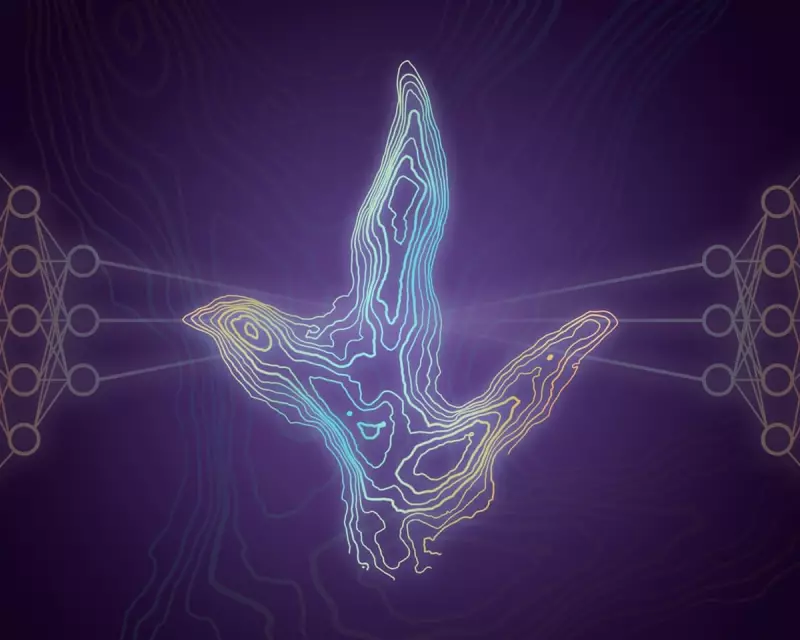
Experts have unveiled a groundbreaking app that harnesses artificial intelligence to identify dinosaurs from the footprints they left behind millions of years ago. This innovative tool, named DinoTracker, represents a significant leap in palaeontological research, offering a new method to analyse ancient traces with remarkable precision.
How the AI System Works
The app's AI system has been trained with 2,000 unlabelled footprint silhouettes, a departure from previous approaches that relied on pre-labelled data. Professor Steve Brusatte from the University of Edinburgh, a co-author of the study, explained the challenge: "When we find a dinosaur footprint, we try to do the Cinderella thing and find the foot that matches the slipper. But it's not so simple, because the shape of a dinosaur footprint depends not only on the shape of the dinosaur's foot but also the type of sand or mud it was walking through, and the motion of its foot."
By using unlabelled data, the AI avoids potential errors from incorrect human identifications. Dr Gregor Hartmann from Helmholtz-Zentrum in Germany, the first author of the research, noted: "You never find a footprint and alongside it the dinosaur that had made this footprint. So, no offence to palaeontologists and such, but most likely some of these labels are wrong."
Key Features and Accuracy
The AI system analyses footprints by identifying eight meaningful features, such as the spread of the toes, amount of ground contact, and heel position. These features allow the system to determine similarities and differences between imprints. The researchers report that this method matches human expert classification about 90% of the time, as detailed in the Proceedings of the National Academy of Sciences.
DinoTracker is a free app that enables users to upload a footprint silhouette, explore the seven most similar footprints, and manipulate the image to see how varying the eight features affects comparisons. Hartmann highlighted that while experts still need to verify factors like material and age, the AI's clustering aligns well with scientific hypotheses.
Insights into Dinosaur Evolution
Among the findings, the AI system supports observations that certain Triassic and early Jurassic footprints are remarkably birdlike, despite being about 60 million years older than the oldest bird skeletons, such as Archaeopteryx. Brusatte commented: "If these tracks were made by birds, that would mean that birds have a much older, much deeper ancestry than we used to think. And not just a few million years but tens of millions of years."
However, he cautioned that it's not definitive: "I suspect it is more likely that these tracks were made by meat-eating dinosaurs with very birdlike feet – maybe bird ancestors, but not true birds."
Limitations and Future Research
Dr Jens Lallensack from Humboldt University of Berlin, who was not involved in the study but has used AI for dinosaur track identification, pointed out a key limitation: the features identified by the system may not directly reflect the foot's shape. He suggested that birdlike tracks could result from how a theropod's foot sank into soft ground, stating: "They are not evidence for an early appearance of birds."
This development opens new avenues for exploring dinosaur behaviour and evolution, with DinoTracker set to become a valuable tool for both researchers and enthusiasts in the field of palaeontology.