
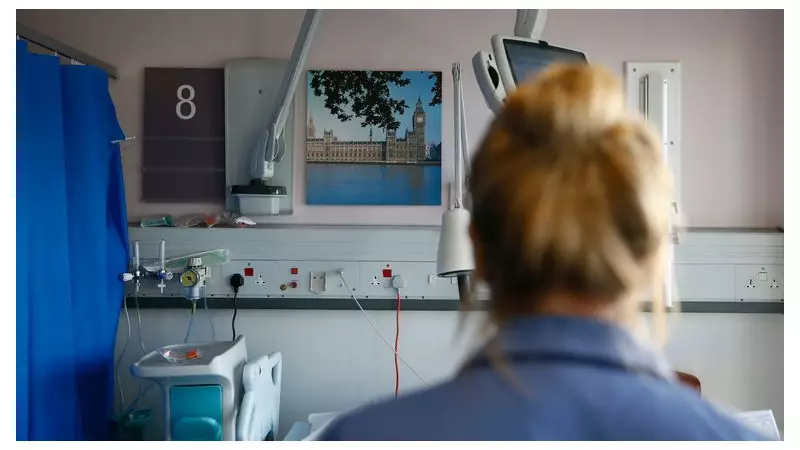
Newly released statistics have exposed a devastating crisis within England's National Health Service, with a record number of patients forced to wait on hospital trolleys for twelve hours or more.
A Grim Milestone for Emergency Care
The data shows that in 2025, a staggering 554,018 people spent half a day or longer waiting for a hospital bed after being admitted via Accident and Emergency departments. This represents a sharp increase of approximately 36,000 patients, or 7%, compared to the previous year. The scale of the problem has exploded over the past decade, with ten times as many people suffering these degrading delays now than did ten years ago.
These 'trolley waits' occur when patients are left in limbo after a decision to admit them has been made, often leading to treatment – and in the most tragic cases, death – in hospital corridors. Policy experts have described the latest numbers as a grim indicator of the extreme pressure facing emergency services across the country.
Political Outcry and a 'National Emergency'
The shocking figures have prompted a fierce political response. Sir Ed Davey, the leader of the Liberal Democrats, condemned the situation in the strongest terms. "Enough is enough. This is a national emergency," he stated, directly criticising the government for allowing the crisis to deepen.
Davey emphasised that the confirmed record levels of 'corridor care' were not what the public expects or pays for through taxation. He called for ministers to be held legally accountable for failing in their duty to protect patients and demanded the immediate implementation of a plan to resolve the A&E crisis permanently.
Behind the Statistics: Staff and Patient Suffering
Tim Gardner, assistant director of policy at the Health Foundation, provided expert context, noting that each statistic represents a person waiting an unacceptably long time for vital care. He highlighted that dedicated NHS staff are being forced to operate in "impossible conditions" to deliver that care.
The crisis is thrown into even starker relief when viewed historically. As recently as 2021, the number of patients waiting over twelve hours stood at 48,626. The subsequent sharp rise has been attributed to a multitude of factors, including the aftermath of the COVID-19 pandemic and chronic resource shortages within the health service.
While there was some positive news in November with a fall in the routine treatment waiting list, experts caution that interim recovery targets for March 2026 will be difficult to meet. These targets are a key step towards the government's pledge to restore the 18-week treatment standard by 2029.
The Department of Health and Social Care was approached for comment on the record-breaking trolley wait figures.




