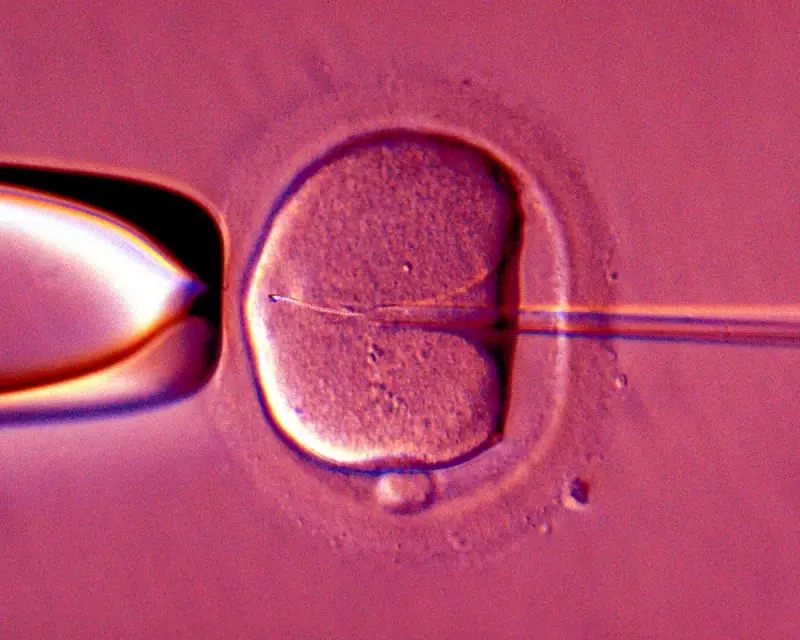
In a landmark development for reproductive medicine, scientists have achieved a significant breakthrough by successfully rejuvenating human eggs. This pioneering technique promises to enhance the success rates of in vitro fertilisation (IVF), offering new hope to women, particularly those of advanced maternal age, who are struggling to conceive.
The Science Behind Egg Rejuvenation
The research, led by a team at the University of Oxford, focuses on improving the health of a woman's eggs by addressing a key factor in age-related infertility: the decline in cellular energy. As women age, the mitochondria – often described as the powerhouses of the cell – within their eggs become less efficient. This reduction in energy production can lead to chromosomal abnormalities and failed embryo development.
The novel technique involves a form of mitochondrial donation. Scientists take healthy mitochondria from small, immature egg cells, known as precursor cells, which are found in the outer lining of a woman's ovaries. These healthy mitochondria are then injected into a mature egg that has been retrieved for IVF. The process aims to re-energise the mature egg, improving its quality and its chances of developing into a viable embryo.
A Potential Game-Changer for Fertility Treatment
This discovery could have profound implications for fertility clinics across the UK and globally. Current IVF success rates decline sharply with a woman's age. For women over 40, the chance of a live birth per IVF cycle is often below 20%. By rejuvenating the egg's cellular machinery, this technique seeks to reset the biological clock, potentially making older eggs behave more like those from a younger woman.
The research is still in its early stages and has not yet been used in clinical treatment. The team's findings, published in a leading scientific journal, demonstrate that the procedure is technically feasible and can improve the egg's energy levels. However, extensive further testing and regulatory approval will be required before it can be offered to patients. The UK's fertility regulator, the Human Fertilisation and Embryology Authority (HFEA), would need to license the treatment.
Ethical Considerations and Future Steps
While the science is promising, it raises important ethical questions. The use of mitochondrial donation, even from a woman's own cells, is a complex area. The UK has been a world leader in legislating for mitochondrial replacement therapy (MRT) to prevent inherited mitochondrial diseases, but this new application for age-related infertility is distinct.
Professor Dagan Wells, a leading figure in the Oxford research group, emphasised the cautious path ahead. He stated that the goal is to provide a new option for women who have very few alternatives left. The next phase of research will involve creating embryos with the rejuvenated eggs to thoroughly assess their development and safety, a crucial step before any clinical trials can begin.
If proven safe and effective, this technology could transform the landscape of assisted reproduction. It represents a move from simply selecting the best available eggs to actively improving their health. For thousands of couples facing the heartbreak of infertility, this breakthrough in egg rejuvenation could one day turn the dream of parenthood into a much more likely reality.