
Fury as Glasgow Hospital Finally Admits Infections After Years of Denial
Families have accused health authorities of "deceit and cowardice" after a years-long battle to prove that contaminated water at a flagship Glasgow hospital was linked to serious infections in child cancer patients. This week, NHS Greater Glasgow and Clyde finally admitted that infections in 84 children, two of whom died, were probably caused by the hospital's water system, following devastating new admissions at a public inquiry.
Molly Cuddihy's Heartbreaking Story
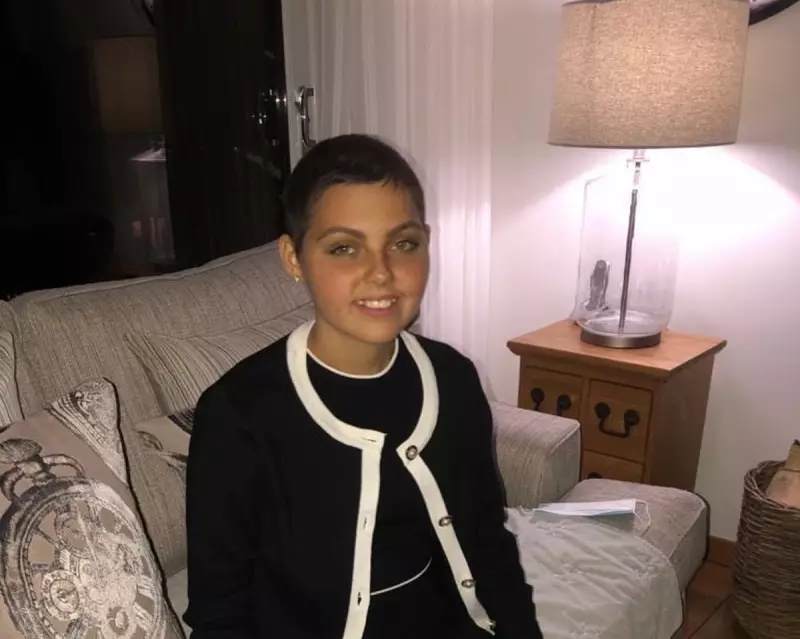
Molly Cuddihy was just 15 years old when she was first diagnosed with a rare bone cancer. While undergoing chemotherapy at Glasgow's Queen Elizabeth University Hospital (QEUH), she contracted a bacterial infection from the hospital environment, suffering "frightening" fits and rigors. In 2021, she told the Scottish hospitals inquiry: "I was made sicker by the environment." Tragically, Molly died last August, her organs weakened by the powerful drugs used to combat the infections alongside her cancer treatment.
Her father, John Cuddihy, attended the inquiry's concluding submissions this week in her place. He stated that while the clinical care was "world-class", the hospital failed to provide a safe environment. "The fact that Molly never got to hear those words is even more painful," he said, referring to the health board's belated admissions.
Years of Denial and Avoidable Harm
The public inquiry, ordered by former Scottish health secretary Jeane Freeman, has revealed shocking details. NHS Greater Glasgow and Clyde admitted that pressure was applied to open the £842m super-hospital in April 2015, despite tests in December 2014 highlighting microbes in the water supply. The board acknowledged the hospital was not ready to open and lacked adequate staffing.
John Cuddihy described the delay in accepting the truth as piling "avoidable distress and harm" on families. Whistleblowers who raised concerns about infection control were dismissed by management as "attention-seeking" and "sensationalising", with the board only now admitting this was "unfair".
Families' Fury and Calls for Accountability
In a coruscating closing statement, families said they had been "lied to, disbelieved, demeaned and smeared" by the health board. They accused NHS Greater Glasgow and Clyde of "deceit and conniving cowardice", adding: "As men, women and children fell ill and died, we were all told: There is nothing to see here."
They called for past and present leadership to "face a reckoning" and warned that "the QEUH is not a safe hospital" and "the current leadership cannot be trusted to make it safe." This echoes whistleblowers who still have "significant concerns" about necessary changes.
Political Fallout and Ongoing Investigations
Scottish Labour leader Anas Sarwar has described this as "the biggest scandal in the history of the Scottish parliament" and called for criminal investigations into Scottish government ministers at the time, including Nicola Sturgeon and John Swinney. Sarwar has campaigned alongside Kimberly Darroch, whose 10-year-old daughter Milly Main died in 2017 after contracting an infection at the hospital.
NHS Greater Glasgow and Clyde is a suspect in a corporate homicide investigation into the deaths of Milly, two other children, and a 73-year-old woman. Prosecutors are also investigating Molly Cuddihy's death. The health board's lawyer offered "an unreserved apology" for the distress caused, but John Cuddihy questioned whether real change would occur, urging the Scottish government to step in "so that this never happens again."
As the inquiry's final report is anticipated later this year, families seek justice and systemic reform, remembering Molly's wish: "She just wanted them to recognise what had happened because that enables you to implement meaningful change."




