
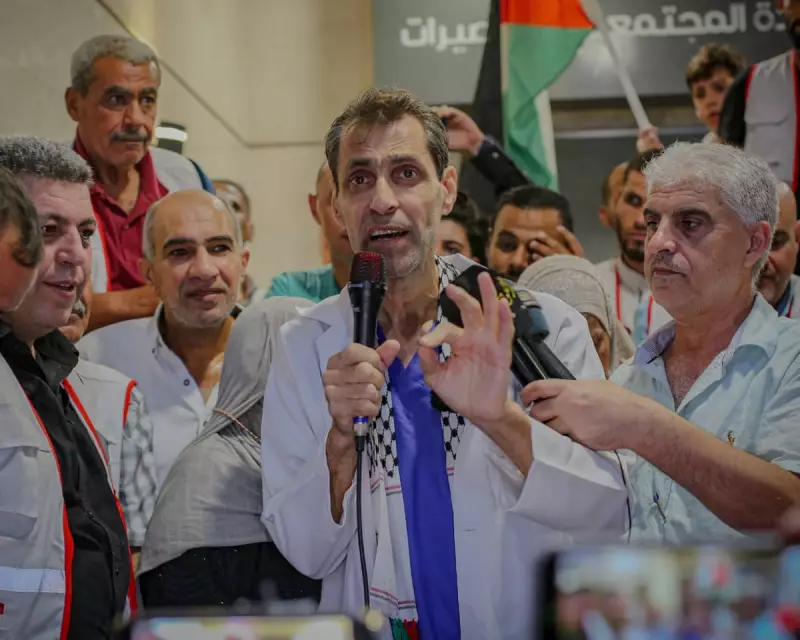
After 665 days detained in Israeli prisons, one of Gaza's most senior doctors returned home to find the healthcare system he left in ruins, with catastrophic consequences for patients.
A Devastating Homecoming
Dr Ahmed Muhanna, a leading anaesthesiologist and emergency care consultant, was released and driven back to Gaza. The journey revealed a landscape of utter destruction. The scale of the devastation brought him to tears, a stark contrast to the dreams of home that sustained him during nearly two years of captivity.
He returned to his hospital, al-Awda, to find it hollowed out. Seventy-five of his colleagues had been killed during his absence. According to the NGO Healthcare Workers Watch, Israel's military has killed 1,200 Palestinian healthcare workers and detained 384 since October 2023.
The hospital, like most in Gaza, lacks staff, equipment, and medicine. "I feel such pain and sorrow at what we are facing," Muhanna says.
A System Destroyed, A Population in Peril
The deliberate targeting of healthcare infrastructure has had a deadly domino effect. A UN Human Rights Office report states 94% of Gaza's hospitals have been damaged or destroyed. This leaves vulnerable patients, including newborns, without essential care.
Muhanna explains the dire practical consequences. "Today, there is not a single, functional MRI machine in Gaza. There is only one CT scanner," he says, crippling doctors' ability to diagnose life-threatening conditions. Cancer patients see tumours spread untreated, and kidney failures rise due to a lack of dialysis machines.
Despite a ceasefire, a UN commission and other human rights organisations accuse Israel of genocide, pointing to the blocking of aid and the systematic dismantling of healthcare. The World Health Organization reports 77% of the population, including 100,000 children, face acute food insecurity. Muhanna's team regularly treats severely malnourished children with complex medical issues.
Detention, Torture, and Trauma
Muhanna's own ordeal began with his detention in December 2023. He describes being tortured, humiliated, and denied food and medical treatment, allegations supported by a recent UN report on Israel's "de facto state policy" of organised torture.
He was first held at the Sde Teiman detention centre, blindfolded and bound for 24 days. Later, during a transfer, Israeli forces beat him so severely they broke one of his ribs. His requests for painkillers were ignored.
He witnessed two men die from preventable medical conditions due to neglect, including a 37-year-old with a fatal gastrointestinal obstruction. Muhanna was never charged with any crime.
No Future in the Rubble
His release brought a bittersweet reunion with his family. Embracing his mother for five minutes was a profound moment, and seeing his wife and children felt like "life had come back to me." Yet, the joy is overshadowed by the crisis around him and his trauma.
With Israel now moving to revoke the licences of 37 international NGOs, including medical groups like Médecins Sans Frontières, the situation is set to worsen. For Muhanna, working amidst the ruins, hope is scarce. "There is no future for my children here," he says, mourning the loss of Gaza's once-vibrant life, its restaurants, beaches, and green spaces, now replaced by nothing.




