
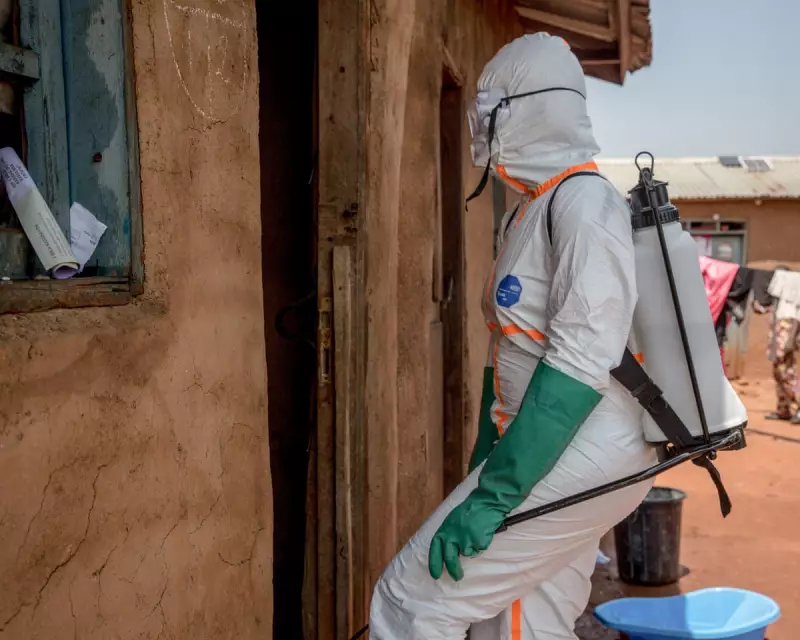
The World Health Organization is set to lose almost a quarter of its workforce by 2026, a move that leading health experts warn will leave the global population less healthy and less safe.
A Drastic Reduction in Global Health Capacity
The UN's health agency confirmed it expects to cut 2,371 positions from its global staff by June 2026. This represents a staggering reduction of nearly 25% from its current workforce of 9,401 employees. The cuts come as a direct consequence of budget pressures following the United States' withdrawal from the organisation in January.
Analysts and global health campaigners have expressed deep concern that these staff reductions, driven by financial constraints, will significantly weaken the WHO's capacity to assist nations confronting disease outbreaks and other health emergencies.
Expert Warnings and Regional Impact
Pete Baker, deputy director of global health policy and a policy fellow at the Center for Global Development, stated: "WHO staffing cuts are a regrettable but inevitable outcome of US withdrawal and lower-than-hoped-for contributions by other countries. The loss of expertise will leave the world less healthy and less safe."
He emphasised that the organisation now requires a clear strategic vision to navigate its new financial reality, rather than cutting crucial global and Africa-based staff.
The distribution of cuts reveals significant regional disparities. The WHO headquarters in Geneva will suffer the highest number of losses at 805 posts. The African regional office follows as the next most affected, facing a reduction of 638 positions from its current 2,541 staff.
Dr Githinji Gitahi, CEO of Amref Health Africa, noted that while the cuts were anticipated, their rapid implementation with insufficient transition planning is particularly concerning. He warned that critical functions including disease surveillance, supply chain management, and emergency response will inevitably be impacted, forcing African governments to shoulder greater responsibility.
Internal Turmoil and Leadership Response
The reduction process has created considerable internal turbulence within the WHO. Junior staff members sent an anonymous open letter in August alleging that senior staff were being shielded from the cuts while many high-cost positions were retained.
In a lengthy email to staff seen by the Guardian, WHO chief Dr Tedros Adhanom Ghebreyesus described the year as "one of the most difficult in WHO's history". He acknowledged the painful conversations with affected staff who expressed their "pain, anxiety and, in some cases, their anger".
Documents presented to member states show that senior directors will face a 42% reduction, bringing their numbers back to 2017 levels, while entry-level professionals will see a 37% cut.
The Path Forward and Funding Crisis
Michel Kazatchkine, a senior fellow at the Global Health Center, Geneva Graduate Institute, described the cuts as a response to political and financial pressure rather than strategic planning. He argued that what is needed is a clear agreement from the World Health Assembly on the WHO's core mandate, followed by strategic fundraising rather than adjusting manpower to financial constraints.
Dr Ghebreyesus revealed to staff that even before the US withdrawal announcement, the WHO faced financial challenges. The American departure, combined with funding cuts from other nations, created a salary gap of approximately $500 million. In a speech to member states, he highlighted that a funding gap of $1 billion remains for 2026 and 2027, urgently requesting support to close this critical shortfall.
As the world continues to face emerging health threats, these unprecedented staff reductions at the world's leading global health authority raise serious questions about international preparedness for future pandemics and health emergencies.




