Navigators provide crucial support for VAD patients
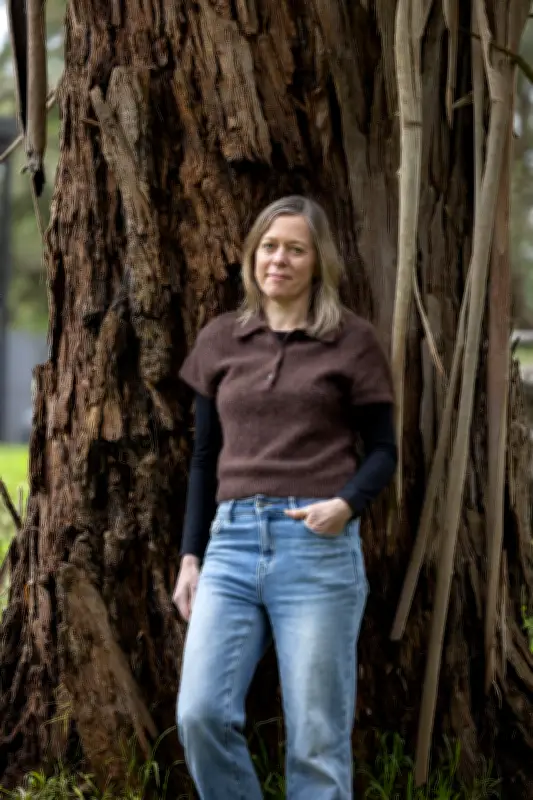
Kristen Kappel, a 51-year-old voluntary assisted dying care navigator in Victoria, has attended many deaths since the service began in 2019. She often cries at them. 'If we don't get emotional, then we're probably done,' she says. 'The death and dying part … is the most beautiful, satisfying, precious part of our role.'
Victoria became the first Australian state to legalize voluntary assisted dying (VAD) in 2019. The care navigator service was established to help terminally ill patients navigate the legal and administrative process. Navigators provide information, connect patients with trained doctors, and sometimes attend the death itself.
Growing demand for VAD across Australia
All Australian states and the Australian Capital Territory now have lawful VAD, and the Northern Territory is expected to table legislation soon. According to data from the end-of-life-choice charity Go Gentle, VAD accounts for 2% of all deaths nationally, but assessments and uptake have increased since 2024 in every state and territory with available data.
In Victoria, the increase has been softer but still felt by the small cohort of navigators. 'It's a little bit chaotic at the moment,' Kappel says. 'We could have anyone call us – and we do … They might be patients, they might be family members and friends, they might be doctors, they might be aged care facilities.'
Emotional and intimate relationships with patients
Navigators often develop close relationships with patients. 'Sometimes it's an extraordinarily intimate relationship,' Kappel says. 'You're seeing people who are dying, who are distressed. You're seeing them in person, you might be seeing them on the day of their death, and you get to know their family.' She adds: 'We have the privilege of seeing a lot of love. I think you carry a little bit of just about everyone with you.'
One image that lingers is a man lying on his bed with his wife, daughters, and dog, all snuggled together after he took the medication. 'It was beautiful, and it was exactly what he wanted,' Kappel says.
Legal hurdles and the role of telehealth
The assessment process for VAD usually takes six to eight weeks and requires multiple appointments with specially trained doctors. It can be 'quite arduous,' says Jill Mann, a 62-year-old navigator based in Geelong. 'Our role is to try and help it be seamless.'
Federal criminal laws from 2005 prohibit using a telephone or email to provide information on how to 'commit suicide,' which complicates VAD communication. A 2022 legal challenge determined that the laws were made before VAD was legal and no distinction was intended. Navigators must carefully navigate phone conversations, send information by mail, and have further conversations in person.
This barrier is harder to overcome in regional areas. Mann, one of just two navigators in regional Victoria, cannot visit everyone. She relies on 'champions in the further regional areas' but notes that the workload falls to a few trained GPs. Specialist assessments are even more challenging: 'We have had some neurologists travel far too far to assess people,' she says.
Stigma and recent reforms
Stigma surrounding VAD has lessened significantly, but it persists in the health system. 'We still get people coming to us who have asked several times about VAD and not gotten anywhere,' Kappel says. 'Then it's too late by the time they get to us, and that is very distressing.'
Mann adds: 'I get cross sometimes with health clinicians, health workers, practitioners that are flippant about [patients raising the possibility of VAD] and don't do anything about it. I find that very objectionable.'
Reforms passed in Victoria's parliament in November, taking effect in April 2027, will require medical professionals who object to VAD to refer requesting patients to the navigator service or another practitioner. The changes also extend the maximum life-expectancy criteria from six months to 12 and remove the 'gag clause' that prevents medical practitioners from raising VAD as an option unless the patient does first.
Peace of mind in choice
Around a third of people who gain access to VAD don't use it. 'There's peace of mind in choice,' Mann says, noting the comfort that comes from empowerment at a vulnerable moment. 'They can't change the trajectory [of their disease]. They don't have control over that, but this, they do.'
The decision to use VAD can also create opportunities for healing. 'It gives people time to bring family together … say things they want to say to each other,' Mann says. 'Even estranged family members will come. So it gives it a little chance of some healing.'
Humour often appears. Mann recalls a 'very practical, straight-down-the-line' man who suggested having his coffin delivered to the nursing home so he could get in and take the substance. She laughed and said it wasn't necessary.
Go Gentle has been campaigning for federal law reform to allow telehealth for VAD, especially for regional patients. The Labor national conference in July changed the party's platform to support the reform, and the Greens and independent Kate Chaney plan to introduce legislation soon.
'It's part of end-of-life care,' Mann says. 'It should be business as usual. If you reflect on a good death, what would you want for yourself?'