
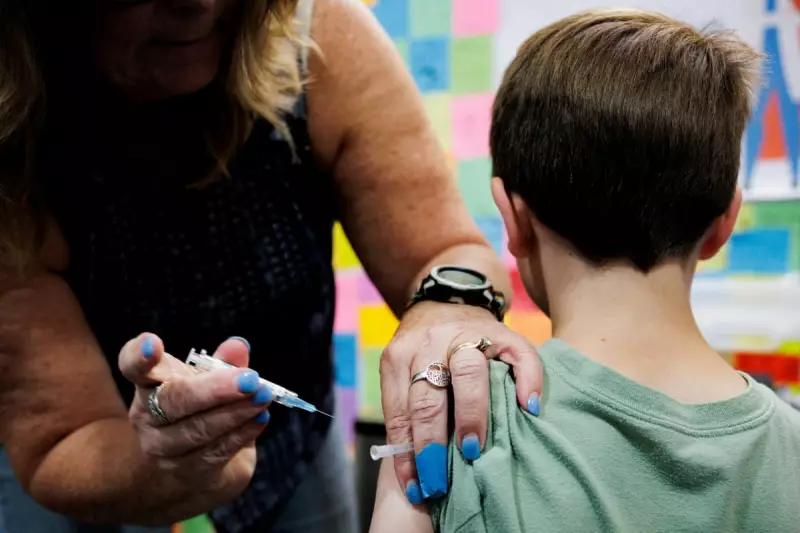
A senior US Food and Drug Administration (FDA) official has sent shockwaves through the public health community by claiming, without presenting evidence, that at least 10 American children died from Covid-19 vaccination.
Unsubstantiated Claims in Internal Memo
In a lengthy and argumentative internal memo sent to staff last Friday, Dr Vinay Prasad, director of the FDA's Center for Biologics Evaluation and Research (CBER), vowed to overhaul vaccine regulation. He based this pledge on the allegation that the Covid vaccine had caused the deaths of at least 10 children aged between seven and 16 from 2021 to 2024.
Prasad cited reports from the Vaccine Adverse Event Reporting System (VAERS), a crowdsourced database open to submissions from anyone. However, he provided no further details on the children's cases. The memo, reviewed by the Guardian, did not specify which conditions led to the deaths, how they were linked to vaccination, or why initial investigations had ruled them unrelated.
"For the first time, the US FDA will acknowledge that Covid vaccines have killed American children," Prasad wrote, questioning whether the shots had killed "more healthy kids than it saved."
Experts Express Deep Concern Over Process
The move has been met with profound alarm by veteran public health figures. They criticise both the sensational nature of the claim and the highly unusual process of announcing it via an internal email without first convening external advisory committees or publishing data.
Dr Dan Jernigan, former director of the National Center for Emerging and Zoonotic Infectious Diseases, stated, "I just have never seen anything like this." He warned that the top-down approach, lacking outside input, risks eroding public trust and could lead to fewer vaccines and more preventable illness.
Dr Paul Offit, an infectious disease expert at Children's Hospital of Philadelphia, was blunt in his assessment. "When you make that kind of sensational claim, I think it’s incumbent upon you to provide evidence that supports that claim. He didn’t supply any evidence," Offit said.
Broader Regulatory Changes and Potential Fallout
Beyond the claims about Covid vaccines, Prasad's memo hinted at sweeping changes to how all vaccines are regulated. He suggested the FDA would now require randomised trials showing clinical outcomes, like reduction of illness, for most new products—instead of relying on demonstrated immune responses.
Experts say this shift could be catastrophic for annual vaccines like the flu shot. Conducting new, lengthy clinical trials each year is not feasible and would mean vaccines arrive too late to be effective. "I don’t know if we will have influenza vaccines next year in the US," said Professor Dorit Reiss, a vaccine policy expert.
The memo also questioned the practice of giving multiple vaccines at once, a common and safe practice that improves access, and made ambiguous statements about measles, mumps, and rubella (MMR) vaccines.
The FDA and Prasad did not respond to the Guardian's requests for evidence linking the children's deaths to vaccination or for details on the proposed regulatory changes. The White House also did not comment on the claims.
Undermining Trust in a Critical Tool
The controversy arrives as Covid continues to circulate. Offit emphasised that "children are getting hospitalised and children are still dying from this virus." He and others fear that undermining confidence in vaccines without robust evidence is "so dangerous and irresponsible."
Jernigan highlighted the confusion such statements create for both the public and physicians. "It’s getting harder for them to know which recommendations to follow and who they can trust," he said, noting that the established, robust systems for monitoring vaccine safety, like the Vaccine Safety Datalink, were not referenced in the memo.
The episode marks a stark departure from the FDA's historical regulatory approach and has left experts deeply worried about the future of vaccine development, approval, and public confidence in the United States.




