
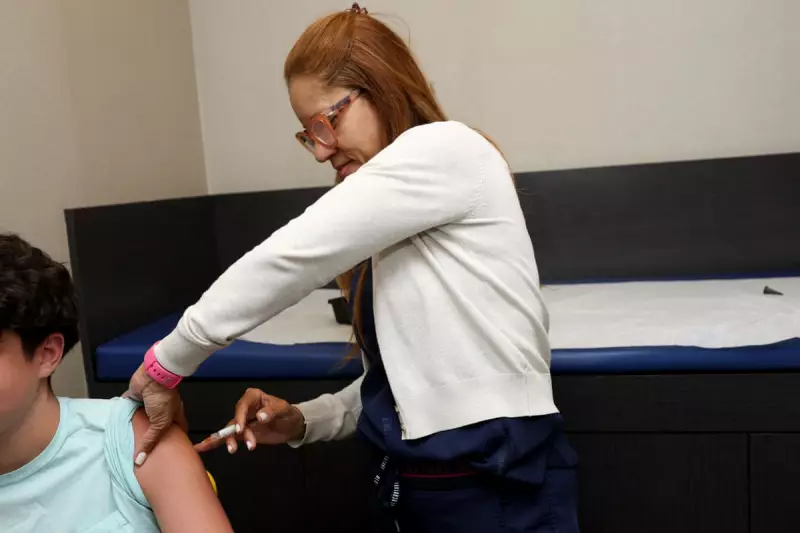
US Doctors Step Up as Flu Threat Looms
Following the most severe influenza season for children outside of a pandemic since records began in 2004, paediatricians across the United States are taking charge of vaccine communication. This comes as the US Centres for Disease Control and Prevention (CDC) confirms it will not revive its ‘wild to mild’ vaccination campaign, which was halted during the record-breaking outbreak.
A Season of Tragedy: The Stark Numbers
The 2024-25 flu season was classified as a ‘high severity season’ by the CDC, resulting in the tragic deaths of 280 children. This makes it the second-worst paediatric flu season in US history, surpassed only by the 2009-10 swine flu pandemic.
The severity of the virus was further highlighted by alarming neurological complications. A total of 109 children developed encephalopathy, or brain swelling, with one-third of those cases diagnosed as acute necrotizing encephalopathy. The condition proved devastating, with three-quarters of affected children requiring intensive care and one in five dying.
A critical finding was that among the children who were eligible for the vaccine, a staggering 89% had not been fully vaccinated.
The Communication Vacuum and a Localised Response
In the absence of a robust federal campaign, trusted local healthcare providers are filling the void. Jonathan Miller, associate chief of primary care at Nemours Children’s Health, expressed his concern, stating, “We saw a really bad season last year, and I worry that this season could be even worse.”
This sentiment is bolstered by data from KFF, a nonpartisan group, which found that 85% of parents trust their paediatrician for vaccine information. This far exceeds the trust placed in national figures like HHS Secretary Robert F Kennedy Jr.
To combat vaccine hesitancy, providers are making concerted efforts. Dr Miller’s team recommends the flu vaccine “at every opportunity”, including during routine and follow-up visits. For families wary of needles, the nasal-spray vaccine is offered as a safe and effective alternative for children over two.
Caitlin Rivers of Johns Hopkins University emphasised the importance of convenience, noting, “People respond really well to reminders.” Meanwhile, medical groups like the American Academy of Pediatrics and the American Lung Association are launching their own educational campaigns.
Global Warnings and an Unpredictable Future
The situation is compounded by a drop in global virus samples shared with the US, which hampers scientists' ability to track mutations. Furthermore, severe flu outbreaks in Australia and Japan, the latter declaring a flu epidemic, serve as a worrying precursor.
Rivers cautioned that while these international trends are “not a direct lesson” for the US, they are a clue that gives experts pause. The CDC’s forecasting centre expects this year’s respiratory virus season to be similar to last year's, but the unpredictable nature of these viruses means vigilance is paramount.
The consequences of a degraded public health communication system are severe. With the CDC’s data flow interrupted during the recent government shutdown, Rivers warned, “It’s very laborious and difficult for the average person to access high-quality data right now.” In this climate, the role of the local paediatrician has never been more critical.




