Ukrainians Defy War with Hope: Building Families Amidst Conflict
In the shadow of Russia's ongoing invasion, Ukrainians are demonstrating remarkable resilience by continuing to build families, even as birthrates plummet and the war grinds on. At the Leleka maternity hospital in Pushcha-Vodytsia, a health resort near Kyiv, staff have returned to delivering babies after treating wounded soldiers during the early battles of 2022. This shift symbolizes a nation's determination to preserve life and hope despite immense risks.
A Patriotic Act in Wartime
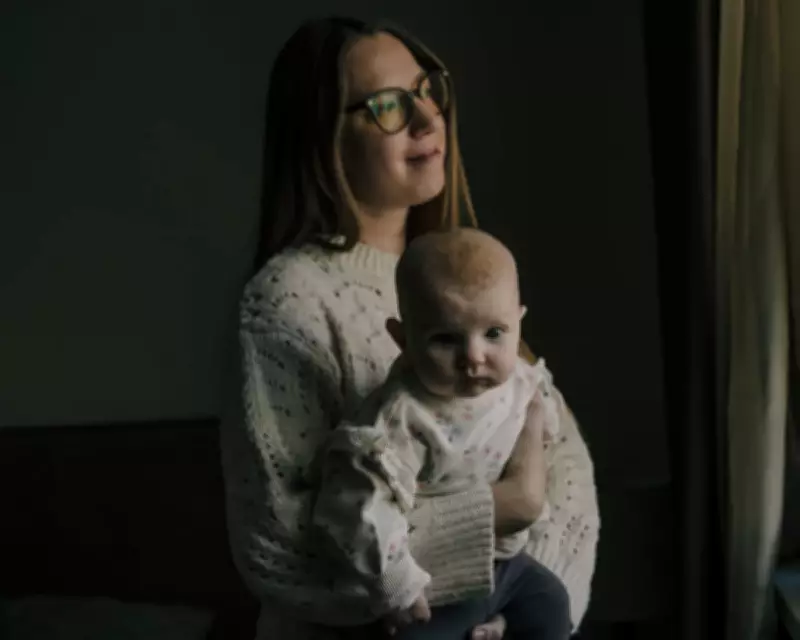
Ivanna Didur, a mother in Kyiv, gave birth to her third child, Anastasia, in October 2025, describing the decision as a 'patriotic act'. She emphasized her commitment to staying in Ukraine, stating, 'I feel I owe it to people on the frontline to stay, raise kids and tell them about Ukraine.' Her family has fortified their home, taping windows to protect against flying glass and using power banks to maintain warmth during blackouts caused by bombing. They strive for normalcy, with her children engaging in activities like acrobatics and football.
Valeriia Ivashchenko, another mother who gave birth at Leleka, echoed this sentiment, expressing confidence that Ukraine will not be defeated. She noted the challenges of planning in wartime, saying, 'War means you can only plan for the short or medium term.' Her daughter, Veronica, recognizes air-raid sirens, a stark reminder of the conflict's pervasive impact on daily life.
Demographic Crisis and Resilience
Ukraine faces a severe demographic crisis, with birthrates among the lowest globally. According to UN data, 5.9 million Ukrainians have fled the country, and 3.7 million are internally displaced, many being women with children. At Leleka hospital, deliveries dropped from 2,300 in 2020 to 868 in 2022, with a slight increase to 952 last year. Dr. Valerii Zukin, the hospital's chief executive, described this decline as 'very sad,' but emphasized the importance of hope, quoting Ernest Hemingway: 'It is silly not to hope.'
Kyrylo Ventskivsky, former head of obstetrics at the Kyiv perinatal centre, noted that the overall birthrate has decreased by about 30%, though some pregnant women are returning from abroad to access free maternity services. He highlighted a law that exempts fathers with three children from military service, which some women cite as a reason for having more children. Despite the crisis, Ventskivsky remains optimistic, predicting that refugees will return if peace is achieved.
Government Response and Future Outlook
In response to the alarming demographic decline, Ukraine's parliament, the Verkhovna Rada, has implemented measures to support families. In January, it increased a one-off payment for new mothers to 50,000 hryvnia (approximately £858) and introduced a monthly subsidy of 7,000 hryvnia for unemployed pregnant women. These steps aim to alleviate financial pressures and encourage childbirth.
However, the war's toll is stark: Russia now occupies 20% of Ukraine, including Crimea, with an estimated 1.2 million casualties in the Donbas region alone. Ivashchenko framed the conflict as an attack on liberal democratic values, stating, 'I don't consider it to be a Russian-Ukrainian conflict. I think this is an attack on the whole liberal democratic system.' She added that the war has united Ukrainians, making them prouder of their identity and braver in the face of adversity.
As demographers predict Ukraine's population could shrink to 25 million by 2050, families like Didur's and Ivashchenko's represent a beacon of hope. Their stories underscore a collective resolve to rebuild and thrive, even in the most challenging circumstances, proving that life and love can persist amidst destruction.