
Trump Selects Former Deputy Surgeon General to Lead CDC
Former President Donald Trump has announced his nomination of Dr. Erica Schwartz to serve as the next director of the Centers for Disease Control and Prevention (CDC). This decision concludes an extensive search for a permanent leader of the prominent public health agency, which has faced significant challenges in recent years.
Schwartz's Background and Qualifications
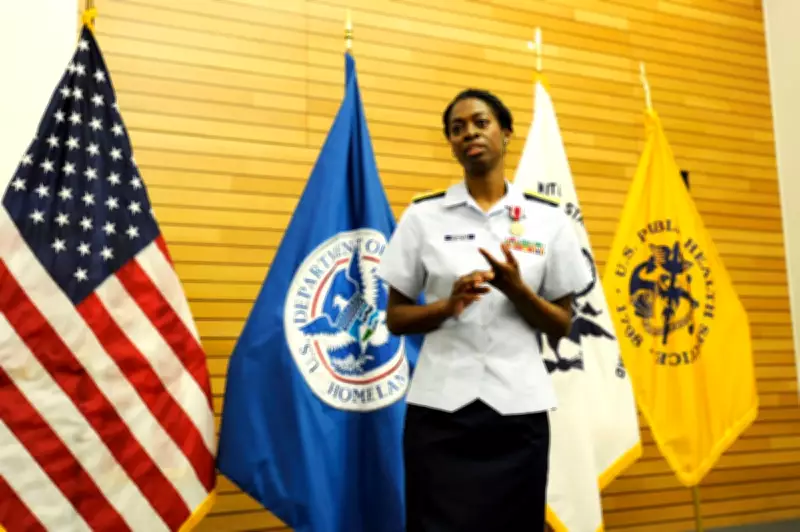
Dr. Schwartz brings a distinguished career in public health and military service to the role. She previously served as deputy surgeon general during Trump's first administration from 2019 to 2021. With over two decades of experience, Schwartz has held positions across multiple branches of government health services.
Her educational background is particularly impressive:
- Bachelor's degree in biomedical engineering
- Medical degree from Brown University
- Master's degree in public health from the Uniformed Services University of the Health Sciences
- Law degree from the University of Maryland
Currently a rear admiral in the U.S. Coast Guard, Schwartz has also served in the U.S. Navy and the Public Health Service Commissioned Corps throughout her career.
The Nomination Process and Current Context
Trump revealed his choice on his Truth Social platform, writing: "I am pleased to announce the new leadership of the Centers for Disease Control and Prevention (CDC). It is my Honor to nominate the incredibly talented Dr Erica Schwartz, MD, JD, MPH, as my Director of the CDC. She is a STAR!"
The nomination requires Senate confirmation before Schwartz can assume the position. This comes at a critical time for the CDC, which has operated without a permanent, Senate-confirmed director for months.
Jay Bhattacharya had been serving as acting CDC director, but that designation expired last month under the federal Vacancies Act, which restricts acting officials from serving longer than 210 days in roles requiring Senate confirmation.
Challenges Facing the CDC
The CDC has experienced considerable turmoil in recent months. The agency's last Senate-confirmed director, Susan Monarez, served for less than a month in July before being fired after clashing with Health Secretary Robert F. Kennedy Jr. over his anti-vaccine agenda.
Since Trump returned to office in January, Kennedy and his team have taken both public and private steps aimed at slowing vaccine research and guidance development. This has created tension within the public health community and raised concerns about the agency's independence.
During a staff meeting in March, Bhattacharya highlighted several difficulties the agency has encountered, including:
- Repeated layoffs affecting agency operations
- Declining staff morale across departments
- A security incident involving a gunman firing outside the CDC's Atlanta campus, resulting in the death of a police officer
Reactions and Expectations
Protect Our Care, a health policy group founded after Trump's 2016 election victory, has called on Schwartz to commit to defending vaccine safety and effectiveness. Kayla Hancock, director of the group's public health project, emphasized the importance of an independent CDC director.
"For the sake of our public health, the next CDC director must be free and independent to encourage as many Americans as possible to protect themselves from preventable diseases without first getting permission from the anti-vaxxer-in-chief," Hancock stated.
The nomination places Schwartz at the center of ongoing debates about public health policy, vaccine advocacy, and agency independence as she prepares for her Senate confirmation hearings.




