
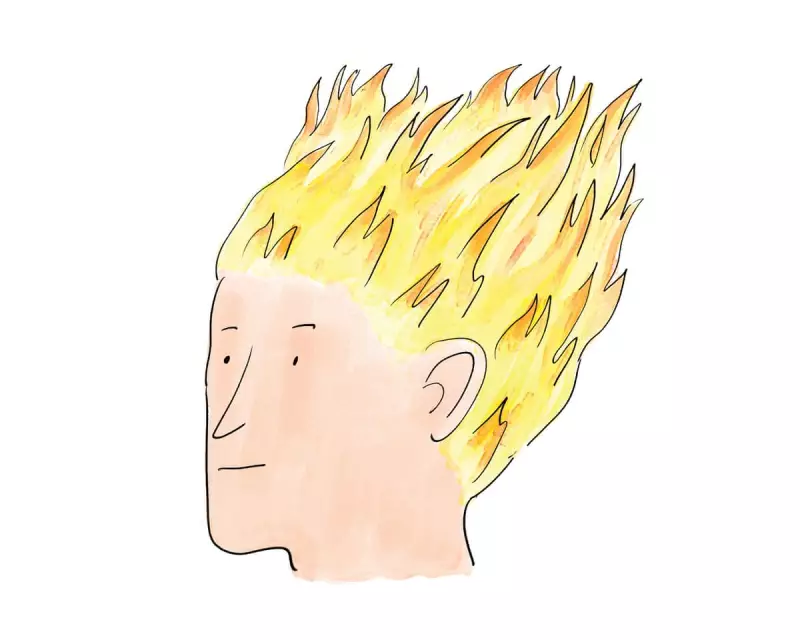
For decades, a piece of cold-weather advice has been treated as gospel: always cover your head because that's where you lose most of your body heat. This widely held belief, however, is more folklore than scientific fact, according to experts.
The Origins of a Persistent Winter Myth
The notion that 40–45% of body heat escapes from an unprotected head can be traced back to a 1970s US Army Survival Manual. Professor John Tregoning, an expert in vaccine immunology at Imperial College London, identifies this as the probable source of the enduring idea. The manual's stark warning to "Always keep your head covered" has seeped into public consciousness, shaping winter behaviour for generations.
In reality, the human body does not prioritise the head as a primary heat-loss zone. The key factor is exposure. "There is nothing special about your head," Professor Tregoning clarifies. Heat dissipates more rapidly from any area of the body left uncovered compared to parts shielded by clothing. If you venture into the cold wearing a snowsuit but no hat, your face and head will indeed cool quickly, while the suit insulates the rest of your body.
The Science of Heat Loss: Surface Area Matters
The professor uses a vivid example to illustrate the point. "If you went to the Arctic in a swimming costume, you'd lose more heat from your legs than your head because their surface area is bigger than your head's," he states. This underscores a fundamental principle: the amount of heat lost is largely proportional to the surface area exposed to the cold air.
Nevertheless, some scientific discussion suggests the head might have minor unique characteristics. Tregoning references a 2008 British Medical Journal article which posits two factors. Firstly, the head generally has less fat tissue than other body parts, offering slightly less natural insulation. Secondly, vasoconstriction—the process where blood vessels narrow to conserve heat—may be less efficient in the head region.
Practical Advice for Cold Weather
Despite debunking the 'most heat' myth, the core advice for braving low temperatures remains sound. "The head does lose heat, but it's not uniquely heat-losing," Tregoning confirms, citing studies where submerging heads in cold water did not show a uniquely faster cooling rate.
The ultimate takeaway is straightforward. If you are underdressed for the cold, you will get cold. Forgoing a hat will chill you just as surely as leaving off a jumper. Professor Tregoning adds a further practical tip: "People probably need to cover their face as well, if they can. You lose quite a lot of heat through your face." The most effective strategy against the cold is simple, comprehensive coverage, paying attention to all exposed areas to stay warm and safe.




