
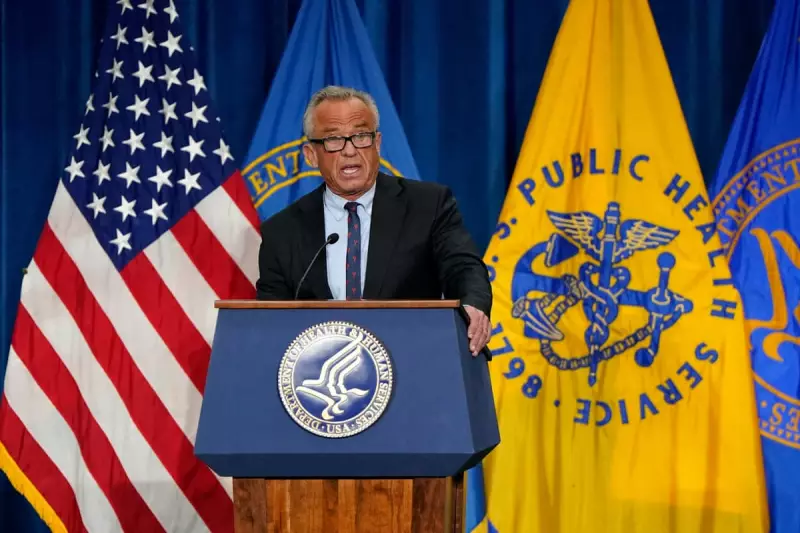
A vaccine advisory committee in the United States, now under the influence of Health Secretary Robert F Kennedy Jr, is poised to deliberate a significant reversal of long-standing public health policy this Thursday. The panel will consider recommending a delay to the routine hepatitis B vaccination for newborn babies, a practice in place for decades.
A Decades-Old Policy Under Review
For years, federal health guidance in the US has stipulated that all infants receive the hepatitis B vaccine shortly after birth. This immunisation protects against a virus that can cause serious liver disease, including cirrhosis and cancer. Kennedy, a prominent figure in anti-vaccine activism who now leads the Department of Health and Human Services (HHS), has consistently advocated for postponing this shot.
The potential consequences of such a change are substantial, according to medical experts. A 2023 study published in the official journal of the US surgeon general highlighted a staggering 99% decline in reported acute hepatitis B cases among children, adolescents, and young adults between 1990 and 2019. Researchers attributed this dramatic drop directly to the success of infant immunisation programmes.
A Reshaped Committee with a New Direction
Kennedy laid the groundwork for this potential policy shift earlier in 2025 by dismissing all 17 members of the Advisory Committee on Immunization Practices (ACIP). This body is crucial as it advises the Centers for Disease Control and Prevention (CDC) on vaccine use. He replaced them with his own appointees, several of whom share his sceptical views on vaccines and support an overhaul of established immunisation schedules.
The committee's composition changed again recently. HHS announced that the panel's most recent chair, Dr Martin Kulldorff, would leave for a role within the agency. His replacement is Dr Kirk Milhoan, a cardiologist known for his criticism of Covid-19 vaccines.
This newly configured panel has already begun influencing US vaccine policy. Key decisions so far include:
- Endorsing a move to thimerosal-free flu vaccines in June, despite no evidence the preservative is harmful.
- Voting in September to recommend separate vaccines for measles, mumps, rubella, and chickenpox instead of the combined MMRV jab.
- Rejecting, the day after the MMRV vote, a proposal to require prescriptions for Covid-19 vaccines.
Broader Context of Falling Immunisation Rates
This review occurs against a troubling backdrop of declining childhood vaccination rates across the United States. Vaccine hesitancy, exacerbated by the coronavirus pandemic, continues to rise. In 2025, the US experienced large measles outbreaks alongside dozens of other countries.
Cases of whooping cough (pertussis) also remain high following a sharp post-pandemic increase. The illness is particularly dangerous for infants and young children, and several deaths have been recorded this year in states including Kentucky, Louisiana, and Washington.
The advisory panel's recommendations will go to the acting CDC director, Jim O'Neill. The previous director, Susan Monarez, was removed by the Trump administration in August 2025 after the White House stated she was "not aligned" with the president's agenda. The outcome of Thursday's meeting could mark a pivotal moment for American public health strategy.




