
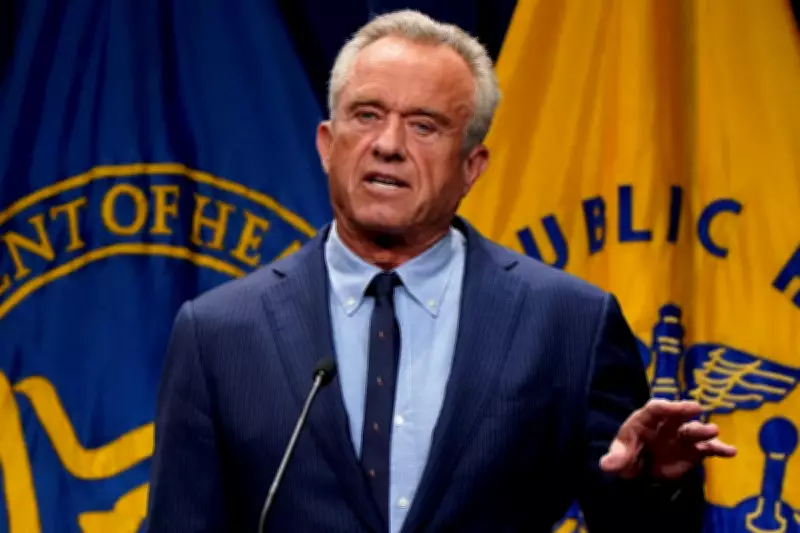
Robert F Kennedy Jr, the US health secretary, has announced a series of steps intended to curb antidepressant use in the United States. The plan promotes 'deprescribing' as psychiatrists warn that the mental health crisis stems from a lack of access to care, not overuse of medications.
Background on Antidepressant Concerns
Antidepressants, particularly selective serotonin reuptake inhibitors (SSRIs), have long been a target for Kennedy, who serves as the Trump administration’s health secretary. He discussed the plans at an event hosted by the Make America Healthy Again Institute, an organization focused on advancing the Maha agenda. Kennedy has claimed without evidence that these drugs are linked to a rise in school shootings and has expressed concerns about withdrawal symptoms and the difficulty of weaning off medications.
HHS Action Plan
In a press release, the Department of Health and Human Services (HHS) stated its intent to 'curb psychiatric overprescribing' and promote 'deprescribing when clinically indicated.' During the event, Kennedy acknowledged the role of psychiatric medications but emphasized that his department 'will no longer treat them as the default; we will treat them as one option, to be used when appropriate, with full transparency and with a clear path off when they are no longer needed,' according to the New York Times’ reporting on the summit, which focused on the 'overmedicalization' of mental health.
Kennedy clarified: 'Let me be clear: if you are taking psychiatric medication, we are not telling you to stop. We are making sure you, and your clinician, have the information and support to make the right decision for you.'
Public Opinion and Data
A 2025 survey across all 50 states revealed that nearly 17% of respondents currently use antidepressants. The survey also found that a 'significant proportion of adults in every US state oppose efforts to restrict access to antidepressant prescribing.'
In the department press release, Kennedy said the action plan aims to address 'overuse' of these medications, 'especially among children.'
Guidance to Providers
A letter issued on Monday from top HHS officials details the goal to reduce antidepressant use and encourages non-medication options for treating depression, including psychotherapy, diet, physical activity, and social connection. The letter intends to 'emphasize the importance of ensuring that treatment planning for mental health conditions includes meaningful access to evidence-based non-pharmacological interventions.'
'When clinically indicated, such treatment should include careful assessment of patient’s symptoms, medication review for efficacy, and when appropriate, deprescribing,' the letter states.
The department also provided guidance to mental health practitioners, clarifying that they can be reimbursed for medical care involved in deprescribing, and distributed resources on managing the deprescribing process.
Psychiatrists' Response
The American Psychiatric Association, representing over 40,000 physicians, issued a statement saying it 'welcomes the attention placed squarely on the nation’s mental health crisis and is committed to advancing solutions that improve access to high-quality evidence-based care.' The association supports the administration’s plans to invest in research and train clinicians on prescribing and deprescribing but pushed back on framing the crisis as a problem of overprescribing.
'That characterization oversimplifies a complex crisis and ignores the larger reality: too many patients cannot access timely, comprehensive care, while care remains unevenly distributed across our health system,' the association said, adding that the framing does not account for workforce shortages, limited psychiatric beds, and barriers to care access.
'Deprescribing alone is not a sufficient response to this crisis,' it said. 'In psychiatry, as in all areas of medicine, prescribing and deprescribing occur every day as part of individualized, evidence-based treatment planning between physicians and patients. The solution is not to stigmatize psychiatric medication or impose broad assumptions on clinical care, but to ensure that patients have access to the full range of evidence-based treatments and that decisions are guided by the best available science and each patient’s needs.'




