
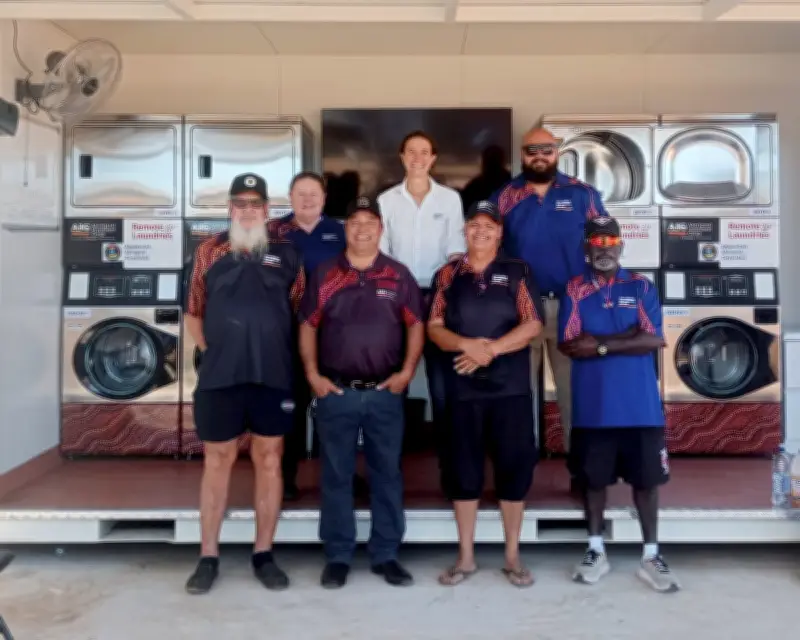
The Aboriginal Investment Group (AIG), an Indigenous-owned not-for-profit, has built seven free laundry sites across the Northern Territory, dramatically reducing scabies infections and preventing new cases of rheumatic heart disease in remote communities.
Scabies rates drop 60% in Barunga
CEO Liz Morgan-Brett, a former Olympian, says the first prototype laundry was built in 2019 in Barunga, a remote community about 300km south-east of Darwin. Within two years, scabies infections dropped 60% and there have been no new cases of rheumatic heart disease in Barunga. The project has now delivered seven laundries, processing over 88,000 washing cycles.
Scabies is widespread in many remote Indigenous communities, with up to 70% of Indigenous children contracting it before their first birthday. Untreated scabies sores can become infected with group A streptococcus bacteria, leading to acute rheumatic fever and rheumatic heart disease. Access to working laundries is a key preventive measure.
Community impact
Gemma Brogan, a teacher in Gunbalanya, says the cost of laundry supplies is double that in urban areas, and few residents can afford a washing machine. “I think every remote community should have one of these laundries, because scabies and rheumatic heart disease are curable and preventable,” she says.
Perpethua Ali, a Warumungu and Warlpiri woman diagnosed with acute rheumatic fever at age 38, says she initially didn’t understand the condition. Now 43, she stresses the need for education. “A lot of our mob get diagnosed with diabetes but they are mostly dying of heart attacks,” she says. As of late December 2024, over 11,700 Australians have rheumatic heart disease or past acute rheumatic fever, with at least 80% being Aboriginal or Torres Strait Islander, who are 20 times more likely to die from it than non-Indigenous people.
Part of a broader strategy
Assoc Prof Vicki Wade, a Noongar elder and research fellow at Menzies School of Health Research, says remote laundries are important but not a standalone solution. “It’s part of the environmental health plan… it’s a basic human right that we’ve got access to water and washing,” she says, calling for community education, culturally safe care, and other preventive measures as part of an endgame strategy.




