
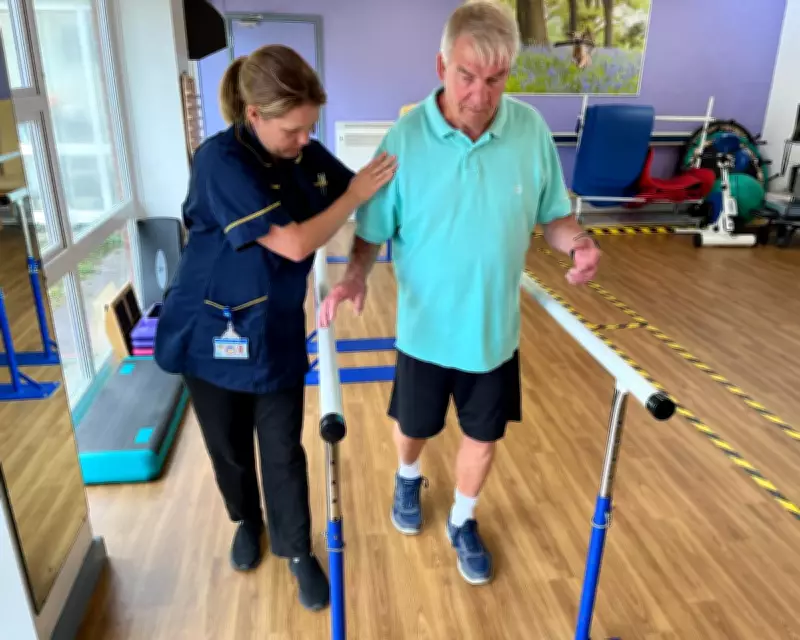
NHS Stroke Rehabilitation Crisis: Critical Staff Shortages Undermine Patient Recovery
Health leaders have issued a stark warning that the National Health Service is failing stroke patients and severely limiting their chances of recovery due to critical shortages in rehabilitation care staff. Despite more people surviving strokes than ever before in the United Kingdom, their prospects for meaningful improvement are being systematically undermined by insufficient numbers of physiotherapists and other specialist personnel.
The Gap Between Guidelines and Reality
National clinical guidelines clearly stipulate that individuals who have experienced a stroke should receive therapy-based rehabilitation for three hours daily, five days each week. However, alarming data reveals a substantial disparity between these standards and actual patient experiences. On average, stroke patients currently receive rehabilitation only three to four days weekly during hospital stays, with this diminishing to merely one or two days following discharge back into the community.
Ash James, Director of Practice and Development at the Chartered Society of Physiotherapy, expressed profound concern about this systemic failure. "Something is going seriously wrong in our health system if the NHS is failing to turn workforce growth into the posts required to meet even the minimum standards for stroke rehabilitation," James stated. He emphasized the troubling reality that dedicated healthcare professionals are advocating tirelessly for their patients, only to have their legitimate concerns dismissed by the system.
Survey Reveals Widespread Staffing Deficits
A comprehensive national survey of stroke physiotherapists working across 159 NHS services throughout the UK has uncovered severe workforce shortages affecting multiple aspects of stroke care delivery. The 2025 Stroke Physiotherapy Workforce Survey findings paint a particularly concerning picture:
- Community stroke services are operating with 26% fewer physiotherapists than national guidance recommends
- Acute stroke teams are functioning with 15% fewer physiotherapists than required standards
- Community rehabilitation support workers are 36% below recommended guidance levels
Adine Adonis, Chair of the Association of Chartered Physiotherapists in Neurology, highlighted the urgent nature of this staffing crisis. "More people are surviving strokes in the UK than ever before, but survival must be matched with the chance to recover well," Adonis emphasized. "These findings highlight a stark and urgent gap in the number of physiotherapists and support staff available to provide the specialist rehabilitation that stroke survivors rely on. This is not good enough."
Human Impact and Call for Immediate Action
Juliet Bouverie, Chief Executive of the Stroke Association, contextualized these statistics with human reality, noting that approximately 240 people in the UK have their lives "potentially destroyed" by stroke every single day. "Stroke survivors are at risk of being unable to see, speak, move or even swallow, which has a huge impact on their ability to enjoy a full and independent way of life," Bouverie explained.
She stressed that early, personalized rehabilitation combined with ongoing support can dramatically improve both physical effects and emotional wellbeing following a stroke. However, progress toward improving rehabilitation availability and intensity remains unacceptably slow. "Much greater investment in both people and processes to meet the national guidelines of care are desperately needed to ensure stroke survivors are supported both in hospital and the community for as long as they need it," Bouverie asserted.
Government Response and Future Commitments
The Department of Health and Social Care acknowledged that every stroke survivor deserves appropriate support for recovery, conceding that too many individuals are currently not receiving this essential care. A departmental spokesperson outlined current initiatives, stating, "We're rolling out specialist stroke rehabilitation in people's homes, so more people can get the right care without having to rely on hospital stays. We've also set clear standards for what good stroke care looks like."
The government has additionally committed to reducing stroke-related deaths by twenty-five percent over the coming decade. However, health leaders maintain that without immediate, substantial investment in rehabilitation staffing and processes, stroke survivors will continue to face unnecessarily limited recovery prospects, with their rehabilitation needs systematically unmet by an under-resourced system.




