
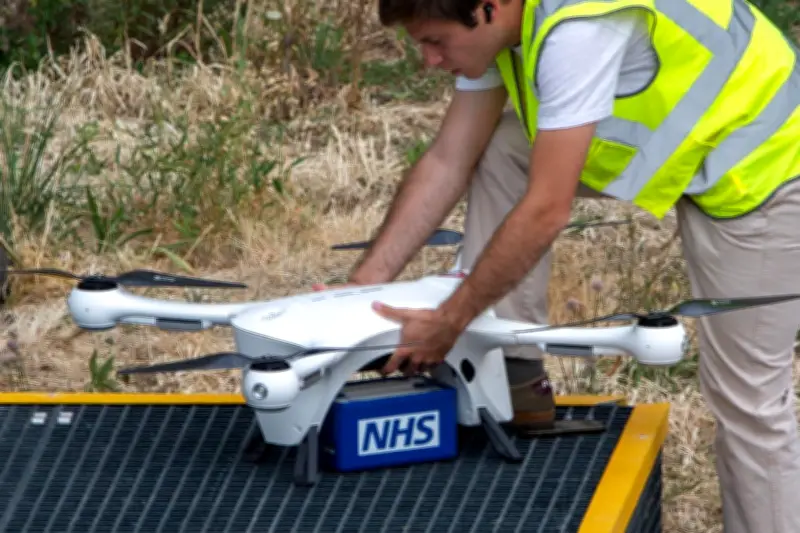
The NHS is set to fly blood samples from sick children over residential buildings in Camden five days a week, using automated drones, as part of a trial by Great Ormond Street Hospital (GOSH) and robotics company Apian. The service will transport pathology samples to analysts at Health Services Laboratories’ (HSL) medical centre in King’s Cross, with flights operating Monday to Friday from 8am to 5pm at a height of 110 metres and speeds of around 35 miles per hour.
The trial flights of the remotely-operated machines, built by a US tech firm, have already begun at the Halo building in Mabledon Place. GOSH says the system is being introduced due to traffic congestion, which has been exacerbated in the Bloomsbury area by recent one-way systems and cycle-safety schemes.
Residents voice concerns over safety and noise
Residents are warning that routine use of the system could disrupt their lives and have questioned whether current drone regulations are fit for purpose in an era when “the whole world may want to have drones delivering everything from their pizza to their medication”. Trevor Shonfeld, co-chair of Bloomsbury Residents Action Group (BRAG), suggested the blood drones could be the “thin edge of the wedge”, adding: “The idea of them flying over residents carrying samples of maybe nasty stuff heading to be tested, you don’t know when there could be an accident and it’s just not the right place to do it.”
Shonfeld also highlighted noise concerns, saying: “People have every cause to be concerned. The noise from the drone taking off and landing is noisy – it’s like a small moped that goes through your ear.” He questioned the practicality of the service, noting that a courier could walk the route in seven minutes, whereas packing the drone, launching it, and retrieving it would take longer.
Consultation criticised as inadequate
Debbie Radcliffe, co-chair of BRAG, said: “Local people don’t really know anything about the practicalities of drone deliveries or how it will actually affect residents’ quality of life.” She criticised the consultation process, saying it consisted of an email asking local people to “get in touch if you have any questions”, adding: “That is not consultation.”
The group noted that the M2 drones, supplied by California-based company Matternet, are the only drone delivery service to receive a standard Type Certificate from the Federal Aviation Administration, described as “the USA’s gold standard for airworthiness”. The drones are 100 per cent electric and produce zero emissions during flight, and can “replace courier trips that would normally require cars, vans or motorbikes”.
Hospital defends trial, citing faster results and reduced emissions
HSL is a joint venture company between University College London Hospitals, the Royal Free London and The Doctors Laboratory, following the privatisation of the NHS pathology service more than 20 years ago. Forty-nine per cent of the profits from the company’s contracts with the NHS go back to the two hospitals. Currently, anything removed from a patient in Camden’s main hospitals and clinics – mainly bloods and tissues – is sent to HSL for testing, with results sent back to hospitals and GPs.
The company behind the trial said: “For paediatric services, where acute illness can escalate rapidly, faster testing turnaround times are vital for timely diagnosis and treatment. By replacing courier journeys with zero-emission flights, this technology reduces air pollution and traffic, supporting cleaner air and safer streets for children and future generations.”
A spokesperson for GOSH said the sound of drones was significantly quieter than a car, adding: “Like other NHS hospitals, we are testing the use of drones to fly pathology samples to nearby laboratories, subject to risk assessment and approval from the UK’s aviation regulator, the Civil Aviation Authority. We hope these flights will help get quicker results for our patients, by avoiding traffic delays, as well as reducing emissions.” The spokesperson added: “Ahead of the trial flights, we contacted local residents and businesses under and adjacent to the initial flightpath to ask them to share any concerns. We are yet to receive any responses and remain happy to discuss the project as this trial progresses.”
The drones will fly within airspace as approved by the Civil Aviation Authority. Under UK rules, the CAA allows drones to be flown for work provided organisations comply with legal requirements, register as an operator, and obtain a Flyer ID through a theory test. Exceptions exist for drones weighing below 250g without a camera. In 2020, the UK adopted new regulations focusing on risks based on aircraft weight and characteristics.




