
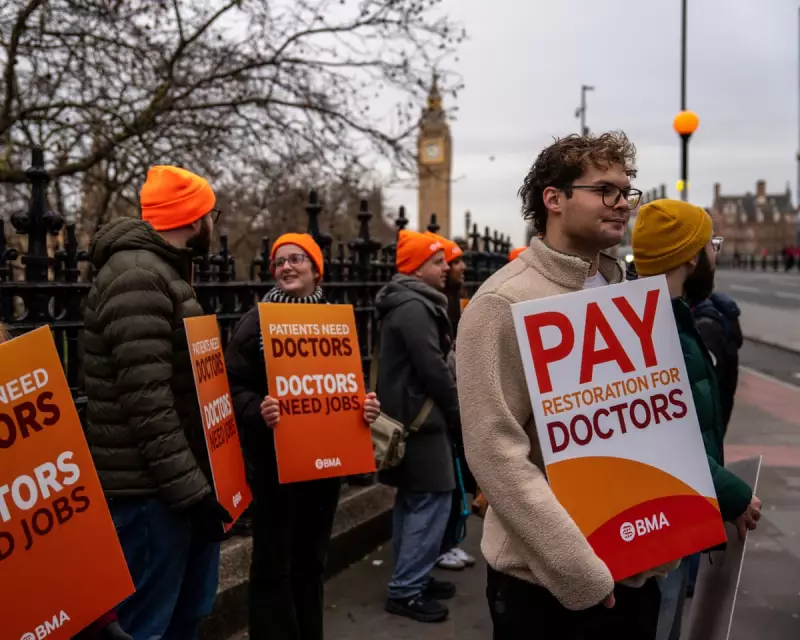
Junior doctors in England have concluded a five-day strike, expressing a renewed willingness to negotiate with the government to prevent further industrial action in the new year. The walkout, which ran from last Wednesday until 7am on Monday, ended as the British Medical Association (BMA) called for a more constructive approach from Health Secretary Wes Streeting.
Strike Ends Amid Cautious Optimism for Talks
The BMA stated that while last-minute discussions before the strike were encouraging, they came too late to avert the disruptive action. The union has now urged Mr Streeting to match their "can-do spirit" as both sides look to resume talks in January. The health secretary has signalled his own determination, stating he does "not want to see a single day of industrial action in the NHS in 2026" and vowed to do everything possible to achieve that.
"My door remains open, as it always has done, and I’m determined to resume discussions with the BMA in the new year to put an end to these damaging cycles of disruption," Streeting said. This conciliatory tone marks a shift from the pre-strike rhetoric, where the government took a tough line. Prime Minister Keir Starmer had described the decision to strike as "beyond belief" given the NHS was facing a severe flu season crisis.
Core Disputes: Pay, Jobs, and 'Cartel' Accusations
The central conflict remains unresolved. The government has refused to reopen formal pay negotiations, while junior doctors continue to demand "pay restoration" to 2008 levels in real terms. In a bid to break the deadlock, Streeting previously offered a deal focused on creating more training posts to address the crisis of newly qualified doctors struggling to find work. However, this was rejected by BMA members, who voted to proceed with the five-day strike.
The dispute has been heated, with Streeting previously accusing the BMA of acting like a "cartel" and describing the strike as "morally reprehensible"—a comment labelled unacceptable by incoming Unison general secretary Andrea Egan.
A Path Forward: Less Name-Calling, More Deal-Making
Jack Fletcher, chair of the BMA's junior doctors committee, appealed for "less name calling and more deal making" in 2026. He outlined the doctors' key demands: a proper fix to the jobs crisis and a credible, multi-year plan to restore the value of doctors' pay.
"Those are solutions that mean we can build out our future workforce to end the current crisis, solutions which are very much within government’s power," Fletcher stated. He added that while doctors were frustrated by a year of missed opportunities, the tone of the eleventh-hour talks provided cause for optimism that the government is finally understanding their frustrations.
As the strike ended, Streeting thanked NHS staff for coping during an "exceptionally challenging" period, warning that the service now faces a difficult recovery in the busiest weeks of winter. All eyes are now on the negotiating table in January, where both sides will test their professed "can-do" attitudes.




