
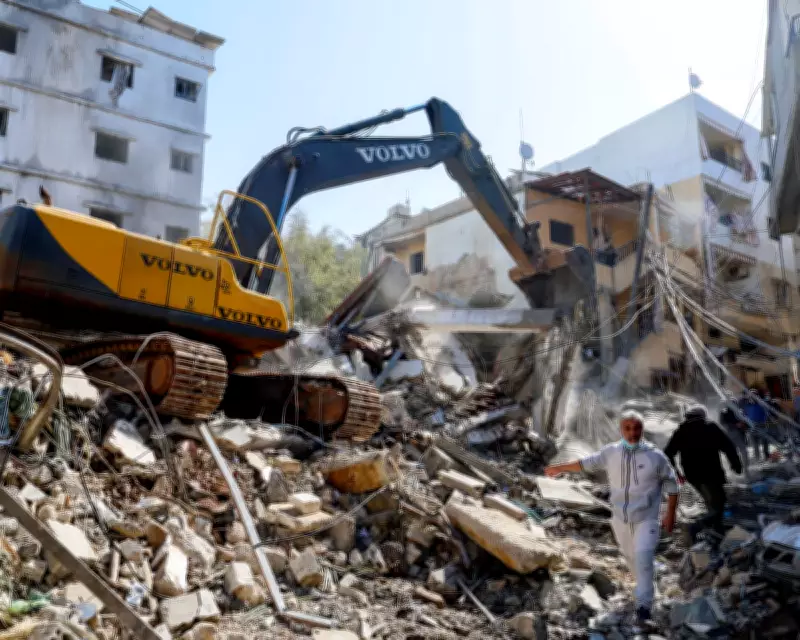
Israeli Military Tactics Targeting Healthcare Infrastructure Expand to Lebanon
During Easter weekend, one of the most intense moments of Israel's war on Lebanon unfolded when the Israel Defense Forces bombed a densely populated residential area near Rafik Hariri University hospital, Lebanon's largest public hospital. The attack killed at least five people and wounded fifty others, marking a continuation of what medical workers and human rights organizations describe as Israel's systematic strategy of crippling healthcare infrastructure.
From Gaza to Lebanon: A Dangerous Blueprint
Israel is applying tactics proven effective in Gaza to Lebanon, normalizing the destruction of hospitals and medical equipment while deterring civilians from seeking medical care. According to Save the Children, an attack on healthcare facilities occurs every six hours in the Middle East and wider region, transforming hospitals into de facto war zones. The World Health Organization reports more than ninety attacks on healthcare in Lebanon since March 2nd, resulting in 137 injuries and 53 deaths.
Dr. Seema Jilani, a paediatric physician who worked at Rafik Hariri University hospital in 2020, treated vulnerable populations including migrant workers, stateless Palestinians, and Syrian refugees. She notes that Israel's actions force large-scale civilian displacement and render parts of the country unlivable. Prime Minister Benjamin Netanyahu's claim that the two-week Iran ceasefire doesn't apply to Lebanon suggests the conflict is far from over.
Healthcare Workers Under Fire
Working alongside Palestinian healthcare workers in Gaza during 2023 and 2024, Dr. Jilani witnessed extraordinary professional heroism. Medical staff worked marathon hours, pronounced colleagues dead in emergency rooms, then scavenged for food and shelter during forced evacuations. Despite promises from the Israeli Coordination of Government Activities in the Territories that al-Aqsa hospital would remain untouched, the war encroached steadily. In January 2024, a bullet struck the intensive care unit's walls, and shortly after Dr. Jilani left, their guesthouse was bombed.
The atrocities endured by Palestinian healthcare workers are particularly severe. CNN reported that in November 2023, medical staff were forced out of al-Nasr hospital under Israeli military direction so urgently that decomposing babies were later found in beds. Since December 2024, Dr. Hussam Abu Safiya, director of Kamal Adwan hospital, has been detained and allegedly tortured. In March 2025, the UN reported finding fifteen paramedics and rescue workers shot dead by Israeli forces in a mass grave.
Consequences of Impunity
Israel has faced no consequences for targeting healthcare in Gaza and now acts with impunity in Lebanon. This creates devastating psychological impacts, with patients questioning whether healthcare systems remain safe. Hospitals, once considered sacrosanct, now force families to calculate risks: is it worth going to a hospital for a baby's asthma attack knowing Israel attacks hospitals?
The Israeli military claims Hezbollah exploits medical facilities for terrorist activity but provides no evidence. Dr. Jilani emphasizes that attacking a hospital is a crime regardless of alleged dual use. Doctors must treat patients without fear or favor, not interrogate political affiliations during medical emergencies.
Long-Term Implications
Having worked in Palestinian refugee camps for over twenty years, Dr. Jilani recalls treating patients in Shatila, site of the 1982 Sabra and Shatila massacre. Stateless Palestinians like Fatima, a mother of three who found her husband among the slain, remain ineligible for care at private Lebanese hospitals and vulnerable in ambulances. Their deaths become statistics in briefings that never translate into consequences for war crimes perpetrators.
The precedent set in Gaza and now Lebanon distorts rules of engagement for future conflicts, making even ambulances fair game. This dangerous normalization threatens healthcare globally, undermining the fundamental principle that medical facilities should remain protected spaces during warfare.




