
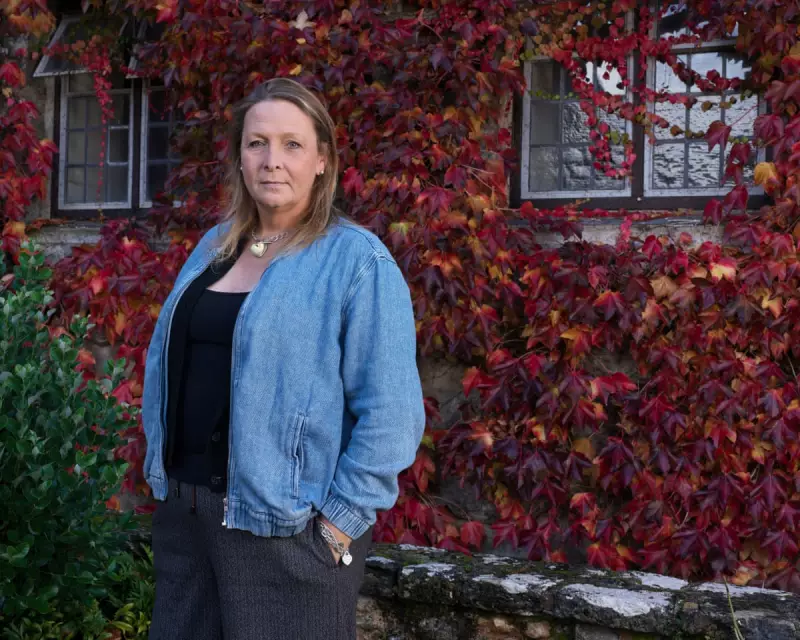
Across the UK and globally, a growing movement of intersex individuals is demanding an end to irreversible genital surgeries performed on children born with variations in their sex characteristics. These campaigners, who have endured profound physical and psychological trauma, argue that such procedures should be delayed until individuals are old enough to provide informed consent.
Lifelong Trauma from Childhood Interventions
Small Luk, a 60-year-old doctor of Chinese medicine from Hong Kong, recounts her devastating experience. Told at age eight that she was a boy with an 'illness', she underwent more than 20 operations attempting genital reconstruction. "I felt so sad and lonely," she says, revealing she came close to suicide twice during this period. Tragically, she later discovered most children who had similar surgeries at her hospital in the 1970s had died by suicide.
Luk wasn't properly diagnosed with partial androgen insensitivity syndrome (PAIS) until she was 36. This meant despite having XY chromosomes, her body didn't fully respond to testosterone. Now living as a woman after further cancer-preventative surgery, she campaigns globally against non-essential childhood surgeries. "I really don't want them to experience the same suffering," she states.
The Damaging Legacy of John Money's Theories
The new documentary 'The Secret of Me' follows Jim Ambrose, born in Louisiana in 1976 with genitals that "fall outside of an arbitrary acceptable norm." Doctors operated on him as an infant, removing his testes and constructing a vagina, advising his parents to raise him as a girl without explanation.
This approach was influenced by psychologist John Money's discredited theories. Money's infamous case study of Canadian twins Bruce and Brian Reimer—where Bruce was raised as Brenda after a circumcision accident—was presented as successful despite clear evidence of Brenda's unhappiness. Both brothers eventually died by suicide in their 30s.
In a powerful moment in the documentary, Richard Carter, the surgeon who operated on Ambrose as a baby, apologises, explaining he had consulted textbooks featuring Money's work.
The Current UK Medical Landscape
While practices have improved, genital reconstruction surgery on children with differences in sex development (DSD) remains legal in most countries, including the UK. An anonymous NHS paediatric doctor confirms the UK now has "a very well run service" where cases are reviewed by specialist panels including paediatric endocrinologists and psychologists.
The medical team would "absolutely err on the side of not performing surgery" and wouldn't operate solely for cosmetic reasons. However, the doctor notes that "ultimately, this is a decision often taken and pushed for by the parents" and argues that completely banning all childhood DSD surgeries could be harmful for some medical conditions.
Holly Greenberry-Pullen, 47, a Liberal Democrat councillor and the UK's only openly intersex candidate in the 2024 general election, underwent what she describes as "horrific mutilating surgeries" as a teenager based on a misdiagnosis. She co-founded the charity Intersex UK and demands: "If there is no life-saving, essential medical urgency and factual diagnosis that means you have to perform an irreversible surgery, then you don't do it."
The Path Forward: Legislation vs. Support
There's ongoing debate about whether the UK should follow countries like Kenya and Germany in implementing legislation. Mitchell Travis, Associate Professor of Law and Social Justice at the University of Leeds, supports waiting until children can consent, suggesting the principle of "Gillick competence" could be applied to determine when a child is mature enough to make such decisions.
However, Jo Williams of dsdfamilies argues that legislation alone isn't the solution, emphasizing that "what is really lacking is the psychological and family support for parents and families who are trying to raise children."
For many intersex individuals like Small Luk, even after choosing a legal gender, identity remains complex. "I don't really feel I'm a female," she explains. "I'm intersex." Their collective experiences highlight the urgent need for medical reform that prioritises bodily autonomy and informed consent over social convenience.




