Gaza Amputees Navigate Physical Recovery and Legal Uncertainty in Egypt
At the height of the Israel-Gaza conflict, a staggering statistic emerged: ten children per day were losing one or both legs. For those who manage to cross the border into Egypt for medical assistance, the journey toward physical recovery is merely the initial step in an ongoing, multifaceted struggle. Emre Çaylak reports from Cairo on the dual challenges faced by Palestinian amputees.
A Mother's Trauma and Loss
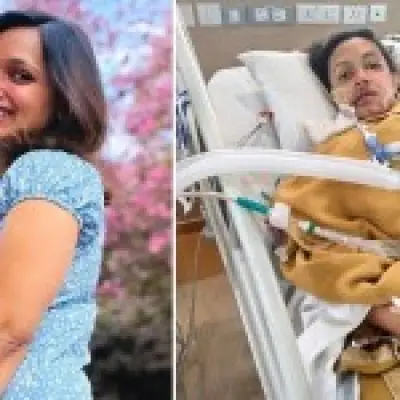
Ola Jamal, a 36-year-old teacher from Gaza, was breastfeeding her two-month-old son, Zain, when a missile struck al-Nasr hospital in November 2023. In the ensuing chaos, shrapnel tore through her arm as she cradled her infant. "I ran with my family to the hospital and stayed there to hide," Jamal recalls at a prosthetic center in Cairo. "We thought it would be safe because it's a children's hospital."
Help was not immediately available amid the screams and confusion. "The blood from my arms was all over his [Zain's] face, also my other three children were sitting next to me," she says. After waiting an hour for an ambulance, Jamal was transported to al-Shifa hospital in Gaza, where her arm had to be amputated. During this traumatic period, she was separated from her children, who were placed with another family for care.

Following a month of initial treatment, Jamal traveled to Egypt with her mother for further rehabilitation. She is now one of over 6,000 adults and children who have undergone amputations since October 2023, according to the World Health Organization and the Palestinian Ministry of Health.
The Long Road to Prosthetic Adaptation
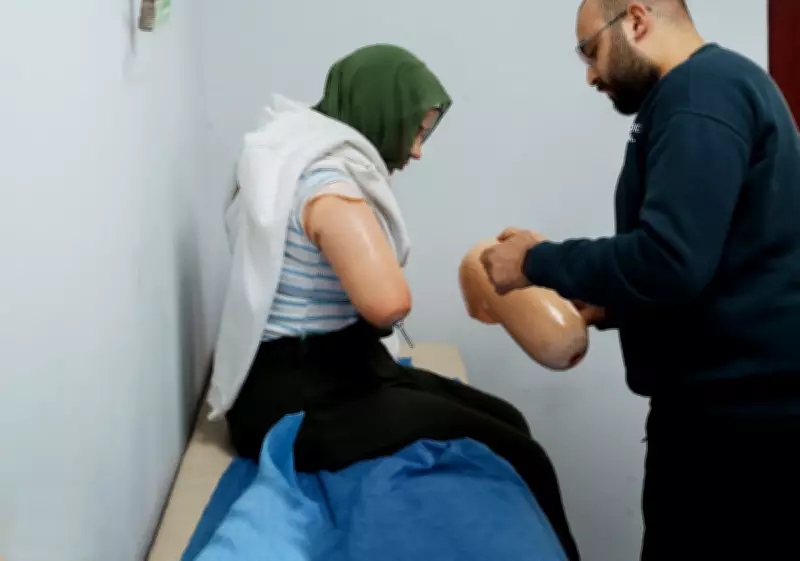
For those who have already lost limbs, physical recovery is only the beginning. Shadi Sharif Ayesh al-Sous, a father of two from Gaza, arrived at a clinic in Cairo in February 2026 to try on his first prosthetic limb. He lost his leg after a missile strike on December 3, 2023, while collecting firewood in the al-Zahra area.
"I went with my relatives to collect firewood when a missile struck us. I lost my leg in the attack," Shadi explains. Initially wounded below the knee, he was taken to the nearest hospital on a mule and told amputation was necessary. He sought to save his leg by traveling to a hospital in Egypt, but by the time he arrived, gangrene had spread, requiring amputation above the knee. Now, he anxiously awaits permission to return home. "I want to return to Gaza because my daughters are there. I have put my name on the list. When I am allowed to leave, I will go back to my daughters."
Legal Limbo and Access to Care
The struggle for Palestinians with life-changing injuries extends beyond medical issues into a complex legal landscape. Egypt serves as the primary border crossing and initial destination for amputees leaving Gaza. However, most Palestinians entering Egypt for treatment find themselves in a state of legal limbo, generally not granted formal residency or refugee status. The United Nations has not assumed responsibility for Palestinians in Egypt.
Without valid residency permits, survivors report being restricted to hostels or shared flats with other families, unable to work, and living under the constant pressure of temporary status. This lack of documentation makes accessing hi-tech, long-term prosthetic care nearly impossible without the support of non-governmental organizations.
Yousef El Deeb, a 25-year-old certified prosthetist at Orthomedics in Cairo, states that his clinic has treated approximately 300 Palestinian patients since October 2023, largely through NGO support such as the Turkish group Sadakataşı. "The finance for prosthetics is not possible for them. NGOs are trying to help these people, which is good," he notes.
Psychological Scars and Ongoing Trauma
For survivors like Jamal, the physical loss is compounded by profound psychological tolls on both themselves and their children. Her son Zain, now over two years old, continues to experience trauma from the incident. "He still wakes up at the same time every night and cries during his sleep. I told this to the doctor and they told me that it was because the body never forgets this kind of trauma," Jamal shares.

Separated from his mother for two years and cared for by seven different women, Zain did not recognize his parents when reunited at age two. "He did not recognise me or his father when he was two years old, as he was just two months old when we were separated," Jamal explains. Despite the relative safety of Cairo, her family remains homesick for a homeland that may no longer exist. "My children tell me every day, Mum, we want to go back to Gaza."
Other patients, like Omar Khaled, 24, who lost his arm in Gaza in 2013, highlight the ongoing need for continuous medical support. "I started experiencing pains in the amputated area and I don't know what it is. It requires follow-up and tests ... and I need continuous monitoring," he says, underscoring the long-term challenges faced by amputees even after initial treatment.
The intersection of medical necessity, legal uncertainty, and psychological trauma creates a multifaceted crisis for Gaza's amputees, one that requires coordinated international response and sustained humanitarian aid to address both immediate and long-term needs.