
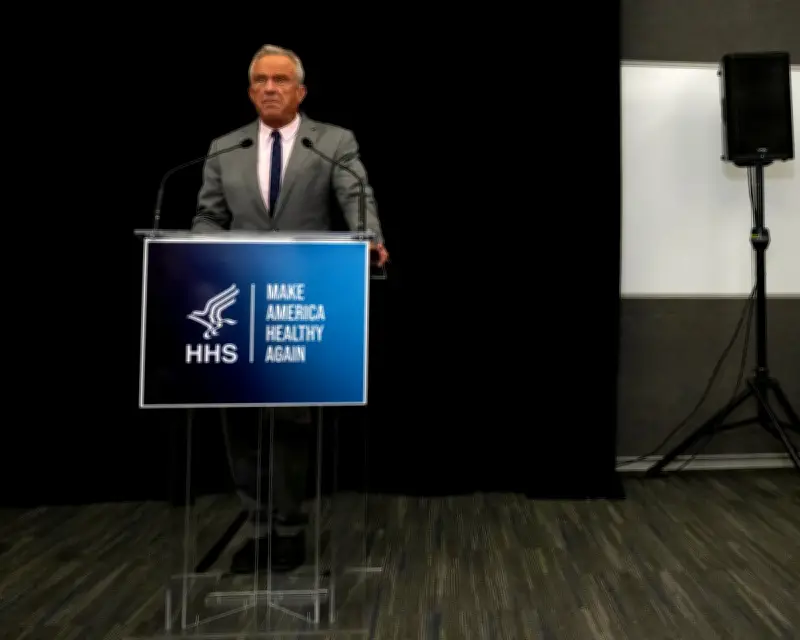
Food manufacturers have discovered a loophole in the U.S. Food and Drug Administration's (FDA) regulatory process that allows them to bypass new safety rules championed by Robert F. Kennedy Jr., the Secretary of Health and Human Services. The loophole, which has been exploited by at least 15 major food companies, involves the use of a 'generally recognized as safe' (GRAS) designation, which permits ingredients to be added to food without FDA pre-market approval.
How the Loophole Works
The GRAS designation is intended for substances that have a long history of safe use or are widely recognized by experts as safe. However, under current regulations, companies can self-affirm GRAS status without notifying the FDA, allowing them to introduce new ingredients into the food supply without any government review. This process has been criticized for years, but the recent push by RFK Jr. to tighten food safety rules has brought it into sharp focus.
According to a report by the Government Accountability Office (GAO), over 1,000 new ingredients have entered the food supply through the self-affirmed GRAS route since 2010, with no notification to the FDA. The report also notes that the FDA only becomes aware of these ingredients if a problem arises, such as consumer complaints or adverse health reports.
RFK Jr.'s Stance
Robert F. Kennedy Jr., known for his advocacy on health and environmental issues, has made food safety a cornerstone of his tenure. In a statement last month, he said, 'The GRAS loophole is a glaring example of regulatory capture. We need to close it to protect American families from harmful additives.' His proposed rule would require all GRAS determinations to be submitted to the FDA for review, a move that has been met with fierce opposition from the food industry.
Industry groups argue that the current system is efficient and safe, and that mandatory FDA review would slow innovation and increase costs. A spokesperson for the Grocery Manufacturers Association said, 'The GRAS process has worked for decades, and there is no evidence that it has led to unsafe products. We oppose any regulation that would burden our members without clear public health benefits.'
Consumer Impact
Consumer advocates are alarmed by the loophole, pointing to studies that link certain food additives to health issues such as obesity, cancer, and behavioral problems in children. A recent study published in the Journal of the American Medical Association found that 80% of processed foods in U.S. supermarkets contain at least one ingredient that has been self-affirmed as GRAS without FDA oversight.
One such ingredient is titanium dioxide, used as a whitening agent in candies and baked goods. The European Union banned its use as a food additive in 2022, citing concerns about genotoxicity, but it remains legal in the U.S. due to its GRAS status. Similarly, certain artificial food colorings have been linked to hyperactivity in children, yet they continue to be used without mandatory federal review.
Industry Pushback
The food industry has launched a lobbying campaign against RFK Jr.'s proposal, arguing that it would disrupt supply chains and lead to higher prices. They have also threatened legal action if the rule is enacted, claiming that it exceeds the FDA's authority. In response, RFK Jr. has vowed to push forward, stating, 'We will not be intimidated by corporate interests. The health of our children is non-negotiable.'
However, some experts believe that the current political climate may hinder progress. With the 2026 midterm elections approaching, lawmakers may be reluctant to take on powerful food industry lobbies. A political analyst at the Brookings Institution noted, 'The food industry has deep pockets and significant influence in Washington. It remains to be seen whether the administration can overcome that.'
What's Next?
The FDA is currently accepting public comments on the proposed rule, with a final decision expected by early 2027. In the meantime, consumer groups are urging the public to read ingredient labels and avoid products with unrecognizable additives. They are also calling for more transparency in the GRAS process, including a public database of all self-affirmed substances.
As the debate continues, one thing is clear: the outcome will have significant implications for the safety of the U.S. food supply and the health of millions of Americans.




