
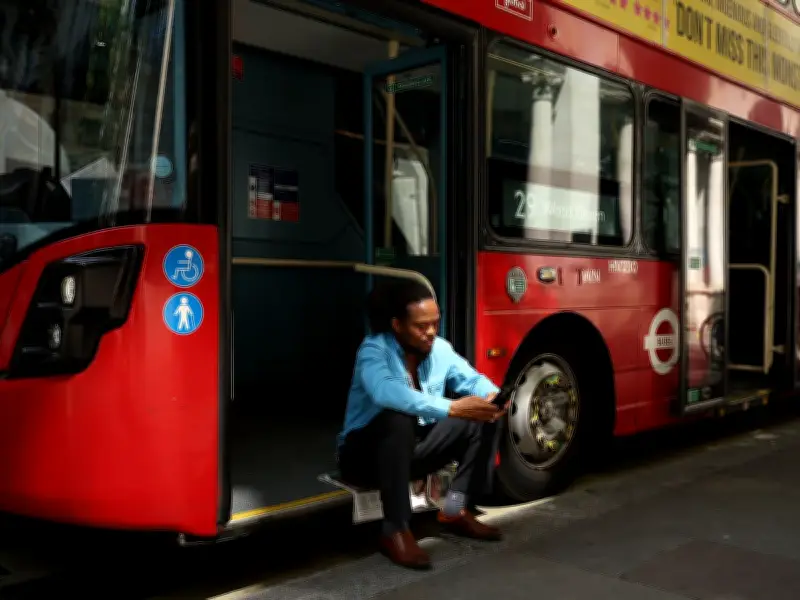
A former London bus driver has spoken out about the crippling fatigue caused by long shifts and inadequate breaks, describing how drivers are "treated like machines" and pushed to the brink of physical collapse. Antonia Pugh-Thomas, 50, quit her role last month after nearly two years behind the wheel, citing unbearable conditions during recent heatwaves and a systemic lack of rest.
Drivers face 30-minute breaks and 13-day stretches
Currently, London bus drivers on local routes (under 50 km) are legally allowed to work 10-hour days, with no weekly or fortnightly limit apart from one day off every two weeks. They can also work up to 130 hours over two weeks, with only a 30-minute break after five and a half hours of driving. In practice, Pugh-Thomas said a typical shift lasting nine to 12 hours includes just one 40-minute break, which can be shortened by traffic.
"That's your one break for you to eat something at the end of each route," she explained. "I might have five to ten minutes to check in with my boss, go to the toilet, maybe have a snack and turn around. But I might not have anything at all. I might arrive 15 minutes late and go straight away." She added that drivers often work up to 13 consecutive days before a day off, a schedule she says is "perfectly normal" but institutionally unsafe.
Health impact and close calls
Pugh-Thomas described her health deteriorating dramatically: "I've never been so ill as I've been since I've been a bus driver because my body, my immune system has just collapsed because of the fatigue." Her experience aligns with a Unite survey earlier this year, which found that 36% of drivers experienced sleepiness while driving two or three times a week, and 48% had a 'close call' due to fatigue in the past 12 months.
Dylan Carroll, founder of London Bus Forums, highlighted the relentless cycle: "The turnaround between getting home for a shift and having to be back can sometimes be as little as nine hours. You can have that for up to 13 days. It's a constant cycle." He criticized TfL's focus on monitoring fatigue rather than preventing it: "The drivers feel that those cameras are there to penalise them, that they will be sanctioned if they yawn. We need to not be fatigued when we go out [in the first place]."
TfL's response and union criticism
TfL has pledged to work with operators to ensure fair schedules and rest breaks, and has instructed operators to install sensors or cameras to detect fatigue signs like eye movements and head position by next year. However, Unite condemned a £500,000 spend on wellbeing initiatives as "insulting," arguing that measures like sleep pods do little to combat the root cause.
Lorna Murphy, TfL's Director of Buses, said: "Bus drivers play a vital role in keeping London moving, and tackling fatigue is essential to the safety and welfare of drivers and everyone using the capital's bus network. We rightly require operators to meet high welfare standards and we're committed to ensuring that all staff have a fair work schedule, with safe vehicles and access to the rest facilities they need." She added that TfL is trialing cutting-edge technology to provide fatigue alerts, alongside improved data gathering to inform evidence-based actions.
Drivers demand systemic change
Pugh-Thomas argues that the problem is profit-driven: "It's all about the profit that the private bus operating companies are making, and they're shrinking the schedules so that they can get as much out of us as possible." She urged TfL and operators to grasp the need for adequate rest, stating, "There seems to be no understanding that this is bound to make the entire system institutionally unsafe."




