
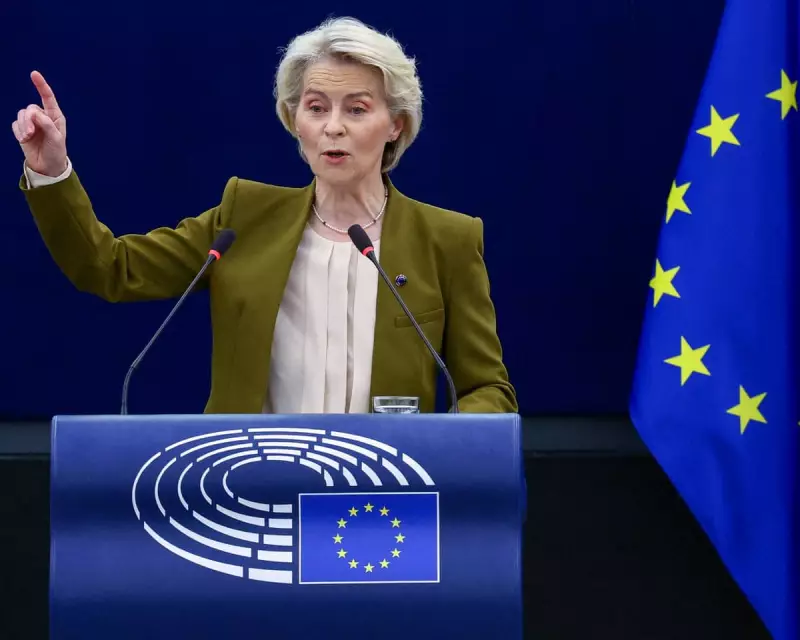
The European Parliament has taken a significant stance on protecting children online, passing a resolution that advocates for a ban on social media access for those under the age of 16.
A Landslide Vote for Child Protection
In a decisive move, Members of the European Parliament (MEPs) approved the resolution with a substantial majority. The vote saw 483 MEPs in favour, with 92 opposed and 86 abstaining. While this resolution is not legally binding, it sends a powerful message and increases pressure for formal European Union legislation. The action stems from escalating concerns about the mental health dangers posed by unrestricted internet access and the specifically engineered addictiveness of many online platforms.
The resolution's architect, Danish Social Democrat MEP Christel Schaldemose, emphasised that safeguarding minors is a societal responsibility. She stated that it is not solely a task for parents and that platforms must be made safe for young users, particularly those above a certain age.
Tackling the 'Tsunami' of Addictive Technology
The push for stricter controls has high-level backing. Ursula von der Leyen, President of the European Commission, has previously spoken out forcefully against the perils of modern tech. She condemned "algorithms that prey on children’s vulnerabilities with the explicit purpose of creating addictions" and described the feeling of powerlessness parents face against a "tsunami of big tech flooding their homes."
Von der Leyen has committed to establishing an expert panel by the end of the year to advise on the best methods for protecting children online. Furthermore, the European Commission is already examining Australia's pioneering policy, which will enact a social media ban for under-16s starting next month.
Specific Measures Against Addictive Design
The parliamentary resolution outlines concrete steps to mitigate harm. It calls for the default disabling of addictive design features on platforms used by minors. These features include:
- Infinite scrolling
- Automatically playing videos
- Excessive push notifications
- Reward systems for repeated site use
The text notes that these "addictive design features are often inherent to the business model of platforms, notably social media." An earlier draft of the report cited a study finding that one in four children and young people exhibited smartphone use patterns that were problematic or dysfunctional, mirroring addictive behaviour.
The proposed age limit for independent social media access is set at 16, though the resolution allows for parental consent to grant access from the age of 13.
Political Tensions and a Defence of Digital Laws
The vote occurred amidst wider political debates concerning EU digital regulation. Just days before, the European Commission announced delays to its Artificial Intelligence Act, aiming to simplify rules for companies. However, the strong cross-party support for the social media resolution indicates a firm commitment to child protection.
The context was further charged by a visit from US Commerce Secretary Howard Lutnick, who urged the EU to adopt a more "balanced" approach to its tech company regulations. In response, French MEP Stéphanie Yon-Courtin issued a powerful statement following the vote, declaring, "Our digital laws are not for sale. We will not back down on children’s protections because a foreign billionaire or big tech tells us to." She asserted that Europe is not a "regulatory colony."
Despite existing protections under the EU's Digital Services Act, which tackles online harms like disinformation and cyberbullying, MEPs believe there are gaps. Schaldemose, who co-authored the Act, acknowledged its strengths but argued that more precise and specific rules are needed, particularly concerning addictive design and harmful 'dark pattern' practices. These dark patterns include manipulative tactics like countdown timers for purchases or persistent requests to enable notifications.
While the resolution faced criticism from Eurosceptic MEPs who argued that such decisions belong with member states and families, the overwhelming majority signalled a clear intent to create a safer digital environment for Europe's youth.




