
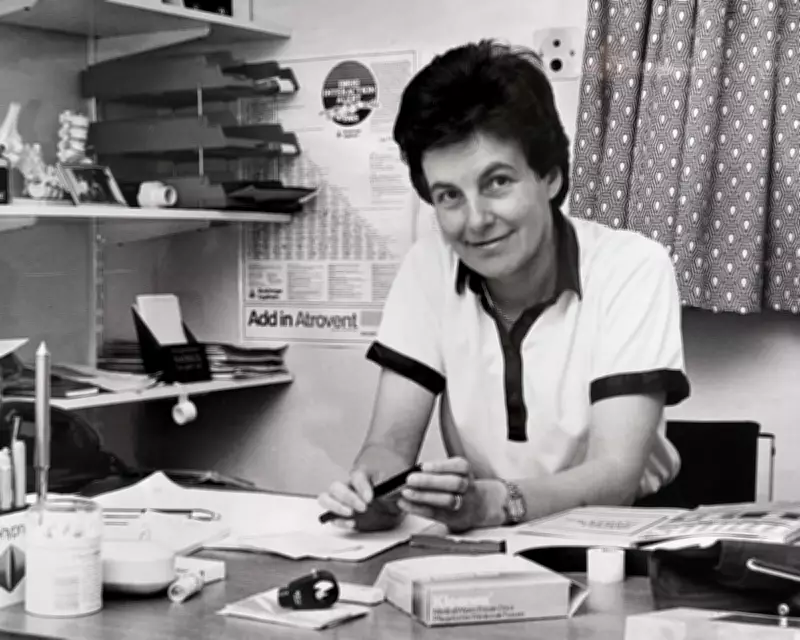
Dorothy Logie: A Legacy of Compassion in Global Health and Palliative Care
Dorothy Logie, a Scottish general practitioner whose unwavering commitment to global health transformed palliative care for communities ravaged by HIV and AIDS, has passed away at the age of 83 due to Alzheimer's disease. Her remarkable journey from Aberdeen to Africa exemplifies a life dedicated to medical advocacy and humanitarian service.
Early Life and Medical Beginnings
Born in Aberdeen, Dorothy was the daughter of Adeline Donald, a housewife, and William Caie, who served as group secretary of Aberdeen General Hospitals and played a pivotal role in establishing the National Health Service in the region. Inspired by her father's work, Dorothy pursued medicine, qualifying with an MBChB from Aberdeen University in 1966. Shortly after, she married fellow doctor Sandy Logie, embarking on a partnership that would shape both their careers.
African Adventures and Medical Research
In 1967, the couple traveled to the Gambia to join the Medical Research Council. While Sandy worked as a medical officer, Dorothy focused on maternal malaria research. This experience ignited a lifelong passion for Africa, even as she returned to Aberdeen upon becoming pregnant with their first child. Later, in 1976, when Sandy was appointed a consultant physician for the Borders Health Board, the family settled in Bowden, and Dorothy became a GP partner in Earlston, balancing a busy practice with raising three children.
Activism and Global Health Advocacy
After recovering from breast cancer at age 38, Dorothy founded Reach for Recovery, a support group for local women facing similar challenges. Her activism expanded through involvement with the Medical Campaign Against Nuclear Weapons, Medact, Christian Aid, and Cafod. Through the Catholic church, she connected with seminarians traveling to Central and South America, leading to a medical study tour to Brazil in 1979. She also joined the Jubilee 2000 campaign for debt cancellation in Latin America and Africa, collaborating with economist Ann Pettifor, and contributed articles on global health to journals like the BMJ.
Continuing Sandy's Legacy in Africa
In 1992, Sandy took early retirement to work at St Francis hospital in Katete, Zambia, during the emerging HIV crisis. Tragically, he contracted HIV from a needlestick injury and died in 2001. Determined to honor his legacy, Dorothy, at age 60, earned an MSc in tropical medicine from Liverpool University. Her research on a morphine public health programme in Uganda led to impactful work with Hospice Uganda, significantly improving access to morphine for palliative care in HIV/AIDS-affected communities. In 2005, she presented her findings at the World Health Assembly in Geneva.
Lasting Contributions and Legacy
Dorothy continued her global health efforts as an assessor for the Diana, Princess of Wales Memorial Fund, authored articles on Rwanda's health system in the Lancet, and lectured widely. She remained deeply involved with St Francis hospital, where the Sandy Logie Clinic was established. In 2002, she founded a charity, now known as the Logie Legacy, supporting health projects in Africa, and in 2008, she encouraged NHS Borders to form a partnership with St Francis hospital that endures today.
Dorothy Logie is survived by her children, Catherine, David, and Andrew, her grandchildren, Skye, Finn, Orla, Alessio, and Reuben, and her sister. Her life stands as a testament to the power of medical compassion across borders, leaving an indelible mark on global health and palliative care.




