
Controversial Vaccine Study Scrapped Following Ethical Outcry
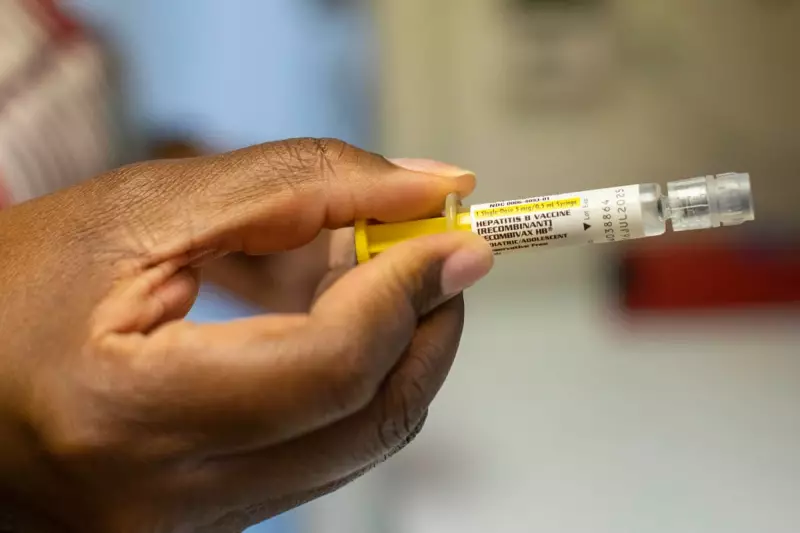
A controversial US-funded medical study, which planned to withhold proven hepatitis B vaccines from thousands of newborns in Guinea-Bissau, has been officially cancelled. The decision was announced by Yap Boum, a senior official at the Africa Centres for Disease Control and Prevention (Africa CDC), during a press conference. The $1.6 million project, funded under the purview of vaccine-sceptic US Health Secretary Robert F Kennedy Jr, drew fierce international condemnation for its ethical design.
"The study has been cancelled," Boum stated unequivocally. He emphasised that while generating evidence for policy is crucial for Africa CDC, it "has to be done within the norm." The trial's fundamental design, which involved not giving a life-saving vaccine to a control group, was identified as the primary ethical challenge leading to its termination.
Exploitation and a 'Damaging' Design
The study, led by Danish researchers Peter Aaby and Christine Stabell Benn, was slated to begin on 5 January. It intended to enrol 14,000 newborns. While 7,000 would receive the hepatitis B vaccine at birth, the other half would not, based on a random coin flip. Researchers argued this would provide the vaccine to 7,000 children who might not otherwise get it due to current access issues in Guinea-Bissau.
Critics lambasted this rationale. Dr Paul Offit, an infectious disease expert at Children's Hospital of Philadelphia, called the cancellation news "extremely heartening." He argued the ethical approach would have been to "take the $1.6m and vaccinate as many children as you can at birth," rather than knowingly depriving thousands. He starkly compared the trial's design to the infamous Tuskegee experiment.
Dr Boghuma Titanji, an assistant professor at Emory University, labelled the study as designed "damaging" and a form of exploitation. "It basically exploits the scarcity of a proven beneficial vaccine in a context where that vaccine is needed," she said, adding that such research "can lead to damage that lasts for several decades."
High Stakes in a Vulnerable Nation
The ethical concerns were magnified by the high disease burden in Guinea-Bissau. Approximately 18% of adults and 11% of infants under one year old have hepatitis B. Infection at a young age drastically increases the risk of lifelong complications, including liver cirrhosis and cancer. The country currently recommends the vaccine at six weeks due to supply constraints, with a plan to move to birth-dose administration in 2027.
Africa CDC officials noted that conversations are ongoing between Guinea-Bissau and US officials on how to ethically conduct future research. An Africa CDC team has been assembled to ensure any future study "will also fit the ethical regulations." This development occurs against a backdrop of political instability in Guinea-Bissau, which underwent a coup in November, leading to a complete turnover of top health officials.
Underlying Scientific Debate and Researcher Links
The Danish researchers based their trial on a controversial hypothesis about "non-specific effects" of vaccines. They theorise that live vaccines can improve overall child health, but that inactivated vaccines like hepatitis B might interfere with this benefit. However, this theory is heavily contested. Other Danish researchers, including Anders Hviid, recently analysed the prior studies and found no statistically significant effects to support the claim.
The researchers' connections have also drawn scrutiny. Both have close ties to Trump-era health officials. Stabell Benn hosted a podcast with Tracy Beth Høeg, now an FDA official known for scrutinising Covid vaccine safety. Furthermore, Robert F Kennedy Jr has publicly praised Aaby's disputed work on the DTP vaccine. Notably, Kennedy did not reference a 2022 follow-up study by the same researchers that found completely different, non-harmful results.
When contacted prior to the cancellation, Aaby dismissed previous ethical reporting as "totally wrong," claiming it contained "virtually no evidence-based content." Neither he nor Stabell Benn responded to inquiries about the project's termination. The US Department of Health and Human Services (HHS) also did not comment on why the trial was cancelled.
For advocates of ethical global health research, the cancellation marks a significant victory. It signals growing institutional strength in Africa to push back against exploitative studies and upholds the principle that medical research must never come at the cost of withholding proven care from vulnerable populations.




