
Children's Play Sand Products Withdrawn Over Asbestos Contamination Fears
The Australian Competition and Consumer Commission (ACCC) has issued an urgent recall notice for several brands of children's coloured sand products amid concerns they may contain dangerous asbestos fibres. The affected products were sold through major Australian retailers including Officeworks, with sales dating back to 2020.
Affected Products and Retailers
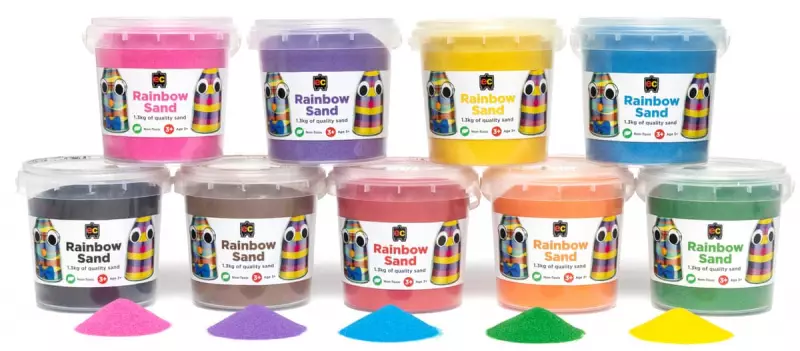
The recall encompasses multiple sand products designed for children's creative play. Specifically included are the 1.3kg versions of Kadink Sand and Educational Colours Rainbow Sand, along with 1kg packages of Creatistics Coloured Sand products.
Officeworks has additionally recalled KD Plain Sand (1.3kg), KD Magic Sand in both natural and purple varieties (2kgs), and Kadink six-piece decorative sand sets. The retailer confirmed that nearly all affected products were manufactured in China and supplied by the art materials company Educational Colours, with the exception of Kadink decorative sand, which came through local wholesaler Shamrock Australia.
Discovery and Response
The potential contamination came to light when Officeworks commissioned laboratory testing on various Kadink sand products from Educational Colours. The accredited laboratory identified microscopic asbestos fibres within the products, prompting immediate action.
Despite the findings, Officeworks stated that an independent risk assessment concluded there was "no identifiable safety hazard" associated with the products. Nevertheless, the company proceeded with what it described as a "precautionary measure" voluntary recall initiated by Educational Colours.
Asbestos has been banned in Australia since 2003 and cannot be imported except under very limited circumstances. The hazardous material is known to cause terminal diseases including mesothelioma and asbestosis.
Safety Advice for Consumers
ACCC deputy chair Catriona Lowe issued clear instructions for consumers who may have purchased any of the recalled products. "Customers with any of the products should stop using them immediately," she stated.
Recommended disposal procedures include placing the sand in a heavy-duty plastic bag, securing it with double tape, and keeping it well away from children. As an additional precaution, consumers should wear disposable gloves and masks while handling the potentially contaminated products.
The regulator emphasised that suppliers are expected to provide appropriate support to consumers, including responding to queries and facilitating refunds.
Expert Reassurance and Concerns
Associate Professor Anthony Linton from the Asbestos and Dust Diseases Research Institute sought to reassure parents, noting that the risk to children who had already used the products is likely to be low. However, he reinforced that the incident highlights why such products require thorough testing.
Barry Robson, president of the Asbestos Diseases Foundation of Australia, expressed concern that these products had "slipped through the cracks" of import controls. He advocated for mandatory testing of all imports that could potentially contain asbestos.
The products were sold nationwide between 2020 and 2025 through various retailers including Educating Kids, Modern Teaching Aids, and Zart Art, in addition to Officeworks. Both the ACCC and Officeworks declined to comment on whether the testing was triggered by a specific parental complaint.




