
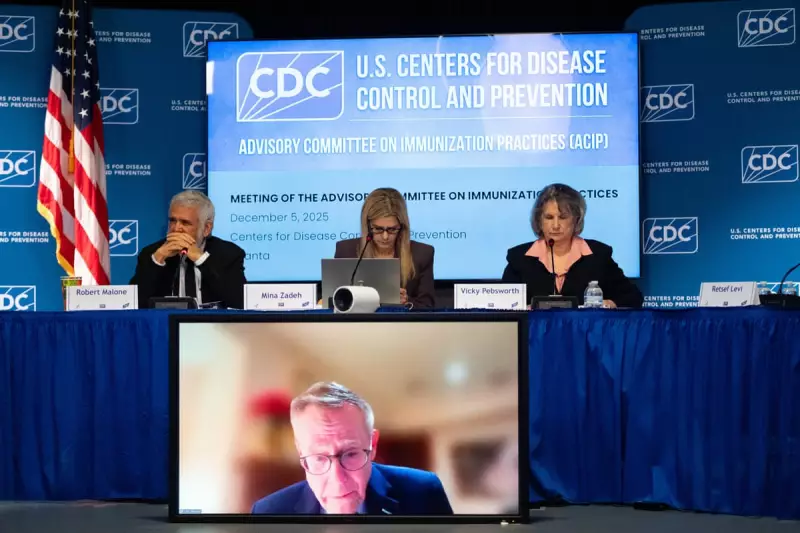
A major shift in US public health policy is on the horizon after a key scientific panel voted to recommend the hepatitis B vaccine for all adults. The Advisory Committee on Immunization Practices (ACIP), which guides the Centers for Disease Control and Prevention (CDC), made the landmark decision on 5 December 2025.
The Vote for Universal Protection
The committee voted 13 to 1 in favour of the new recommendation. This moves away from the previous strategy, which focused vaccination efforts only on adults with specific risk factors for contracting the liver infection. The proposed new guideline advises that all adults aged 19 to 59 years should receive the hepatitis B vaccine if they are not already protected.
Experts argued that the old risk-based approach had failed to curb infection rates effectively. Identifying individuals at risk is often difficult in busy clinical settings, and many people may be unaware they are vulnerable. Dr. Kevin Ault, an ACIP member, highlighted the stark reality, stating the previous policy was "not working" and that infection rates were "not going down".
Addressing a Silent Threat and Health Disparities
Hepatitis B is a significant public health concern, with the CDC estimating between 700,000 and 1.4 million people in the US living with chronic infection. The virus attacks the liver and can lead to severe complications like cirrhosis and liver cancer. A major challenge is its silent nature; many infected individuals show no symptoms for decades.
The push for universal vaccination is also a drive for health equity. Data presented to the panel revealed disproportionate infection rates among certain groups. Black adults are infected at nearly twice the rate of white adults, while Asian American communities also face a higher burden. A universal recommendation removes stigma and ensures broader protection across all communities.
Next Steps and Implementation
The ACIP's vote is a recommendation, not final policy. The CDC director must now officially accept the committee's guidance. Following this, healthcare providers across the country will be expected to implement the new standard. The recommendation does not apply to adults over 60, unless they have known risk factors.
This decision aligns the US with strategies already in place in other countries and follows the successful model of universal childhood hepatitis B vaccination, which began in the 1990s. The move is seen as a crucial step to finally eliminate hepatitis B as a public health threat, protecting future generations from a preventable disease.




