
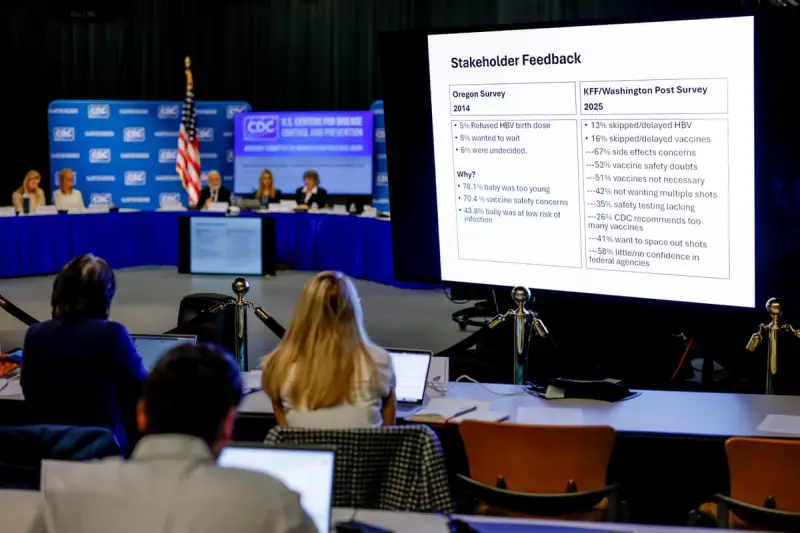
A pivotal vote on whether to restrict access to the hepatitis B vaccine for newborn babies in the United States has been abruptly postponed following a fractious and unprecedented meeting of top government vaccine advisers.
Contentious Meeting Leads to Delay
The advisory committee on immunization practices (ACIP), which counsels the US Centers for Disease Control and Prevention (CDC), met in Atlanta, Georgia on 4 December 2025. The session, which at times turned confrontational, concluded with advisers voting six to three to delay a final decision. The move grants the panel more time to scrutinise the precise wording of a proposal that could limit a shot that has been safely administered for decades.
No new evidence concerning vaccine safety was presented during the discussions. The hepatitis B vaccine has been given to an estimated 1.4 billion people globally over more than 30 years with what experts describe as a stellar safety record. Currently, the CDC recommends the vaccine for all infants at birth.
Political Appointees and Rising Hesitancy
The debate unfolded among a panel of advisers who were all hand-picked by the controversial US Health Secretary, Robert F Kennedy Jr, a prominent anti-vaccine activist. Kennedy has long advocated for delaying the hepatitis B vaccine. Several members of the committee are known for their longstanding opposition to vaccines.
During the meeting, two members pressed for any proof of harm from the vaccine while highlighting its proven benefits. Their comments were reportedly interrupted at points by the meeting's vice-chair. This aborted vote follows a pattern from previous ACIP meetings, where advisers have recommended restricting access to other crucial immunisations, including those for Covid-19, measles, mumps, rubella, and chickenpox.
This trend coincides with a continued decline in childhood immunisation rates across the US, a problem exacerbated by pandemic-related vaccine hesitancy. The country has experienced significant measles outbreaks in 2025.
Leadership Shake-up and Potential Consequences
The ACIP's leadership was overhauled just days before the meeting. The former chair, Martin Kulldorff, moved to the Department of Health and Human Services (HHS). His replacement is Kirk Milhoan, a paediatric cardiologist who has publicly opposed Covid-19 vaccines and promoted the use of the parasite drug ivermectin for the virus.
Public health experts have sounded the alarm, stating that any change to the established infant hepatitis B schedule could have severe and long-lasting repercussions for child health in America. Their concern is backed by data: a 2023 study in the US surgeon general's official journal found a 99% decline in reported acute hepatitis B cases among children, adolescents, and young adults between 1990 and 2019, a direct result of infant immunisation programmes.
The advisory panel's recommendations go to the CDC's acting director, Jim O'Neill. The previous director, Susan Monarez, was removed by the Trump administration in August 2025 after the White House stated she was not aligned with the president's agenda.




