
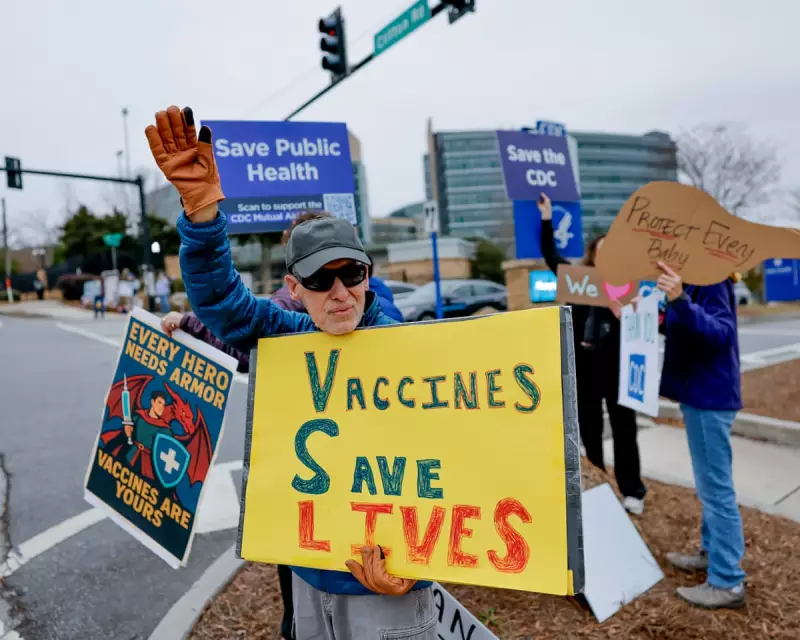
In a dramatic reversal of established medical guidance, the US Centers for Disease Control and Prevention (CDC) has terminated its long-standing recommendation that all newborns receive the hepatitis B vaccine.
A Policy Reversal Decades in the Making
The agency's decision, announced on Tuesday, follows a pivotal vote earlier this month by a vaccine advisory panel appointed by Health Secretary Robert F Kennedy Jr. The new guidance states that the birth dose of the vaccine should now only be administered to infants whose mothers have tested positive for hepatitis B or whose status is unknown.
For parents of newborns with hepatitis B-negative mothers, the CDC will advise consulting a healthcare provider to decide on vaccination. Jim O'Neill, the acting CDC director and deputy health secretary, framed the shift as "restoring the balance of informed consent" for parents whose babies face minimal risk of contracting the virus.
This move marks an abrupt end to 30 years of universal vaccination policy in the United States. Since 1991, health officials have recommended all infants get the hepatitis B vaccine, with the first of three shots given shortly after birth.
Expert Warnings and Potential Consequences
The policy change, which the CDC describes as promoting "individual-based decision making," has been met with significant concern from public health specialists. They fear it will lead to more children contracting a preventable disease and further destabilise childhood immunisation schedules.
Michaela Jackson, programme director of prevention policy at the Hepatitis B Foundation, told The Guardian she anticipates the change will cause confusion. "Parents are not going to know who to trust any longer," she said, adding that it effectively "removes choice by causing barriers to access." CDC recommendations heavily influence US health insurance coverage and guide physicians' vaccine decisions.
Hepatitis B, which spreads through blood and other bodily fluids, can cause serious liver disease. Infections in the US have plummeted by nearly 90% since widespread vaccination began, falling from 9.6 cases per 100,000 people in 1982 to about one per 100,000 in 2018.
Science Ignored and Trust Eroded
Critics argue the new directive disregards scientific evidence. Dr Emily Landon, an infectious diseases expert at the University of Chicago Medicine, stated the advisory panel's role is to help clinicians interpret science for patient care. "This recommendation is ignoring the science," Landon said. "The fact that the acting director of the CDC would sign on to this just continues to reinforce that they are no longer committed to science-based recommendations."
The shift is seen as part of broader changes to US vaccination policy under Kennedy, a longtime vaccine sceptic. Experts warn that without a firm federal stance, more families may opt out of vaccination, potentially exposing more children to the virus and reversing decades of public health progress.




