
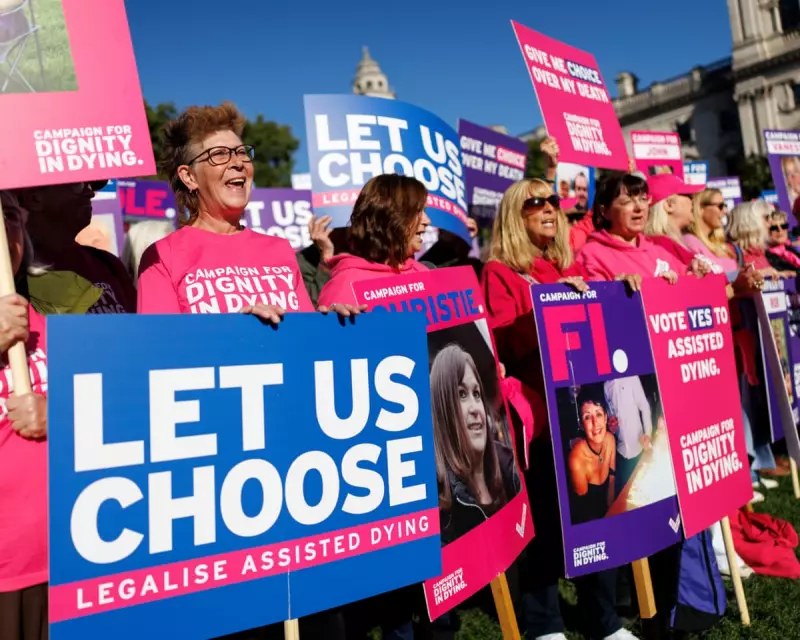
The national conversation around assisted dying has intensified dramatically, with recent parliamentary debates highlighting both the urgent need for better palliative care and the growing demand for end-of-life choice.
Parliamentary Momentum and Investment
Labour peer Dianne Hayter, a member of the special Lords select committee examining the assisted dying bill, revealed that palliative care was discussed more than 280 times throughout nine expert panel sessions. She countered claims that assisted dying debates have sidelined palliative care concerns, stating the opposite effect has occurred.
The government's £100 million investment in hospices, announced last December, would likely not have materialised without the terminally ill adults bill, according to Hospice UK CEO Toby Porter. Health minister Stephen Kinnock similarly acknowledged the bill has acted as a catalyst for long-overdue improvements in palliative care, with further announcements expected in coming weeks.
Medical Professionals Voice Concerns
Retired palliative care consultant Dr David Jeffrey applauded recent exposures of what he called scandalous neglect of dying patients. He emphasised that while most people wish to die at home, only a minority achieve this goal due to inadequate out-of-hours support.
Research shows a direct correlation between GP home visits and the likelihood of dying at home, yet current systems often prevent the continuity of care that patients desperately need from familiar doctors.
Dr John Smith, another retired palliative medicine consultant, described the current hospice system as a postcode lottery, with bed availability ranging dramatically from one per 2,900 people to one per 54,300 across different regions. He questioned whether the heavy reliance on charitable funding, while once wonderful, now hinders the development of a unified, properly funded service comparable to obstetric care.
Personal Testimonies Highlight Limitations
Rebecca Gillanders shared the harrowing experience of watching her mother die from metastatic brain cancer in 2024. Despite what professionals described as excellent palliative support, her mother suffered ten days of profound distress, repeatedly begging to be allowed to die.
Even the best palliative care has limits, Gillanders wrote, emphasising that assisted dying wouldn't replace care but would honour patient autonomy when care can no longer alleviate suffering. Her testimony underscores why many believe both care and choice are necessary.
The assisted dying debate continues to evolve in Parliament, driven by both medical expertise and personal experiences that highlight the complex realities of end-of-life care in modern Britain.




