Every day, healthcare professionals perform remarkable acts of kindness that only they and their recipients know of. A recent story from a general practice in Australia illustrates this beautifully.
A Surprise Visit Reveals a Hidden Act of Kindness
Passing through her neighbourhood, I decided to surprise a friend at her general practice. The clinic is constantly in demand and always overbooked. However, when I arrived, the receptionist told me the doctor had just stepped out. I was surprised—it was mid-morning, the waiting room was packed, and as far as I knew, she didn't do house calls. They couldn't (or wouldn't) say where she had gone. I left, a tad annoyed. Later, I was relieved I had kept my mouth shut.
The Patient's Story
Shortly before my visit, a man had walked in. From their 20-year association, my friend knew him to be diabetic. He had caught the bus, but neither the walk from the bus stop nor his blood sugar explained his elevated heart rate. "Why is your heart rate so high?" she wondered while examining him. "I haven't eaten properly for two weeks," he said. She knew that he shared space with a boarder. It emerged that the boarder had fallen on hard times and couldn't pay rent; consequently, the patient couldn't afford groceries. Feeling increasingly weak, he was seeking a reason. But his doctor already knew the diagnosis: hunger.

The Doctor's Response
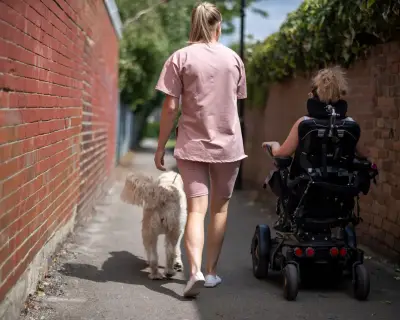
So she said: "It's almost time for my walk, come with me." Their first stop was the cafe. Noting the queue for service, she asked him to duck into the supermarket with her. He asked what she needed. "Lozenges for my scratchy throat," she said. Inside, she picked a basket and quietly handed it to him. Hunger trumps hesitation: soon he had collected milk, eggs, and sausages; she casually replaced each with the family size version. In the vegetable section, they bickered like an old couple. She said buy lettuce, he scoffed. "Some fruit at least," she coaxed. He conceded and picked up bananas. At the checkout, he implored, "Let me get your lozenges." But there wasn't enough change in his pockets. She pretended not to notice and swiped her card.
A Meal and a Promise
Arms full of groceries, they returned to the cafe, where she ordered him a toasted sandwich with the works. His eyes gleamed. "What coffee would you like?" she smiled. In a coffee-obsessed city, it had been a long time since someone asked. Seated in the cafe, eyeing a hot meal and fresh coffee, he felt self-conscious. This reversal of fortune had happened in the course of his 20-minute appointment. "Eat at your own pace, and then catch the bus home," my friend said lightly. "And you?" he asked. "I'll get back to work." His eyes brimming, he said: "Doctor, I will pay you back one day." "I know you'll pay it forward," she replied. "Is there anything I can do?" "A Google review!" she jested. "We are due for accreditation."
Reflections on Empathy in Medicine
A few days later, my friend mentioned the encounter to me when contrasting the privileges we take for granted against the deprivation of the people we treat. This got me thinking about all the patients I see—often socioeconomically disadvantaged and mentally ill, yes, but just as often having fallen through gaps from a previous place of safety. I have felt for their situation and offered kind words but can't readily recall a spontaneous kindness so boldly practical. I feel proud of my friend but can't help wondering if I have fallen short of my own expectations.
I marvel how, in a split second, she went from doctor to fellow human. How she stuck with her gut response, backed empathy over "true" doctoring, and found the self-assurance to walk out in scrubs with a patient and haul back groceries. Theodore Roosevelt observed that in any moment of decision, the best thing you can do is the right thing. But if you can't do it for everyone, should you do it for anyone? So, as I listen to her, my mind is turning over the question whether I would have found the courage to do what my friend did.
The Ethical Question
Medicine is full of comparisons. Unexpectedly, this one gets under my skin. Of course, my question to her came out all wrong: "Did you wonder about the ethics of it all?" "What, the ethics of buying food for a hungry man?" Touche.

The Unseen Kindness of Doctors
No day passes without doctors being scorned in the media. General practitioners are put under pressure by the government and community for not bulk-billing enough, not seeing enough patients, not doing enough for patients. Specialists are under attack for earning too much and caring too little. Some criticism is fair and doctors should heed it. But underneath the bubble and froth of medicine runs a deep current of altruism and empathy for the human condition, which represents the best of what it takes to be a doctor. It is inspiring yet rarely acknowledged—but I hope it never dies out.
My friend will hasten to tell you she is not alone. Every day, healthcare professionals perform remarkable acts of kindness that only they and their recipients know. In fact, it was the practice nurse who first unearthed the patient's hunger, but her message to the doctor arrived late. My friend didn't tell anyone else about her day, which is when I decided that these stories deserve to be told. In case you are wondering about the Google review, the patient gave her five stars. He thanked his doctor for saving him again. But what made her exceptional, he said, was her understanding that kindness comes in many forms.