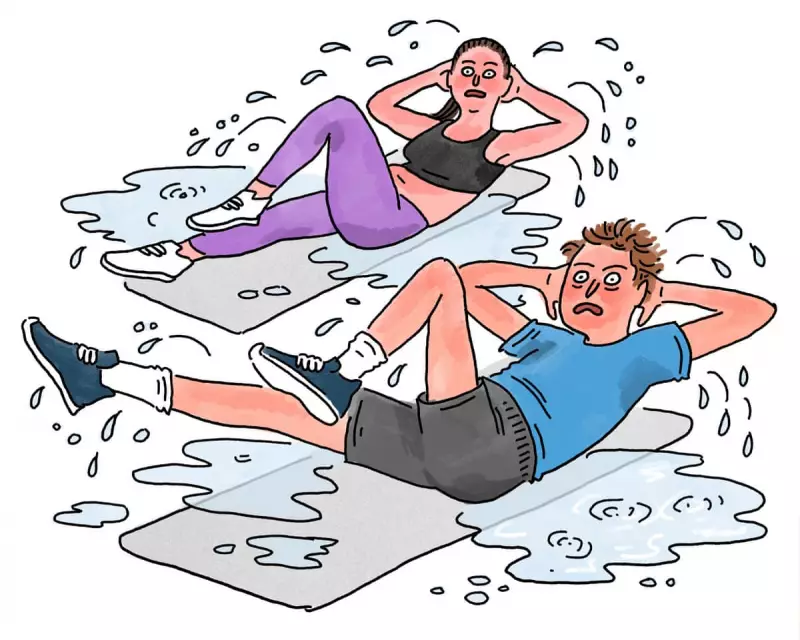
If you've ever judged a workout's effectiveness by how drenched your gym clothes are, you might be surprised to learn that sweat isn't the reliable measure of effort we often assume. According to Adam Collins, a leading researcher from the University of Bath's Centre for Nutrition, Exercise and Metabolism, the connection between sweat and workout intensity is more complex than it appears.
The Science Behind Sweating
Sweating serves as your body's natural cooling system, a process known as thermoregulation. When your body temperature rises during physical activity, your brain signals sweat production to help cool you down. As Collins explains, "When we exercise, the energy we produce to fuel that activity creates heat as a byproduct." This means that more intense workouts typically generate more heat, leading to increased sweating as your body works to maintain its optimal temperature.
Factors That Influence Sweat Production
However, Collins emphasises that sweat levels can be misleading because numerous factors beyond exercise intensity affect how much you perspire. Environmental conditions play a significant role – humidity prevents sweat from evaporating efficiently, making you feel sweatier even during lighter workouts. "If you went on an easy run on a hot, humid day, you'd probably sweat a lot," Collins notes. "But on a cold day, you might run at a much higher intensity and barely sweat at all."
Individual characteristics also dramatically impact sweat production. Your fitness level, age, sex, body size, and even how acclimatised you are to your current climate all contribute to how much you sweat. Clothing choices can further influence your perspiration levels, making direct comparisons between individuals unreliable.
Better Ways to Measure Workout Intensity
So if sweat isn't an accurate gauge of exercise effort, what should you use instead? Collins recommends several more reliable indicators. Your breathing rate, perceived effort level, and heart rate provide much better measurements of workout intensity. Modern technology like chest strap monitors or smart watches can help track these metrics accurately, giving you a clearer picture of your actual exertion.
While sweat might not tell you how hard you've worked, it does serve an important purpose. "Sweat is a good marker of dehydration," says Collins. If you finish your exercise session thoroughly soaked, this signals that you need to replenish fluids immediately. So instead of using sweat to measure workout success, use it as your reminder to hydrate properly after physical activity.