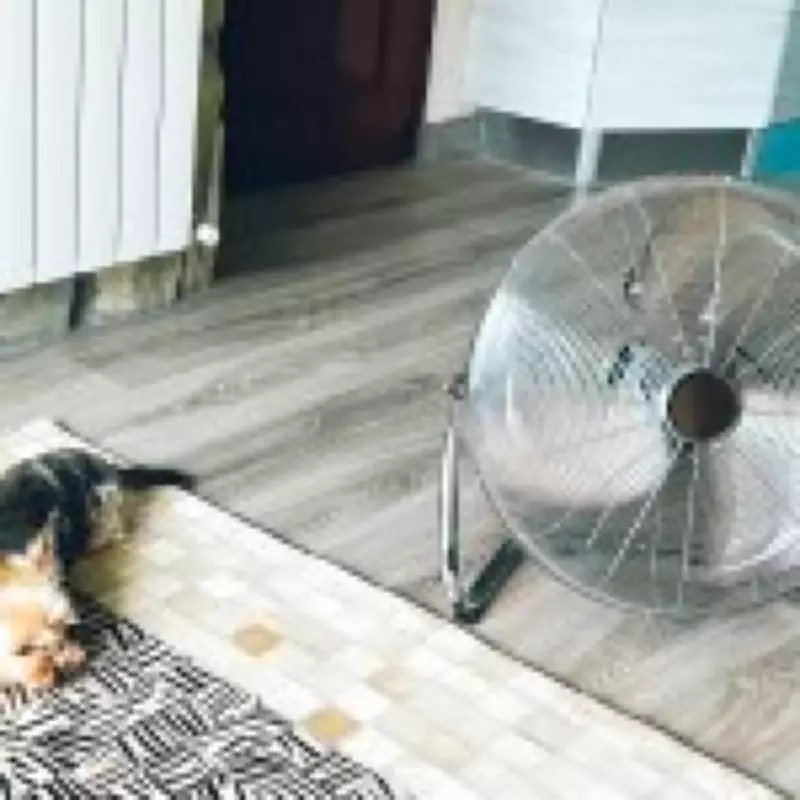
Unless you are one of the fortunate Brits who have air conditioning, you have probably grown quite attached to your fan over the past week. With temperatures topping 30 degrees Celsius, households across the UK are making the most of these appliances to make stuffy homes feel more bearable. But while most of us simply switch them on and hope for the best, experts say there is a good chance you are not actually using your fan in the most effective way. From where you position it to which settings you choose, a few simple changes could make a surprisingly big difference in keeping your home cool during hot weather — and might even help you sleep better at night too.
Reposition Your Fan for Maximum Effect
Many people try to cool themselves down by pointing the fan directly at themselves all day, but according to Matt Ladell, brand manager at Duux, that is not actually the most effective way to cool a room. 'While this can feel instantly refreshing, it does not help cool the room itself,' he explains. Instead, positioning your fan near a window can significantly improve its effectiveness. In the evening, when outdoor temperatures drop, a fan can be used to draw cooler air into the room. Alternatively, turning it to face outward can help push warm, stale air outside. If you have two fans, maximise the benefit by placing one near a window to draw cooler air in and another facing outward on the opposite side of the room, creating a cross-breeze that mimics natural ventilation.
Because sleeping with a fan blowing in your face all night can cause blocked noses, dry throats and lighter sleep, positioning is especially important at bedtime. Natalie Pennicotte-Collier, sleep therapist and resident sleep expert at MattressNextDay, says: 'Many of the clients who come to me struggling with early morning waking, convinced it is stress or anxiety, are actually experiencing the overnight effect of airway dryness from fan exposure. Point the fan towards the ceiling or a wall, not directly at your face or body, to reduce airway drying while still cooling the room.'
Keep Hot Air Out
Changing your usage based on timing is key, as fans work best when the air outside is cooler than the air indoors. So, although your natural instinct is to increase ventilation during the hottest part of the day, Matt argues 'it is often better to keep windows and blinds closed and use your fan to circulate cooler indoor air instead.'
Check Your Fan Settings
Modern fans often come with far more features than people actually use, but making the most of those settings can have a noticeable impact on comfort levels. 'Higher speeds can be used to quickly move hot air out of a room, while lower settings help maintain a comfortable environment once the temperature stabilises,' says Matt. 'Oscillation is another key feature that often goes underused. By sweeping air across a wider area, it helps distribute airflow evenly rather than concentrating it in one spot – particularly useful in larger or shared spaces.' Some fans also have settings like sleep modes and timers that help optimise your restful environment. Matt adds: 'Stronger airflow can be useful when first going to bed, while softer settings are often more comfortable as temperatures drop overnight.'
Use the Ice Bowl Trick
Although fans do not actively lower the temperature of a room, there are small adjustments that can make them feel more effective when all else fails. 'Placing a bowl of ice or cold water in front of a fan can help create a cooler breeze as air passes over it,' says Matt. 'Similarly, a damp cloth positioned in the airflow can produce a subtle evaporative cooling effect.' It is not quite air conditioning, but it does the trick when all else fails.
Keep Your Fan Clean
Matt explains: 'Maintenance is often overlooked, but dust build-up on blades and grilles can reduce performance and circulate particles back into the air. Regular cleaning helps keep your fan working efficiently.' Natalie notes that this is especially important for people with hay fever, dust allergies or asthma, to avoid 'essentially circulating their primary triggers continuously in a closed bedroom for seven or eight hours.' 'Clean your fan thoroughly and regularly,' she adds. 'The blades are one of the most effective dust collectors in your bedroom.'