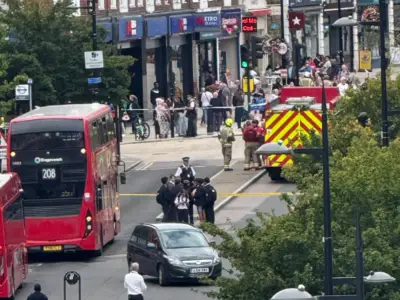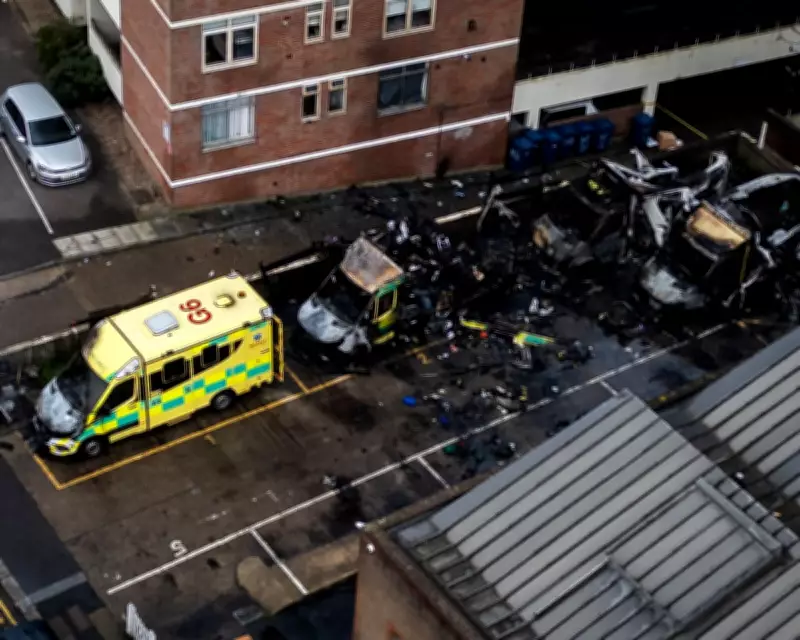
In a shocking incident that has rattled Jewish communities across the UK, four Hatzola ambulances were deliberately set ablaze by arsonists in Golders Green during the early hours of March 23, 2026. Despite the destruction, volunteer paramedics from the charity ambulance service have defiantly continued responding to emergency callouts, underscoring their commitment to serving all residents regardless of background.
A Community in Shock but Determined to Serve
The targeted attack on Hatzola's emergency vehicles has left Jewish neighborhoods reeling, with concerns about rising antisemitism intensifying. However, volunteers and community leaders have emphasized that the service's fundamental humanitarian principles remain unshaken. "It's not just a Jewish service. If a call comes from within the area, they will come to your aid, whoever you are. There's no cost to anyone and even on the sabbath, they'll go to any case," explained Andrew Walters, an Orthodox Jewish councillor in Greater Manchester where another busy Hatzola operation functions.
Volunteer Paramedics: Everyday Heroes with Day Jobs
Yossi Richman, a governance lead at Hatzola Golders Green who also works as a trained volunteer paramedic, described the unique nature of the service. "Accountants, plumbers, surveyors – whatever it might be, they've all got day jobs. Everyone has got kits in their car, everyone responds from wherever they are," he said, highlighting how volunteers carry emergency equipment in their personal vehicles ready to spring into action.

The dispatchers themselves are volunteers – men and women who might be cooking supper at home when the emergency phone rings. They quickly gather details, ask crucial questions, and dispatch the nearest available responders to emergencies within their tight 4.5-kilometer radius, ensuring remarkably quick response times for residents in the vicinity.
Historical Roots and UK Expansion
Hatzola ambulances first emerged in New York during the 1960s, born from America's private healthcare culture. The concept arrived in north London during the late 1970s following tragic deaths of Jewish people waiting for ambulances. Today, alongside London and Manchester operations, services exist in Canvey Island in Essex, Hertfordshire, and Gateshead in northeast England – all key centers of UK Orthodox Jewish life.
These parallel charity services, many operating 24 hours daily throughout the week, have become valued partners in easing pressure on NHS ambulance services. Operating as autonomous regional charities, they've developed formal liaisons with statutory bodies like those Walters maintains in Greater Manchester.
Beyond Religious Boundaries: Serving All in Need
Rabbi Levi Schapiro of the Jewish Community Council in Stamford Hill, London, emphasized the inclusive nature of Hatzola's mission. "If you go on any typical street, you'll have a synagogue, you'll have a church, you'll have a mosque, you'll have a Polish community center. This is who we are as a community. Our community is based on charity – and one of the most fundamental parts is Hatzola – which means 'rescue' in Hebrew."
Richman recalled a particularly poignant emergency response that demonstrated this universal commitment. "I went to a nine-year-old in cardiac arrest, who wasn't a member of our community, who collapsed playing on the street with friends. He had a heart defect he didn't know about, had it operated on, and was absolutely fine afterwards. We've been to meet him since."
Political Context and Community Resilience
The attack occurs against a backdrop of heightened tensions, with Schapiro noting that "the Middle East conflict has contributed to a lot of antisemitism." He added that "it's Keir Starmer's poor luck it's happening while he's in office. But right now nobody in the community is happy with him."
Community anxiety is palpable, with Schapiro describing how "my phone has been exploding from members of the community asking: 'What's the long-term plan? Are we safe? Can we go out? Who is next?'" Walters in Greater Manchester acknowledged that "it would be naive to think the community's nerves would not be tested" but expressed confidence that "our resilience will pull us through."

Operational Impact and Continued Service
Despite losing four ambulances in the arson attack, Hatzola's Golders Green service continues operating with its remaining fleet, which includes blue-lighted ambulances equipped with latest medical technology, fast response cars, and volunteers' personal vehicles. The service typically handles approximately twenty emergency calls daily.
Remarkably, Richman revealed that "we responded to calls while our ambulances were on fire" on the morning of the attack. "Today, it's business as usual," he stated firmly. "It gives us an ability to be grateful for everything we have, when other people need help in their time of need, you can drop everything and run. It's a privilege."
The arsonists may have targeted vehicles, but they failed to extinguish the spirit of service that defines Hatzola's volunteers – ordinary people with extraordinary commitment to rescuing anyone in need within their communities.