A fierce political dispute has erupted in Victoria over funding for the Country Fire Authority (CFA), even as its crews battle devastating bushfires across the state. The opposition and firefighters' unions have accused the Labor government of cutting resources, while Premier Jacinta Allan insists support has grown, labelling the criticism "misinformation and conspiracy theories." The release of the CFA's delayed annual report has now thrown hard numbers into the heated debate.
What the CFA's Annual Report Reveals
The CFA's 2024-25 annual report, tabled in parliament almost three months late, shows the volunteer-based service received $361.3 million in government grants. This figure marks the highest level of funding in five years, representing an increase of $21.8 million from the previous financial year. The government maintains that annual budgets naturally fluctuate based on assessed fire risk.
Total income for the CFA also rose, from $451 million in 2023-24 to $477.4 million in 2024-25, while its asset base grew from $2.12 billion to $2.23 billion. However, the service recorded a $50.5 million deficit, an improvement on the previous year's $75.5 million shortfall but a stark contrast to the $357.7 million surplus seen in 2022-23.

CFA Chief Executive Greg Leach noted in the report's foreword the ongoing challenge of achieving "financial sustainability" and providing the fleet and assets needed to support volunteers. It is crucial to note that these figures do not include additional funds provided by the government in November following a dire seasonal bushfire outlook; that top-up will appear in next year's report.
Behind the Funding Row and Fleet Concerns
Despite the reported funding increase, the opposition is not conceding. Emergency services spokesperson Danny O'Brien argues that when adjusted for inflation, the CFA has effectively suffered a $55 million "cut" in real terms since 2020. This claim keeps the political argument alive, ensuring the dispute is far from over.
Beyond the raw budget numbers, the report highlights other pressures. Volunteer numbers saw a slight dip, with 28,753 in operational roles compared to 28,906 the previous year, against a target of 35,000-37,400. CFA Chief Officer Jason Heffernan acknowledged that "volunteer recruitment and retention remain a challenge."
Furthermore, United Firefighters Union secretary Peter Marshall has raised alarms about an ageing fleet, claiming 800 CFA tankers are out-of-date, with 230 over 31 years old. Stephen McDonald from Volunteer Fire Brigades Victoria echoed that the fleet is "one part – albeit a highly visible part, of a much bigger problem," calling for non-partisan investment in equipment, facilities, and support systems.
Delay and Accusations
The controversy was exacerbated by the late tabling of the annual report. Government agencies are required to submit reports by 31 October. Premier Allan initially blamed the Victorian Auditor-General's Office (VAGO) for the delay, but VAGO issued a rare public rebuttal, stating it approved the report on 11 November. Emergency Services Minister Vicki Ward stated she received the report on 18 December and tabled it earlier than planned due to the public funding stoush.
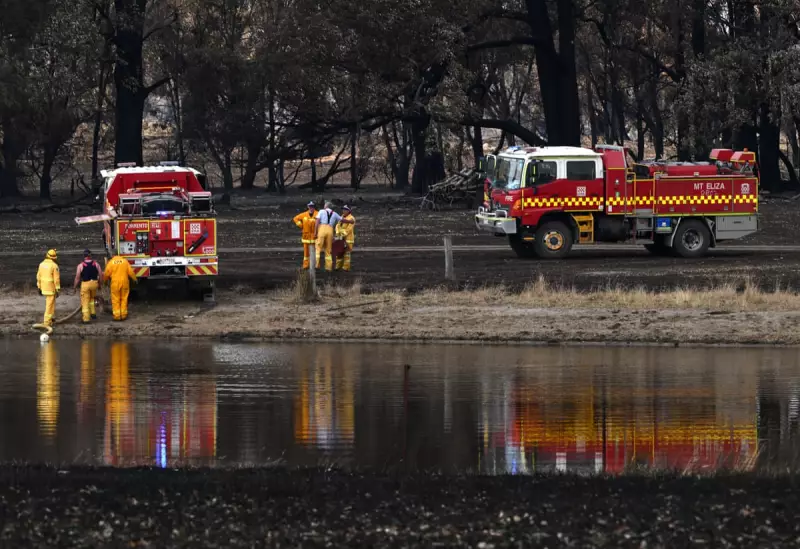
As communities in central Victoria, like Ruffy, face the immediate threat of bushfires, the political battle over resources continues to simmer. The annual report provides official data, but its interpretation remains fiercely contested, leaving the core issue of the CFA's long-term resourcing and capability unresolved in the face of a worsening fire season.