
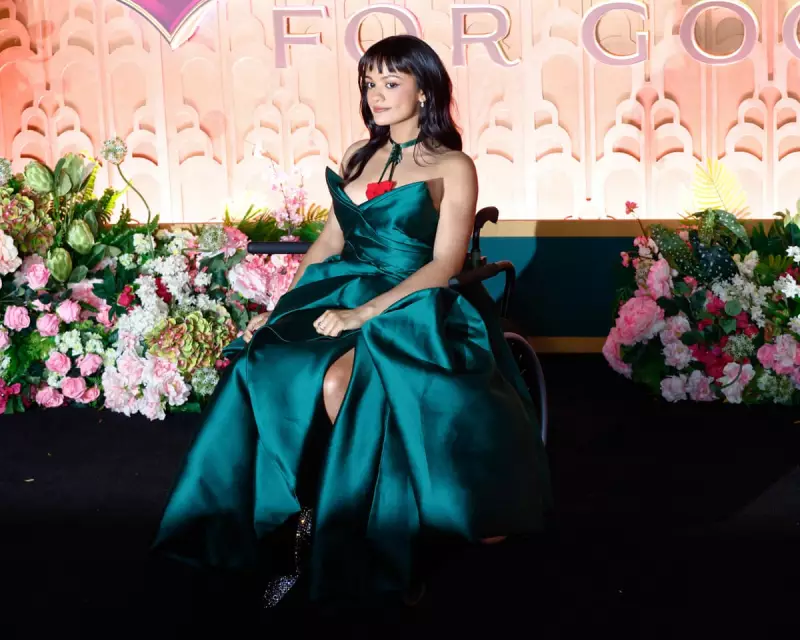
The release of Wicked: For Good has ignited a crucial conversation about authentic representation in the entertainment industry, marking a significant step forward for disabled actors.
A History of Underrepresentation
For decades, the film and television industries have consistently failed to represent disabled people authentically. While progress has been made in diversifying race, gender, and sexuality on screen, disability remains shockingly overlooked. The problem is twofold: disabled actors are frequently overlooked for roles, and able-bodied actors are often praised and awarded for 'cripping up'—playing disabled characters. In nearly a century, only three disabled actors have won an Oscar, compared to 25 able-bodied actors who have won for portraying disabled characters.
Wicked: A New Chapter for Nessa
The arrival of the Wicked film adaptation is challenging this status quo. The story, a prequel to The Wizard of Oz, celebrates difference through the journey of the green-skinned witch Elphaba. However, since the musical's 2003 debut, the role of her wheelchair-using sister, Nessarose, was always played by able-bodied actors. This changed last year when Marissa Bode became the first wheelchair-using actor to portray Nessa in the first part of the film. The young Nessa is also played by a wheelchair user.
The films have gone further by giving the character greater complexity and agency, amending a problematic scene that previously suggested she needed to be 'fixed.' Despite this progress, actor Marissa Bode has had to challenge gross and harmful online comments about her character, showing that audience attitudes also need to evolve.
The Industry's Accessibility Problem
The core of the issue, however, lies with the industry itself. A recent study revealed that only 21% of disabled characters on US TV between 2016 and 2023 were played by disabled actors. In his powerful 2021 MacTaggart lecture, screenwriter Jack Thorne highlighted the same problem in British television, stating that not only do the stories need to change, but the studios themselves, many of which remain physically inaccessible.
It is a profound irony that an industry capable of creating talking animals and emerald cities often considers the logistics of accommodating a wheelchair user—such as providing accessible toilets—as too tricky or expensive. This systemic failure extends to storytelling, where physical differences are still used to signify villainy, as seen in the 2020 adaptation of The Witches and the persistent use of facial disfigurement in the James Bond franchise.
Blueprints for a Better Future
There are, however, positive examples proving change is possible. The BBC's adaptation of Enid Blyton's Malory Towers features a genuinely diverse cast, including actors with visible differences like Beau Bradfield and model Ellie Goldstein, who has Down's syndrome, without making their disabilities a plot point. Ellie Goldstein's appearance on Strictly Come Dancing this year, to the delight of her established young fanbase, demonstrates the powerful normalising effect of mainstream visibility.
Amid a troubling backlash against inclusivity, with some critics dismissively labelling Wicked's Shiz University as a woke Hogwarts, authentic casting has never been more vital. Director Jon M. Chu has redefined the great American fairytale, and the Broadway production of Wicked has already followed the film's lead by casting its first ambulatory wheelchair user as Nessarose. As Marissa Bode advocates, the next step is to hire disabled people as writers and crew members, ensuring the narrative changes from the inside out. In the spirit of Elphaba's iconic song, it is about ensuring that everyone truly gets the chance to fly.




