
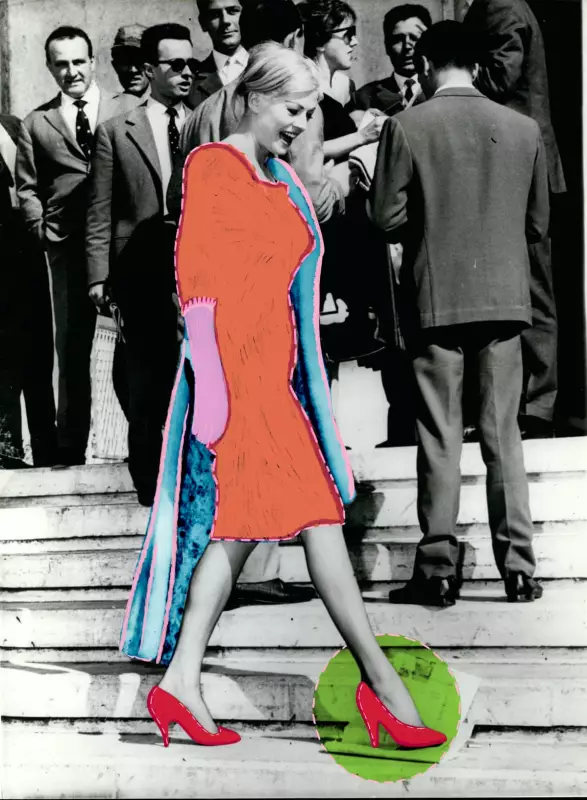
It was an ordinary Thursday evening in London when a simple act of extraordinary kindness prevented what could have been a serious accident. Emma Brockes, a journalist navigating the city streets in her high heels, found herself in a precarious situation that would highlight the profound impact of human compassion in urban life.
The Moment Everything Nearly Went Wrong
Brockes was descending a steep flight of stairs at a London Underground station, her attention divided between maintaining balance in her heels and managing her belongings. The combination of smooth-soled shoes and worn steps created a perfect storm for disaster. As she felt her footing give way, time seemed to slow, and the realization of an impending fall dawned.
"I was wearing a particular pair of high heels that had smooth soles," Brockes recalls. "The stairs were the worn, shiny type that offer little purchase at the best of times." The physics were working against her - the angle of descent, the inadequate friction, and the height of her heels conspired to create a dangerous situation.
The Unexpected Rescue
Just as gravity threatened to take control, a stranger's hand reached out and steadied her. A woman coming up the stairs had noticed Brockes's precarious position and acted without hesitation. This simple, spontaneous act of awareness and kindness prevented what could have been a nasty fall down concrete steps.
"She didn't say anything remarkable," Brockes notes. "Just 'I've got you' or words to that effect." The encounter lasted mere seconds, but the impact would linger far longer. The stranger continued on her way, disappearing into the crowd, never knowing how significant her intervention had been.
The Ripple Effect of Compassion
This incident, occurring in November 2024, sparked deeper reflection about the nature of urban living and human connection. In a city of millions where people often avoid eye contact, this moment stood out as a powerful exception. Brockes found herself contemplating how such small acts of kindness can transform someone's day - or prevent physical injury.
The experience highlighted several important aspects of urban accessibility and design. Footwear choices, stair conditions, and public infrastructure all play crucial roles in pedestrian safety. Yet beyond the physical considerations, the encounter demonstrated how human awareness and willingness to act can overcome environmental challenges.
Brockes's story resonates particularly in London, where rushed commuters and crowded spaces often lead to decreased social interaction. The incident serves as a reminder that beneath the surface of urban anonymity lies the potential for genuine human connection and care.
Since that day, Brockes has paid more attention to others in potentially tricky situations, whether someone is struggling with heavy bags, navigating uneven pavement, or managing children while using public transport. The kindness she received has created a chain reaction of increased awareness.
This story isn't just about avoiding a fall in high heels - it's about how we navigate shared spaces and watch out for one another. In cities where individual journeys often take precedence, the simple act of noticing someone else's struggle and offering assistance represents a powerful form of community building.
As Brockes concludes, such moments remind us that urban living doesn't have to mean isolation. The kindness of strangers can transform concrete and steel environments into communities where people still look out for one another, one steadying hand at a time.




