
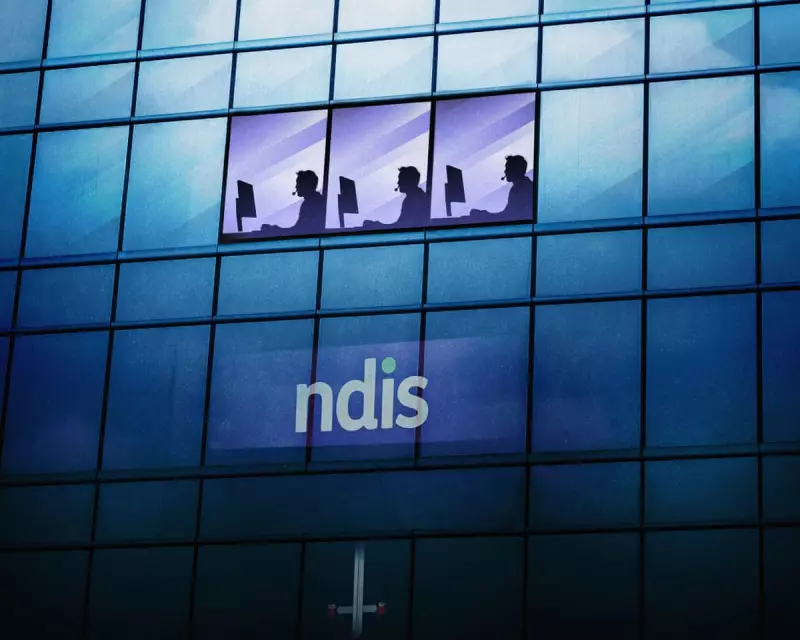
Outsourced NDIS Call Centre Staff Forced to Pose as Public Servants
Workers employed by the private contractor Serco on the National Disability Insurance Scheme (NDIS) phone lines have revealed they are instructed to pretend to be public servants while handling sensitive funding requests, despite lacking specialised welfare training. This concerning practice has raised serious questions about transparency and service quality within the vital disability support system.
Impersonation and Inadequate Training
According to multiple accounts from Serco employees shared with Guardian Australia, staff are explicitly told not to disclose their actual employer when interacting with the public. "We have to pretend that we're public servants and we're not allowed to say we're Serco," one worker explained, requesting anonymity due to fear of repercussions. This directive creates a misleading impression for vulnerable callers seeking assistance.
Compounding this issue, outsourced workers report receiving government agency email addresses that are identical to those used by direct public service employees. This makes it virtually impossible for NDIS participants to distinguish between properly trained government staff and privately contracted call centre operators who may have minimal relevant qualifications.
Critical Decisions Without Proper Qualifications
Perhaps most alarmingly, Serco team leaders without specialised welfare or disability training are reportedly responsible for screening and prioritising urgent funding requests. "Priority situations must be screened and determined by our Serco team leaders who are not welfare or disability trained, nor do they have financial qualifications for understanding the budgets of participants," revealed one concerned employee.
This arrangement means that critical decisions affecting some of Australia's most vulnerable citizens are being made by personnel who lack the necessary expertise to properly assess complex disability support needs and financial circumstances.
Systemic Issues and Worker Concerns
The current system has been described by workers as prioritising profit over both employee wellbeing and service quality. Starting pay rates at these outsourced centres hover around $52,800 annually, significantly lower than the more than $72,000 earned by many public servants performing similar roles. This substantial pay disparity exists despite workers handling equally sensitive and complex cases.
Beth Vincent-Pietsch, deputy national secretary at the Community and Public Sector Union, emphasised the fundamental problem with this approach: "Australians reaching out for help to the NDIS deserve to speak with a trained, supported and accountable public servant, not a labour hire worker in a for‑profit call centre who has been thrown in the deep end."
Contractual Arrangements and Government Response
Serco's most recent NDIA contract commenced in September 2024 for an initial three-year term, with provisions for up to two additional three-year extensions. The company reportedly maintains a 1,200-strong team in its contact centre operations supporting the NDIS.
In response to these allegations, a Serco spokesperson stated that the company provides vital support to the public service and works "in seamless collaboration" with the National Disability Insurance Agency. The spokesperson categorically denied that Serco NDIA staff are directed to make any misrepresentations about their employment status.
Meanwhile, an NDIA spokesperson maintained that only public service staff with appropriate delegation can "action and progress" priority plan change requests, suggesting a formal separation of responsibilities that appears contradicted by worker accounts.
Impact on Vulnerable Australians
The consequences of this outsourcing model extend beyond workplace issues to directly affect NDIS participants. Workers describe scenarios where callers facing genuine emergencies receive inadequate guidance and experience unnecessary delays. "Someone may be bedridden with a broken hoist, can't get lifted out of bed without two people and the hoist is broken, and their funds have been depleted," explained one Serco employee, highlighting the human impact of systemic failures.
Another worker expressed profound ethical concerns: "The whole thing is just wrong, you can't apply this call centre framework to the most vulnerable people in Australia." This sentiment reflects growing unease about applying standardised, profit-driven call centre models to complex social support systems.
Broader Context and Expert Warnings
This revelation comes amid broader concerns about government outsourcing practices. Guardian Australia has previously documented extensive use of private call centres by various government agencies, including the Australian Taxation Office and Centrelink. Experts have consistently warned that expecting private operators to deliver equivalent service quality at lower costs while still generating profits creates unrealistic expectations that ultimately compromise outcomes.
Despite Labor's earlier commitment to reduce reliance on external consultants and outsourced workers, progress appears to have stalled, leaving these problematic arrangements in place. Vincent-Pietsch emphasised the urgency of addressing this issue: "The NDIA's longstanding and problematic reliance on outsourcing is undermining service quality and public trust across the scheme, and must be addressed as a matter of urgency."
The situation raises fundamental questions about accountability, transparency, and appropriate service delivery models for essential public services supporting vulnerable populations.




