
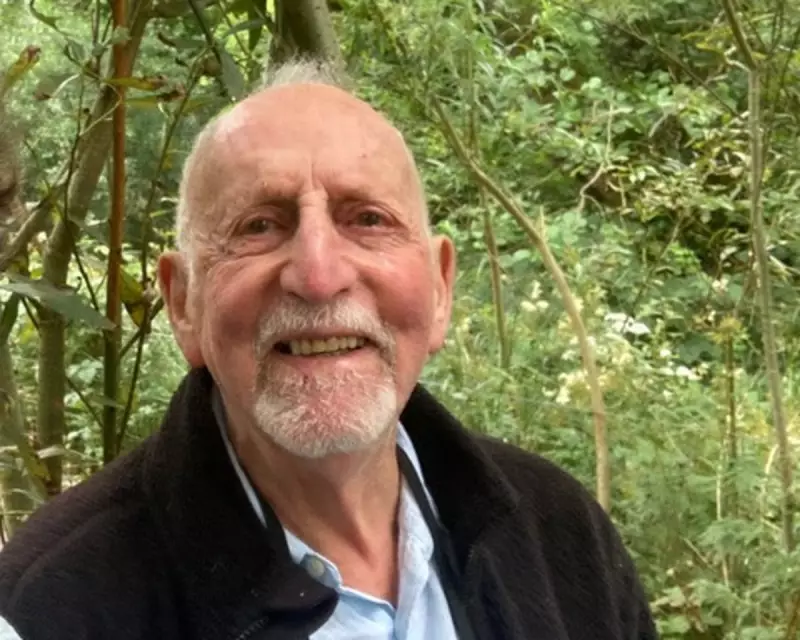
Michael Baron: The Legal Pioneer Who Revolutionised Autism Support
The legal profession and autism community are mourning the loss of Michael Baron, the visionary London solicitor whose tireless campaigning fundamentally transformed support for autistic people across the United Kingdom. Baron, who has died at the remarkable age of 96, leaves behind a legacy that reshaped educational provision, residential care, and public understanding of autism spectrum conditions.
From Personal Challenge to National Movement
Baron's journey into autism advocacy began with the birth of his son, Timothy, in 1956. As a toddler, Timothy exhibited limited speech, social aloofness, and behavioural patterns that puzzled medical professionals. When a paediatrician familiar with American psychiatrist Leo Kanner's work suggested Timothy might have autism - a condition virtually unknown in Britain at the time - Baron faced a system with zero provision for such children beyond psychiatric institutions.
Refusing to accept that his son was "ineducable" as some doctors claimed, Baron became determined to create better opportunities. His search for understanding led him to the National Society for Mentally Handicapped Children, where in 1961 he met psychiatrist Lorna Wing, another parent familiar with Kanner's research and facing similar challenges with her autistic daughter.
Founding a National Charity
In January 1962, Baron, Wing, and several other parents gathered to establish what would become the UK's leading autism organisation. Initially considering naming it the "Society for Psychotic Children" due to the term autism's obscurity, Baron successfully argued for the National Society for Autistic Children. This organisation would later evolve into the National Autistic Society in 1975, reflecting the understanding that autism continues into adulthood.
As the charity's first chair, Baron became the driving force behind fundraising and public awareness campaigns. His legal background proved invaluable as he campaigned alongside other lawyers for the landmark Education (Handicapped Children) Act 1970, which guaranteed all children, regardless of disability, the right to education.
Creating Pioneering Educational Institutions
Baron's most tangible achievements came through establishing groundbreaking educational facilities. After discovering Sybil Elgar, a Montessori teacher developing structured approaches for children with learning disabilities, Baron secured premises in Ealing, west London. In 1965, the Sybil Elgar School opened as the world's first autism-specific educational institution, with Timothy Baron and Susan Wing among its inaugural pupils.
Public awareness received an unexpected boost when the Beatles visited the school, with John Lennon personally donating £1,000 - a substantial sum at the time. Baron's media engagement and networking helped gradually shift public perceptions of autism throughout the 1960s and 1970s.
Addressing Lifelong Support Needs
As Timothy approached adulthood, Baron recognised the critical need for lifelong support structures. His solution was Somerset Court, which opened in 1974 as the world's first autism-specific residential community. Located near Brent Knoll in Somerset, this converted property provided accommodation for 21 residents, with Timothy among the first to benefit from this pioneering approach to adult care.
Even in his later years, Baron remained vigilant about evolving needs within the autism community. As understanding of autism as a spectrum grew, he expressed concern that severely autistic individuals like his son might become overlooked. In his eighties and nineties, he campaigned for more learning disability nurses within the NHS and greater awareness of welfare deputies to support disabled people without family assistance.
A Life of Diverse Achievements
Born in Willesden, northwest London in 1928, Baron was educated at Westminster School before reading history at Trinity College, Cambridge. After qualifying as a solicitor, he established his own practice in Twickenham. His personal life saw marriage to Danish student Mie Wadsted in 1956, with whom he had Timothy and two daughters, Joanna and Saskia. Following divorce in 1977, he married social worker Hetty Thieme in 1980.
After selling his legal practice in 1990, Baron fulfilled a long-held dream by moving to the Lake District with Hetty. There he campaigned against nuclear waste disposal and developed passions for local wildlife including bats and red squirrels. A lifelong literature enthusiast, he helped establish the Words by the Water literary festival in Keswick. In 2023, he celebrated the publication of his poetry anthology The Gingko Tree and Other Poems.
Baron's contributions were formally recognised with an MBE in 1980 for services to autism. Carol Povey, former director of the NAS Centre for Autism, described him and his contemporaries as "formidable - a force of nature" who were "admirable, fierce and so skilled at making change happen."
He is survived by his son Timothy, daughter Saskia (a documentary filmmaker who produced The Autism Puzzle for the BBC), grandson Jacob, and sister Margaret. His daughter Joanna predeceased him in 2025.




