
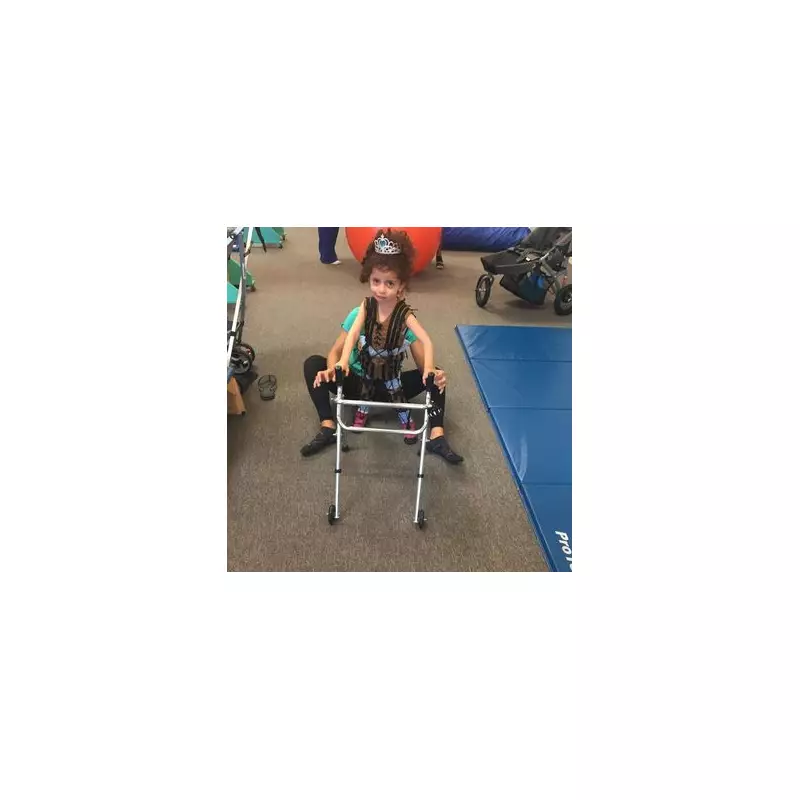
A Mother's Instinct: Spotting the Signs
Stella Tikkirou and her partner, George Vasili, knew something was different about their daughter's health even before she was born. During the final ultrasound scans, Penelope was coming up quite small, a detail that worried the expectant mother. Their daughter, Penelope Vasili, was born in 2014, but her arrival was marked by a low body temperature and low blood sugar, requiring a week-long hospital stay.
Stella, a full-time carer and apprentice Pilates teacher, described early feeding difficulties due to a severe tongue tie. "She was always so upset and really unsettled," Stella recalled. By the time Penelope was six months old, Stella noticed her daughter wasn't holding herself up, describing her as being like a little floppy rag doll.
The Diagnosis and Daily Challenges
After numerous visits to doctors, a different GP immediately recognised the seriousness of the situation and referred them to a paediatrician. Following extensive testing, Penelope received a diagnosis at 18 months old: a rare chromosome disorder known as 8p inverted duplication and deletion syndrome.
This complex genetic condition means the short arm of her chromosome 8 broke off, inverted, duplicated itself, and then deleted its terminus. This anomaly has been replicated in every cell in her body. Penelope was also diagnosed with agenesis of the corpus callosum, meaning the nerve bundle connecting her brain's hemispheres did not form correctly.
As a result, the now 11-year-old is non-verbal, has low muscle tone, scoliosis, and a rare, painful nerve condition. Stella explained that the nerve pain feels like tendons snapping and is soul-destroying to watch as Penelope cannot verbally explain her discomfort.
To communicate, Penelope uses:
- Makaton sign language, which combines symbols, signs, and speech.
- An AAC (Augmentative and Alternative Communication) device, similar to an iPad, with basic commands and a pain symbol.
Stella describes her daughter as a very sweet little girl who is happy, giggly, and loves food, music, and being read to. However, her condition means she wakes up to 12 times a night and, at age 11, wears clothing for a seven to eight-year-old.
Funding a Future of Hope
Since 2018, the family from Kingston upon Thames, London, has periodically taken Penelope to a specialist physiotherapy clinic in Los Angeles for intensive therapy blocks. These three-week programmes, which include dynamic movement intervention and speech therapy, cost between £10,000 and £15,000 per trip, covering flights, accommodation, and expenses.
Penelope has attended six therapy blocks since January 2018, with noticeable progress, including being able to use a walker. The family relies on fundraising to continue this vital treatment. Their latest event in September 2025, a day of Pilates classes, has raised over £8,000 so far.
When asked about the future, Stella finds it too heart-wrenching to contemplate. "We're in survival mode, it's just one foot in front of the other," she shared. "The way we've dealt with this is to shower Penelope in love and take each day as it comes." Her advice to other parents is to trust their instinct: "If something doesn't feel right with your child, you should definitely investigate."




