
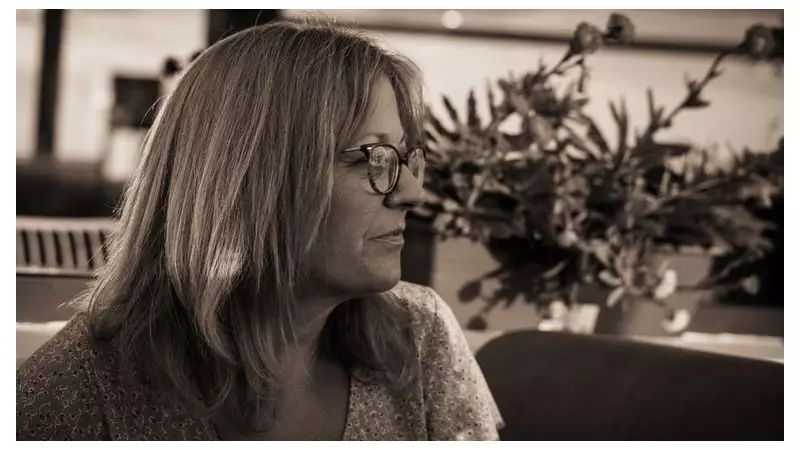
If you've ever contemplated a radical career change, the journey of Julie Fernandez offers a powerful blueprint. The actress, best remembered as Brenda in the hit BBC series The Office, has forged a vital new path as an access coordinator, earning up to £900 a day to make television and film sets inclusive for all.
From Actor to Advocate: A New Role Behind the Scenes
Fernandez, a wheelchair user, now co-runs the Casarotto access team with business partner Sara Johnson. Their work is freelance and consultancy-based, with daily rates firmly set to challenge industry norms. "We are worth the money and always aiming to challenge the disability pay gap," she states. Their guidance starts at no less than £350 a day for unscripted work, scaling to between £350 and £900 for drama productions, depending on budget.
Her days are diverse, involving one-to-one meetings to understand the access requirements of cast and crew, advising on adjustments, and collaborating with locations teams to ensure sets and venues are genuinely accessible. She also guides production secretaries on what accessible travel and accommodation should truly entail.
The Frustrations and Favourite Sets
While Fernandez loves her work, she admits it can be disheartening. "It's hard when you feel like a tick box or when people don't value your advice," she explains. She recalls her own challenging experiences as an actor on the 1990s soap Eldorado, where she was flown to Spain and expected to simply cope. "Thirty-five years on I can't believe I'm still having the same conversations about ramps and toilets," she notes, though she acknowledges the industry has improved.
One of her favourite regular jobs is on the BBC's Silent Witness, which she praises for "working hard to embed access-first thinking across every process." She also highlights positive strides across the UK industry, spurred by playwright Jack Thorne's influential 2021 MacTaggart lecture. However, she argues progress will "crawl along" until the access coordinator role is mandated on every production.
Breaking Down Barriers: The Hurdles for Disabled Talent
Fernandez identifies several persistent obstacles for disabled actors trying to enter the industry. These include a lack of drama school places, inaccessible buildings, difficulties getting to auditions, and a narrow perception of the roles disabled actors can play. She is a strong advocate for incidental casting—where disabled actors play roles not defined by their disability—to help build sustainable careers.
The most common barrier, in her view, is "small mindedness." "People think they are doing disabled people a favour by hiring them, rather than the other way round," she observes. She points to the immense economic power of the "purple pound," valued at £446 billion, which businesses and the creative industries are still failing to fully embrace.
On a practical level, her team advises productions that retrofitting accessibility costs 30% more than embedding it from the start, which can be cost-neutral. While no show has achieved 100% perfection, she commends broadcasters and producers like STV, BBC, Pulse, 60Forty, Disney, and Sky who consistently try and re-hire access coordinators.
A Three-Point Plan for Change
Looking to the future, Fernandez proposes three key legal changes to accelerate accessibility:
- For the government to employ and be guided by paid disabled experts to identify and remove barriers across all legislation, transport, and buildings.
- To move Access to Work payments from the DWP to the Department for Business, Energy & Industrial Strategy (BEIS), reframing it as a work enablement scheme, not a sickness benefit.
- To mandate that every business signed up to the Disability Confident Scheme must engage in meaningful consultancy with disabled experts to drive actual change.
Reflecting on her iconic role in The Office, Fernandez hopes it was important. "Ricky and Steve did a great job of using comedy to show something that continues to be an issue, without the issue being the point," she says. Her mission now, both on and off-screen, is to ensure that world is a place for everyone.




