
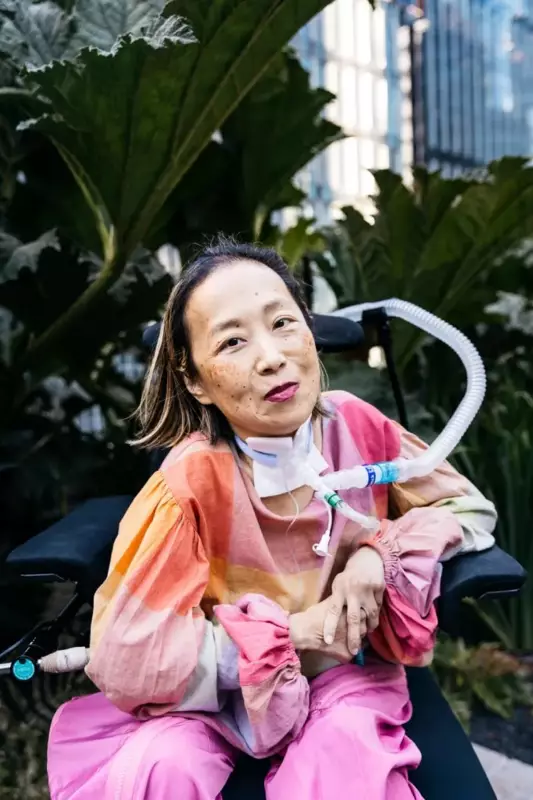
The disability community mourns the loss of Alice Wong, a pioneering writer and activist who dedicated her life to championing the rights of disabled people. Wong passed away on Friday at a San Francisco hospital, aged 51, following complications from an infection.
A Life Dedicated to Disability Justice
Born with muscular dystrophy, Wong used a powered wheelchair and breathing assistance device, describing herself as a "disabled cyborg." As the daughter of immigrants from Hong Kong, she brought unique perspectives to her advocacy work, focusing particularly on intersectional issues affecting people of colour, LGBTQ+ individuals, and immigrant communities within the disability sphere.
Her close friend Sandy Ho described Wong as "a luminary of the disability justice movement" who envisioned a world where all disabled people could exercise complete autonomy over their lives and decisions.
Building Platforms for Marginalised Voices
In 2014, Wong founded the Disability Visibility Project, initially conceived as an oral history initiative to document and amplify the experiences of disabled individuals. This groundbreaking work evolved into two significant publications: Disability Visibility and Disability Intimacy, collections that centre disabled voices in their own narratives.
Her 2022 memoir, Year of the Tiger, candidly explored her experiences growing up with a neuromuscular disease in Indiana, where she faced discrimination and bullying. These early encounters with ableism fuelled her lifelong commitment to dismantling systemic barriers.
Self-Advocacy and Lasting Impact
Wong's advocacy began early. In a January interview with the Guardian, she recalled resisting an invasive medical procedure as a teenager, insisting she knew her own body best. This pivotal moment, she explained, planted the seeds for her future activism, both for herself and others.
"I am really proud of the teenage Alice, who knew herself even though she didn't know a lot," Wong reflected in the interview.
Before her death, Wong wrote about her unexpected journey into writing and activism, crediting supportive teachers and friends for helping her reach a place where she felt comfortable in her own skin. "We need more stories about us and our culture," she emphasised, highlighting the importance of representation.
Her work consistently advocated for deinstitutionalisation and community-based living arrangements for disabled people. Through her books, edited collections, and the Disability Visibility Project blog, she created essential platforms for diverse disabled perspectives.
Ho noted that Wong combined serious advocacy with sharp humour, describing her as a "funny person and a hilarious writer" whose memoir humanised disability while entertaining readers.
In recognition of her transformative work amplifying disabled voices, Wong received the prestigious MacArthur Foundation "genius grant" in 2024.
Wong acknowledged that activism work could be draining, particularly given challenging political climates. However, she found strength in remembering past injustices, transforming anger into what she called a "battery charger" that sustained her during difficult periods.
Her enduring legacy, as Ho summarised, ensures that people with disabilities "speak for themselves and that nobody speaks for us" - a principle that will continue to inspire future generations of activists.




