
In an era where technological advances often prompt scepticism, a groundbreaking new documentary offers a powerful counter-narrative. Chris McCausland: Seeing into the Future, presented by the blind comedian and Strictly Come Dancing winner, delivers an astonishing look at how technology is fundamentally transforming lives within the disabled community.
From Smartphones to Smart Glasses: Everyday Tech as a Lifeline
The documentary, airing on Sunday 23 November at 8pm on BBC Two, immediately challenges preconceptions. Early scenes show McCausland using his smartphone not as a luxury, but as an essential tool. He demonstrates its capability by holding up a T-shirt and asking what it is. The device promptly identifies it as a "grey T-shirt with a graphic logo of Deftones" and can even assess if it needs ironing. For McCausland, this represents a level of accessibility previously unimaginable from a button-less glass screen.
His journey then takes him to the United States to visit the research hubs of major tech corporations. At a Meta facility, he trials smart glasses that are always active, providing live audio descriptions of his surroundings. "The one thing blind people never have is two hands free," McCausland observes, highlighting the profound benefit of wearable technology that offers constant environmental interpretation without occupying his hands.
Beyond Convenience: Bionics and Autonomous Vehicles
The exploration delves into even more advanced territory at MIT, where McCausland meets with a nanotechnologist discussing molecular devices capable of repairing human cells from within the body. He also tests bionic gait assistance technology—a calf-worn device that augments the wearer's strength, reminiscent of the brace used by Bruce Wayne in The Dark Knight Rises.
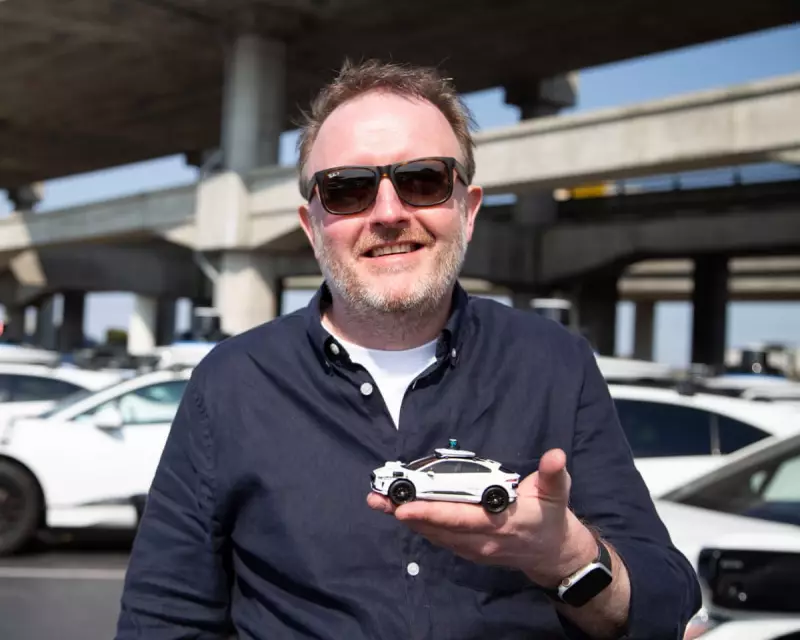
Perhaps the most emotionally resonant moment occurs when McCausland experiences a driverless car journey alone for the first time in his life. With the UK expecting to welcome these autonomous vehicles as soon as next spring, McCausland offers a refreshing perspective. "It's not massively different to trusting a driver I don't know," he reflects, marvelling at the vehicle's sophisticated radar systems and its ability to model the environment in real-time using calculations at the speed of light.
A Transatlantic Cultural Lens on Technological Optimism
The documentary finds an unexpected source of warmth in the cultural contrast between McCausland's dry British wit and the earnest futurism of Silicon Valley. This juxtaposition creates moments of inadvertent comedy, such as when the smart glasses earnestly inform him that "a plane is visible in the clear blue sky." McCausland's wry commentary as he turns to his camera crew—"Do they look like they know what they're doing?"—highlights the current limitations of AI in understanding human irony.
While acknowledging valid concerns about profit-driven tech giants, Seeing into the Future compellingly argues that for those with disabilities, these advancements are not about convenience but about fundamental dignity, independence, and access to a world designed for the sighted and mobile. The documentary serves as a potent reminder that technological progress, when guided by inclusivity, can be genuinely life-changing.




