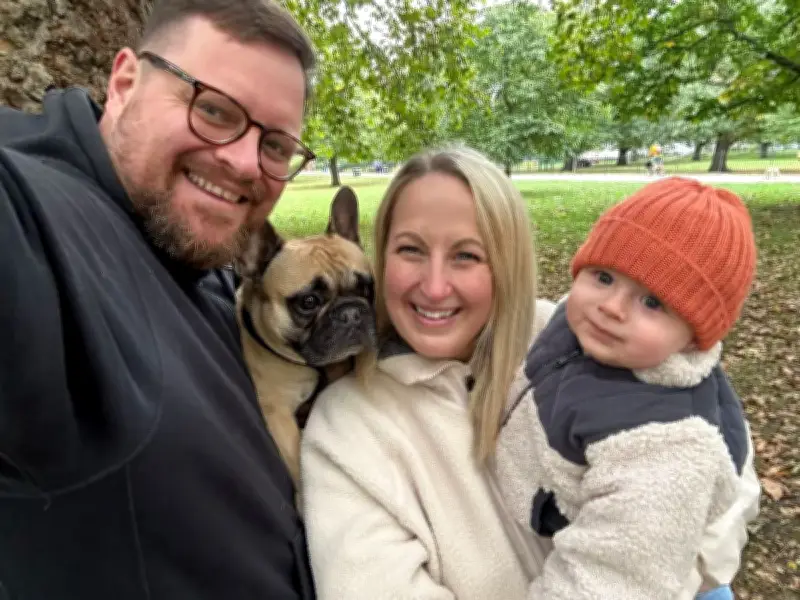
The parents of a two-year-old boy with a progressive condition that could leave him using a wheelchair by age 12 and cause serious heart, breathing and feeding problems say it feels like a “ticking time bomb.” Amy and Steve Baker, both 41 and living in west London, are fundraising for a £2.4 million gene therapy treatment in the US, which they hope could slow the progression of the condition.
Delayed milestones and initial reassurance
Amy and Steve said their “cheeky chappy” son Wilf was slightly delayed in sitting and crawling and by 18 months had still not started walking. They took him to their GP, followed by appointments with a paediatrician and physiotherapist, who reassured them there was “nothing to worry about.” Wilf eventually took his first steps at 21 months.
According to the NHS, the average age for children to start walking is 14 months. Amy said: “Doctors tell you not to compare your children to other children… and part of us was putting it down to his personality – we were trying to work out if he didn’t want to walk or he couldn’t walk.”
Miscarriage leads to DMD diagnosis
In September 2025, Amy suffered a miscarriage at eight weeks, and testing of the pregnancy tissue showed it had the genetic variant linked to Duchenne muscular dystrophy (DMD). Further testing in January showed Amy was a carrier for the condition. DMD is a genetic condition that causes progressive muscle weakness, most commonly in boys, according to Great Ormond Street Hospital.
Wilf was tested and diagnosed with DMD in February 2026. Doctors told them he could begin to lose mobility at age eight. Most people with DMD will reach adulthood, but they are more likely to die from heart or respiratory failure before or during their 30s, according to the NHS.
Progression and treatment plans
At their final paediatrician appointment in January 2026, Amy mentioned her results, and Wilf had a blood test to check his protein levels, followed by a full genetic blood test. He tested positive for DMD in February, and Amy said it “felt like our world was falling apart.”
They had their first appointment at Great Ormond Street Hospital in March, which Steve said “brought it all home” and made it “feel real.” Amy explained: “They said he’ll continue progressing, but be behind his peers, until he gets to about age five or six, and that’s when we’ll start seeing the decline. They said at age four he’ll start taking corticosteroids to try to slow down the progression of the disease, and he could be in a wheelchair by age 12.”
He is being monitored every six months, but this will increase over time. According to the NHS, people with DMD may also need a machine to help them breathe and a gastrostomy tube to help with feeding. They can develop bladder and bowel problems, muscle weakness, scoliosis and dilated cardiomyopathy – where the muscle walls of the heart become stretched and thin.
Fundraising and awareness
Steve told PA Real Life: “You almost bury your head in the sand to carry on and it’s a weird situation because currently Wilf’s progressing – he’s walking, running and doing well at nursery. But we know what’s going on in the background and what will eventually happen. I think we’re still trying to process that, I’m not sure if we ever will. It feels like the situation is a ticking time bomb. My mind is split between feeling hopeful and hopeless.”
They have looked into private gene therapy options across the globe, including one in the US, which costs £2.4 million (3.2 million dollars), excluding hospital costs and travel. They have set up a fundraiser, which has raised more than £18,800.
Amy said: “We just want to do everything we possibly can for him and I don’t want to look back, or more importantly him look back, and think we could have done more.” Steve added: “We’re desperate to do anything for our son, we couldn’t just sit here and do nothing.”
Steve said they would like to raise awareness about the condition itself, while recognising that the progress in research today would not be possible without the families before them who shared their stories and took part in trials. They want to continue that momentum to help other families avoid going through what they have.