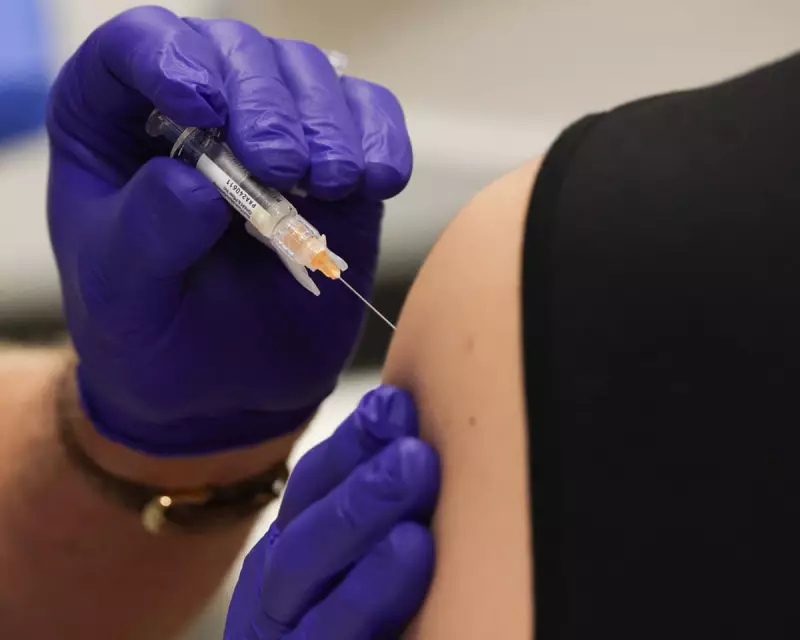
In a remarkable medical breakthrough that could transform cancer care, new research suggests that mRNA Covid vaccines may significantly extend the lives of cancer patients. According to a study published in the prestigious journal Nature, vaccinated cancer patients lived nearly 17 months longer than their unvaccinated counterparts.
Striking Survival Benefits Revealed
Researchers at the University of Texas MD Anderson Cancer Center conducted an observational study examining medical records of patients with advanced lung cancer treated between 2015 and 2022. The analysis included 180 patients who had received an mRNA Covid vaccine – either Pfizer or Moderna – within 100 days of starting immunotherapy treatment, compared against 704 patients who received the same cancer drugs but no Covid jab.
The results were nothing short of astonishing. After accounting for factors such as age and disease severity, vaccinated patients survived a median of 37.3 months compared to just 20.6 months in the unvaccinated group. Even more impressively, three years after beginning treatment, 55.7% of vaccinated patients were still alive versus only 30.8% of those who hadn't received the vaccine.
How mRNA Vaccines Boost Cancer Treatment
The mechanism behind this unexpected benefit appears to involve the immune system's general activation. Unlike traditional cancer treatments that directly target malignant cells, mRNA vaccines seem to act as a biological flare, priming the body's natural defences to become more alert and responsive.
Professor Devi Sridhar, Chair of Global Public Health at the University of Edinburgh, explains: "Our immune system is excellent at recognising invaders like viruses or bacteria, but cancerous cells prove much harder to distinguish from healthy tissue since they're part of our body."
This general immune activation helps transform previously hidden "cold" tumours into recognisable targets that the immune system can effectively attack. The same survival benefit was observed in patients with metastatic melanoma, and importantly, the effect was consistent across both Pfizer and Moderna vaccines, though not present in non-mRNA Covid vaccines.
Potential Game Changer for Cancer Care
The survival gains observed in this study far exceed what's typically seen with new cancer treatments. A review of 124 cancer drugs approved by the US FDA between 2003 and 2021 found they increased median survival by just 2.8 months on average – making the 17-month improvement with mRNA vaccines particularly noteworthy.
Dr Elias Sayour, an oncologist and co-author of the study, envisions even greater possibilities: "We could design an even better non-specific vaccine to mobilise and reset the immune response, in a way that could essentially be a universal, off-the-shelf cancer vaccine for all patients."
The potential to repurpose existing mRNA vaccines represents a particularly exciting prospect because these vaccines have already undergone extensive safety testing in millions of people worldwide. This could lead to a low-risk, inexpensive way to boost cancer treatment outcomes without the severe side effects associated with traditional chemotherapy.
Important Caveats and Future Research
While these findings are undoubtedly promising, researchers caution that this was an observational study rather than a randomised controlled trial. This means the research can show association but not definitive causation. Further studies involving animal models and carefully designed clinical trials are needed to confirm whether the mRNA vaccines are directly responsible for the survival benefit.
Nevertheless, the research opens exciting new avenues in cancer treatment. As Professor Sridhar reflects: "I remember my father suffering through round after round of chemo and wondering if the cure was worse than the disease. The Nature study is a reminder that science often advances in surprising ways."
The mRNA Covid vaccines, already credited with saving millions of lives during the pandemic, may now be poised to deliver another medical revolution – this time in the ongoing battle against cancer.