A 17-month-old girl was diagnosed with leukaemia after doctors dismissed her symptoms as childhood bugs picked up at nursery and told her mother she was being an "overdramatic first-time parent." Sophie Sparks, 37, spent six weeks seeking medical help for daughter Darcey, who had repeated infections, soaring temperatures, and endless coughs and colds.
Despite temperatures above 40°C, Darcey was treated for tonsillitis and given throat spray at A&E, with doctors reassuring the family she was simply picking up common childhood illnesses from nursery. When Darcey never fully recovered between illnesses, her stomach began to swell, and she stopped eating, the family pushed for a second opinion but were told she was probably just constipated.
GP's urgent referral led to diagnosis within 24 hours
A GP later recognised that Darcey looked seriously unwell and arranged an urgent hospital assessment at Queen's Hospital in Romford, Essex. Within 24 hours of blood tests, Darcey was diagnosed with acute lymphoblastic leukaemia (ALL) and began chemotherapy at Great Ormond Street Hospital the following day in November 2022.

Sophie, from Rainham, Essex, said: "Darcy had been unwell for around six weeks beforehand. It started with what seemed like normal coughs and colds, so we didn't think much of it at first. The problem was that she never seemed to recover from one illness before the next one started."
"She might have one or two good days, then she'd be poorly again with high temperatures and complete exhaustion. She just wasn't herself. Every time we took her to a doctor, we raised concerns about it, but we were repeatedly told it was a minor illness she probably picked up at nursery or constipation."
Family pushed for tests after four-hour A&E wait
Sophie said the family visited walk-in centres three times and A&E once because they could not get an appointment with their own GP. "Each time, we were told she was simply building her immune system, that she was young, and that these things were normal and we were just being overdramatic first-time parents," she said.
"She was prescribed antibiotics several times, but nothing seemed to improve. We knew in our gut that something wasn't right. A few weeks in, we noticed her stomach was becoming very swollen."
Eventually, a GP appointment led to immediate concern. "As soon as the doctor saw her, he was alarmed. She was extremely pale, almost yellow in complexion. He immediately told us to take her straight to A&E," Sophie said. "Even then, we spent four hours waiting before anyone saw us. They told us she appeared fine at which point I was beside myself and pushed for tests."
Two years of treatment ended with cancer-free bell ringing
After blood tests, nurses told the family Darcey was incredibly anaemic and needed a blood transfusion. At around 1am, a doctor informed them that blood results suggested leukaemia. "Within a single day, our whole world had changed. Within 48 hours we were at Great Ormond Street Hospital and Darcy was starting chemotherapy," Sophie said.
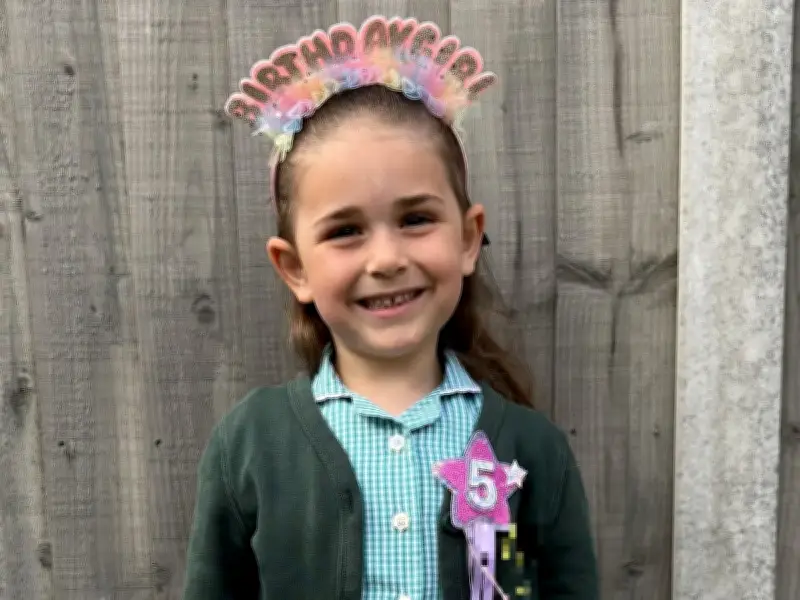
Darcey underwent two years of treatment and chemotherapy, during which she was in and out of hospital due to the gruelling effects. The now five-year-old was told she was cancer free in December 2024 and rang the bell to mark the milestone. Her port was removed in March 2025, ending around two and a half years of treatment, including roughly two years of chemotherapy.
Sophie, an aviation insurance claims manager, said: "Looking back, it's hard not to question why it took six weeks to reach that diagnosis. I don't blame individual doctors, but I do think the bigger picture was missed. Doctors see lots of coughs, colds and infections, and I understand that. But they should also listen to parents."
"Once we entered the NHS cancer system, the care was incredible. The teams at Queens and Great Ormond Street were absolutely outstanding and saved. Over the next two and a half years, I genuinely couldn't fault the treatment she received."

Darcey now thriving at school and wants to be a doctor
Darcey started school in September last year and is said to be doing "brilliantly" and loving life as a big sister to one-year-old Harry. Sophie, married to husband Jon, 37, a carpenter, said: "Seeing her walk into reception was one of the proudest and most emotional moments of our lives, especially after everything she'd been through."
"When she was three years old, she told nursery staff, 'I want to be a doctor so I can make people better like they made me better'. That was incredibly special to hear and she is loving being a big sister, the novelty certainly hasn't worn off and they love each other."
Sophie wants to speak about the urgent need for greater awareness and research into earlier diagnosis, kinder treatments, preventing relapse, and reducing long-term effects of cancer treatment. "Chemotherapy is incredibly hard on a child's growing body - these are adult treatments they are using. There can be long-term effects, which is why Darcey still has regular check-ups," she said.
"The most important thing I would tell parents is to trust your instincts. You know your child better than anyone. If they're unusually tired, pale, developing swellings, or simply don't seem themselves, keep pushing for answers. Childhood cancer can develop quickly, and early diagnosis saves lives."
According to CCLG: The Children & Young People's Cancer Association, common childhood cancer symptoms include feeling very tired and exhausted all of the time, noticeable skin paleness, having lots of infections that don't go away or keep coming back, flu-like symptoms that don't go away, unexplained or excessive bleeding, bruising easily or a rash of small red spots, persistent unexplained sweating or fever especially at night, aches and pains that don't go away, unexplained new limp or leg weakness, changes when going for a poo, feeling a lump or swelling anywhere on the body, losing a significant amount of weight in teenagers, slow growth in children, and change in behaviour such as persistent crying, sleeping a lot, or being off food.