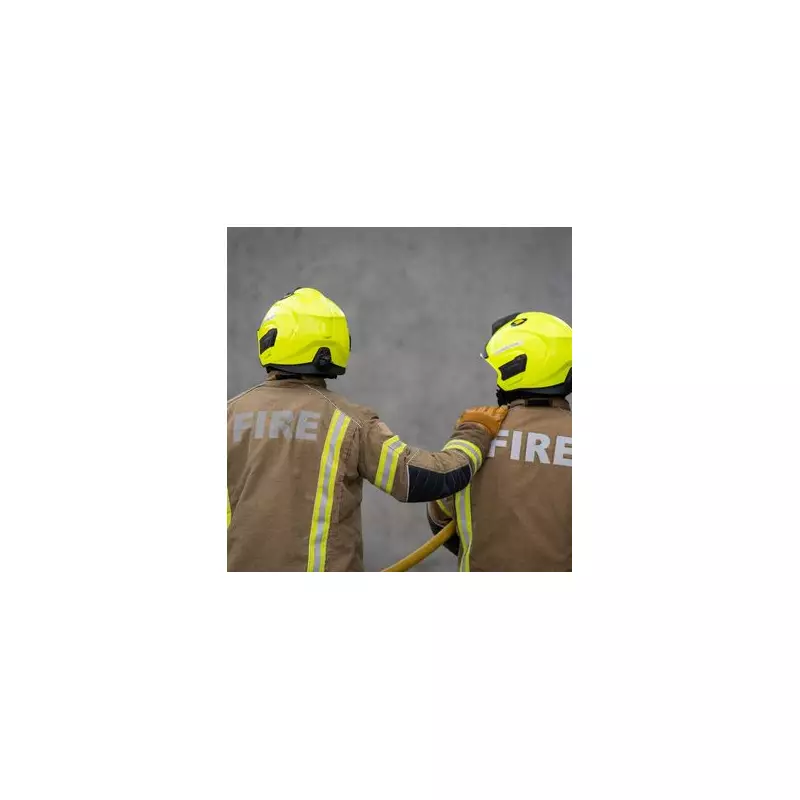
Firefighters serving in London are confronting an "extremely alarming" risk of cancer, with new research suggesting the danger is equivalent to smoking twenty cigarettes every day. The stark findings were presented to the London Assembly's Fire, Resilience and Emergency Planning Committee this week.
A Capital-Scale Health Crisis
Research commissioned by the Fire Brigades Union (FBU) shows that exposure to toxic contaminants at fire scenes has directly led to a surge in cancer diagnoses. The data is particularly shocking for younger crews: firefighters aged 35-39 are up to 323 per cent more likely to be diagnosed with cancer than the general population in the same age bracket.
Gareth Beeton, the FBU's Regional Chair, explained that London's unique scale intensifies the threat. "London Fire Brigade is the biggest and busiest in the UK and the fourth largest in the world," he told the committee. "The number of firefighters exposed to arguably the largest number of fires has to have an effect."
Unique Threats in a Modern City
Deputy Commissioner of the London Fire Brigade, Spencer Sutcliff, described a "confluence" of risks specific to the capital. He pointed to the dense built environment, increased use of chemical flame retardants in furnishings, and the rise of lithium-ion battery fires linked to the gig economy as key factors changing the risk dynamics.
Karl Smith, the FBU's London Region Deputy Health & Safety Co-ordinator, stressed the severity. "The World Health Organization has recognised firefighting as a Group 1A carcinogenic occupation – the highest level of risk," he said. "They've stated that being a firefighter is equivalent to smoking twenty cigarettes a day." He added that four per cent of firefighters surveyed already have a cancer diagnosis.
Funding Gap Blocks Safety Overhaul
While a major cultural shift within fire stations is needed—such as strictly separating contaminated kit from clean living areas—officials said a chronic lack of funding is the primary obstacle. Mr Smith highlighted a "disconnect between policy and what actually happens," citing examples like firefighters unable to shower within the crucial first hour after a fire due to staff shortages on busy days.
Older fire stations, particularly in North-West London, lack the infrastructure to prevent toxic "off-gassing" from dirty kit from spreading into rest and eating areas. "For us, that's unacceptable," Mr Smith stated.
Gareth Beeton appealed directly to the Mayor and Central Government for investment. "Funding across the LFB is an absolute massive issue for us," he said, noting there has been no additional funding from central government since the Grenfell Tower Inquiry recommendations. He concluded that compared to other global cities like Paris or Tokyo, London's fire service is "massively under-resourced."