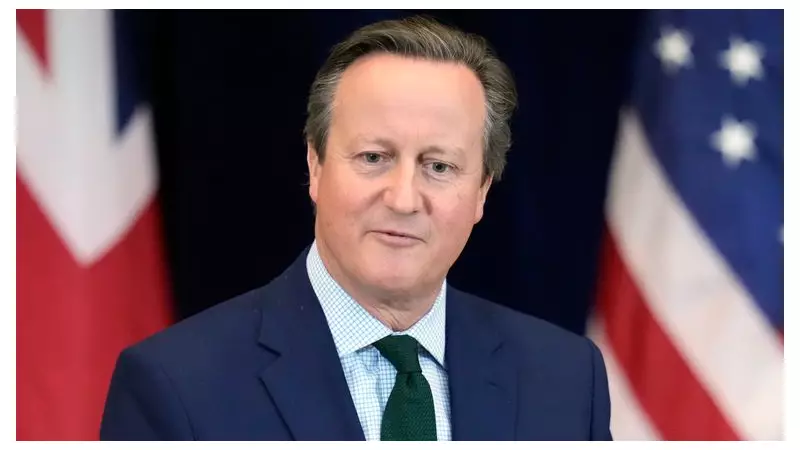
Former Prime Minister David Cameron has publicly disclosed his recent personal battle with prostate cancer, announcing he is now cancer-free after undergoing treatment.
A Personal Health Revelation
The 59-year-old, who served as Prime Minister from 2010 to 2016 and later as Foreign Secretary, shared the news in a candid interview with The Times. Lord Cameron explained that his wife, Samantha, urged him to visit his GP for a prostate-specific antigen (PSA) test. The results showed alarmingly high levels of the protein associated with prostate cancer.
Recalling the moment he received his diagnosis after a follow-up biopsy, Lord Cameron said, "You always dread hearing those words." He described the surreal feeling of the doctor confirming the disease, a moment that prompted a critical decision: to seek immediate treatment or to adopt a watch-and-wait approach.
Choosing Treatment and a Family History
The former Conservative leader's decision was influenced by a profound family tragedy. His older brother, Alexander, died of pancreatic cancer at the age of 59, the same age Lord Cameron is now. "It focuses the mind," he stated, revealing that he opted quickly for focal therapy. This treatment uses electric pulses delivered via needles to destroy cancerous cells.
He received his post-treatment MRI scan around the time of significant global events last year, quipping, "It was the same week as Donald Trump was talking about the bomb damage assessment... I got my own bomb damage assessment."
Joining the Call for Targeted Screening
Lord Cameron is now using his platform to add his voice to a growing campaign, joining figures like Olympic champion Sir Chris Hoy and former PM Rishi Sunak. He is backing a call by the charity Prostate Cancer Research for the introduction of a targeted screening programme for men at high risk.
"I don't particularly like discussing my personal intimate health issues, but I feel I ought to," he said. He highlighted that men are often reluctant to talk about health issues, especially those connected to sexual health, and felt a duty to speak out. "I would feel bad if I didn't come forward and say that I've had this experience."
His interview comes ahead of a crucial meeting this Thursday, where the National Screening Committee could approve the first NHS screening programme for prostate cancer. This is particularly significant as approximately 12,000 men in the UK die from prostate cancer every year, making it the country's biggest male cancer killer.