The World Health Organization is spearheading a major global initiative to unlock what it calls a "potential treasure trove" of health benefits from centuries-old traditional medicines. This move aims to bridge the gap between ancient healing practices and modern biomedical science through rigorous evidence and research.
A New Strategy for Ancient Wisdom
Earlier this year, WHO member states agreed on a new global strategy for traditional, complementary, and integrative medicine (TCIM) for the coming decade. The plan, as detailed by Dr Shyama Kuruvilla, who leads the WHO Global Traditional Medicine Centre, seeks to build a robust evidence base, develop regulations for treatments and practitioners, and, where appropriate, integrate these practices into mainstream national health systems.
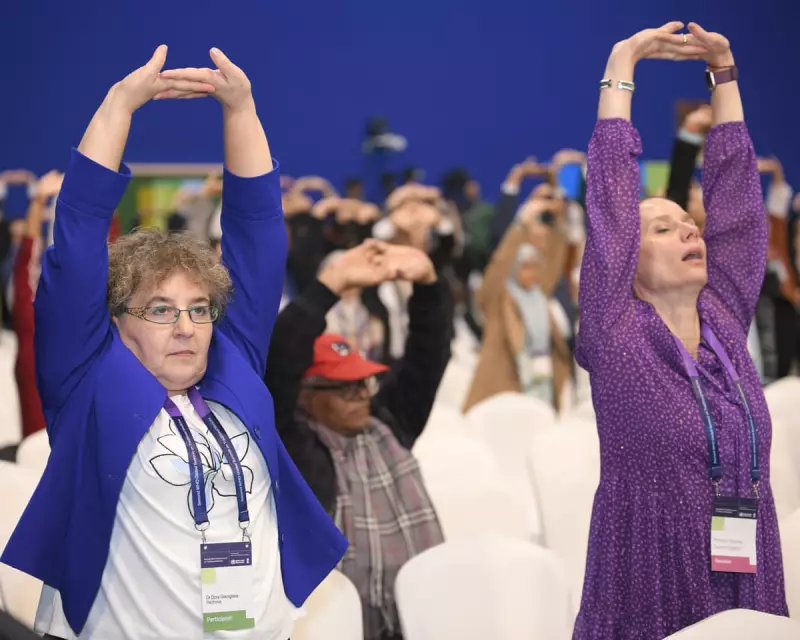
"It's super-exciting," said Dr Kuruvilla. "I'm not saying we know what works and what doesn't work at scale – but I think there's this opportunity [to find out] right now." The strategy was a focal point at the second WHO global summit on traditional medicine, held in New Delhi, India, on 17 December.

Modern Science Meets Traditional Practice
The WHO believes that a historical lack of scientific evidence, which has led some to dismiss traditional practices, can now be addressed with modern investment and technology. Dr Kuruvilla highlighted that tools like artificial intelligence, genomics, and advanced brain scanning offer unprecedented ways to study remedies ranging from herbal poultices in Africa to acupuncture in China and Ayurveda in India.
"Meditation was all this 'woo-woo stuff'," she noted, "but now, seeing all these advances in neuroscience and showing changes in brain waves from functional magnetic resonance imaging... actually being able to trace the pathways that lead to changes in health measurements – I think this is really, really exciting."
The organisation points to Thailand as a leading example, where traditional herbal treatments are being put through randomised trials and added to the national essential medicines list. In May, the country's health ministry even advised doctors to switch from some biomedicines to traditional remedies for conditions like muscle pain.
Clarifying Scope and Ensuring Safety
Addressing concerns that the strategy might legitimise unscientific systems like homeopathy, Dr Kuruvilla was clear. She stated that homeopathy does not fit the WHO's definition of traditional medicine, as it originated in the late 18th century, and lacks the robust evidence required.
"With all of these – with biomedicine, homeopathy, traditional medicine – if the evidence changes, I think it's our responsibility to be open to that," she said. "Our bottom line: is this supported by robust reliable evidence, especially on safety and efficacy? And if it's not, WHO is not supporting it."
This evidence-based approach is crucial, given that WHO surveys indicate most TCIM services are paid for directly by patients and operate outside formal, quality-checked health systems. "Not engaging wasn't an option," Kuruvilla emphasised, pointing to the need for safeguards in a trillion-dollar global wellness industry.
A Bridge to Universal Health Coverage
The potential benefits extend beyond new treatments. The vast network of traditional medicine practitioners, including university-educated professionals in countries like China and India, could help alleviate global healthcare workforce shortages. Dr Kuruvilla suggested this could make a "huge contribution" to achieving universal health coverage.
In an era of aid cuts, she also framed traditional medicine as a path for nations to become more self-reliant in health provision and share resources. The newly launched WHO strategic technical advisory group for traditional medicine will guide this work, aiming to "build a bridge" between different health philosophies.

"This is a pivotal moment for traditional medicine," Dr Yukiko Nakatani, WHO's assistant director-general, told the summit. "It embodies cultural heritage and national health identities, and increasingly, it constitutes a vital component of primary health care strategies." The WHO's mission is now to ensure this shared heritage is explored safely and scientifically for the wellbeing of people worldwide.